Choosing an Amazon market research tool isn't about collecting a long list of vanity features. For marketers, a reliable tool provides deep, operational evidence—sales velocity, pricing history, review velocity, and structural keyword gaps.
This guide compares 6 of the best Amazon market research tools for marketers, including Helium 10, Jungle Scout, Keepa, Viral Launch, AMZScout, and DataHawk. It also explains where each tool fits in a real Amazon product analysis workflow, when to combine tools, and how to automate the repetitive competitor monitoring work that standard research platforms often leave behind.
Key Takeaways
- Best overall tool: Helium 10 is the strongest all-in-one choice for advanced marketers who need product research, keyword research, listing optimization, and competitor tracking in one workflow.
- Best beginner option: Jungle Scout is easier to use for marketers who need a cleaner market research workflow and practical Amazon product analysis without too much complexity.
- Best validation layer: Keepa is essential for checking price history and sales rank trends before trusting a product’s current performance.
- Best free starting point: Amazon Product Opportunity Explorer, Helium 10 free tools, and Keepa’s free charts can help you validate early ideas before paying for a full stack.
- Best workflow: Most serious marketers do not rely on one rank tracking tool or market research tool. They combine keyword data, historical pricing, review analysis, and competitor monitoring.
- Best automation layer: AllyHub helps marketers automate recurring Amazon competitor monitoring and research reports after the initial product analysis is done.
What Is the Best Amazon Market Research Tool?
The best Amazon market research tool for most marketers is Helium 10 if you need a complete Amazon research and optimization suite. Jungle Scout is better if you want a beginner-friendly product research workflow. Keepa is the best supporting tool for validating price history and sales rank trends before making a decision. That said, “best” depends on the decision you are trying to make.
The right tool stack depends entirely on the specific decision you are trying to make at your current operational stage.
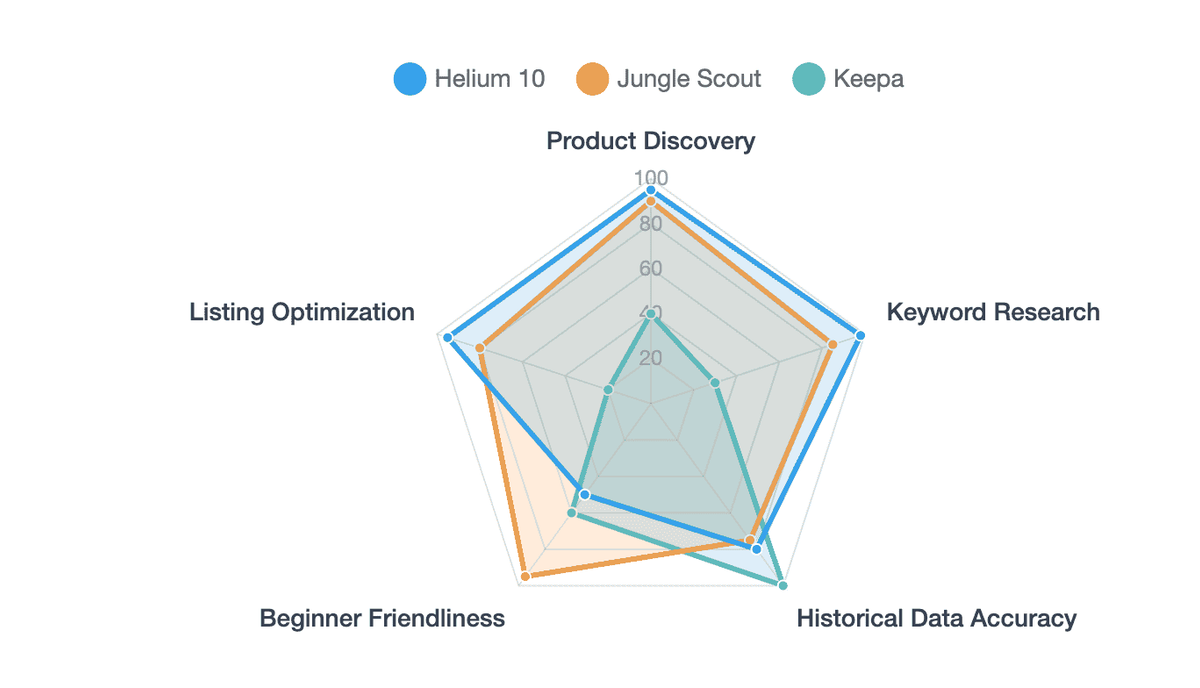
If you are choosing a new product, you need product demand, sales estimates, review count, keyword opportunity, pricing stability, and margin signals. If you are managing Amazon SEO or PPC, you need keyword ranking data, competitor ASIN research, search volume, bid estimates, and listing optimization guidance. If you are running market intelligence for a brand or agency, you need repeatable competitor tracking, review analysis, and reporting.
That is why this article does not treat Amazon market research as one activity. It breaks the workflow into four layers:
- Product discovery: finding product categories or niches worth testing.
- Amazon product analysis: validating sales, reviews, pricing, margin, and competition.
- Keyword and listing research: understanding what drives organic visibility and PPC performance.
- Competitive intelligence: tracking competitor pricing, reviews, launches, and positioning over time.
A marketer choosing a tool should not ask, “What is the best Amazon product research tool overall?” The better question is, “Which tool gives me the evidence I need for the next decision?”
Why Do Marketers Need an Amazon Market Research Tool?
An Amazon market research tool helps marketers collect and interpret marketplace data that is not easy to see inside the standard Amazon shopping experience. These tools estimate product demand, track keywords, analyze competitors, monitor pricing, and reveal patterns that can support better product, SEO, PPC, and positioning decisions.
For marketers, the value is practical:
- Validate product-market fit before investing in sourcing, packaging, or ad campaigns.
- Find high-intent Amazon keywords for listings and PPC campaigns.
- Compare competitor pricing, review volume, and category positioning.
- Understand whether demand is steady, seasonal, or driven by a short-term spike.
- Build better client reports with product, keyword, pricing, and review evidence.
- Reduce the risk of choosing a product based only on surface-level search results.
Note: Third-party Amazon tools estimate many metrics because Amazon does not publicly expose exact sales volume or keyword search volume for every product. Treat sales estimates as directional signals, then cross-check them with historical data, reviews, pricing trends, and manual market analysis.
The 6 Best Amazon Market Research Tools
1. Helium 10 — Best All-in-One Platform for Advanced Marketers
Helium 10 is the most comprehensive Amazon research suite on the market. It covers every stage of the seller workflow: product research, keyword discovery, listing optimization, PPC management, and competitor tracking — all within a single platform.
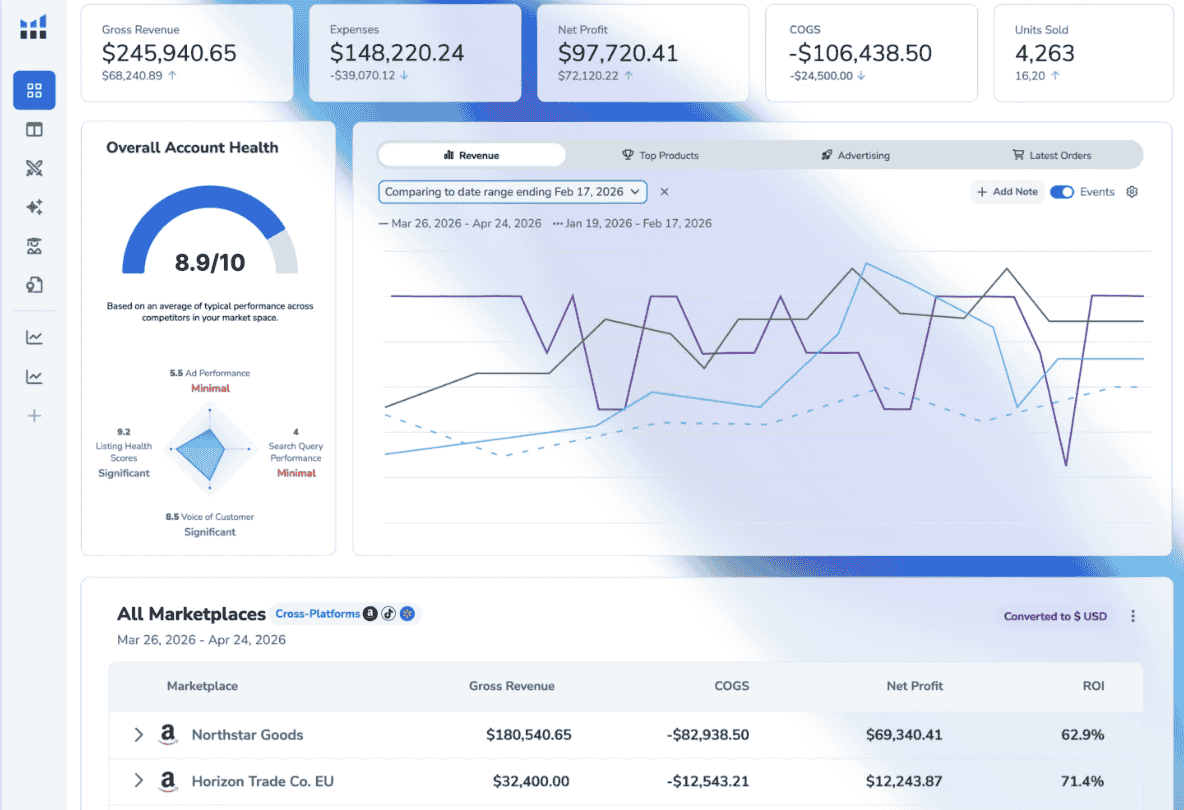
Key features for marketers:
- Black Box: Product research database with filters for sales volume, revenue, review count, and competition level
- Cerebro: Reverse ASIN lookup — enter a competitor's product and see every keyword they rank for
- Magnet: Keyword research tool with search volume, trend data, and keyword difficulty scores
- Xray: Chrome extension for real-time product analysis directly on Amazon search results pages
- Trendster: Historical sales rank and demand trend visualization
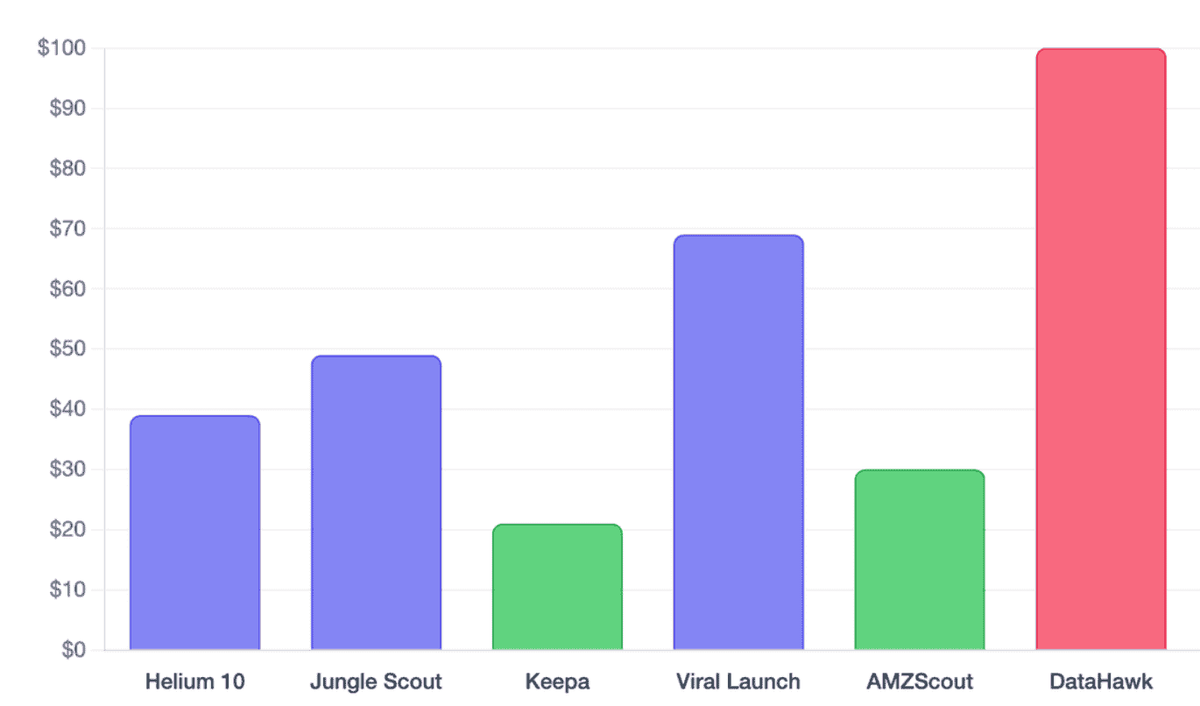
Pricing: Free tier available (limited searches); paid plans from ~$39/month (Starter) to $229+/month (Diamond). Annual billing reduces cost by ~25%.
Best for:
- Marketers managing multiple product lines or client accounts
- Agencies running Amazon PPC campaigns who need deep keyword data
- Sellers who want a single platform to replace multiple specialized tools
Pro tip: Use Cerebro to analyze the top 3 competitors in your target niche before writing a single word of your product listing. The keyword overlap between their top-ranking ASINs reveals exactly which terms Amazon's algorithm considers most relevant for that category.
2. Jungle Scout — Best for Beginners and Sales Estimation Accuracy
Jungle Scout is one of the easiest Amazon product research tools for marketers who need a clear product validation workflow. It is especially useful for comparing demand, competition, and estimated sales data before building a launch plan.
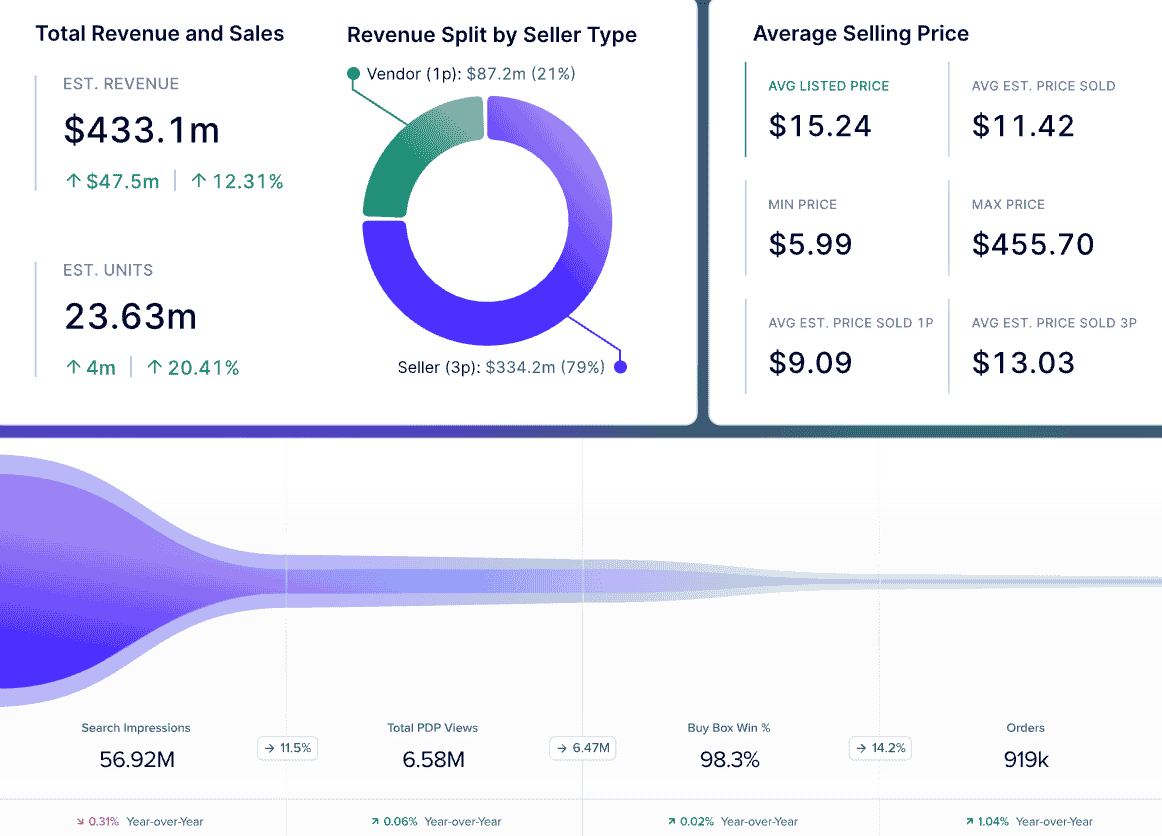
Key features for marketers:
- Product Database: Filter by category, sales volume, revenue, and competition to surface viable product opportunities
- Opportunity Finder: Identifies emerging niches with rising demand and low competition
- Keyword Scout: Search volume data with historical trends and PPC bid estimates
- Supplier Database: Connects product research directly to verified manufacturers — useful for marketers who also manage sourcing
- Sales Analytics: Revenue and unit tracking for your own listings
Pricing: Plans from $49/month (Basic) to $129/month (Business). No free tier, but a 6-day money-back guarantee is available.
Best for:
- Marketers launching their first Amazon product and needing reliable sales estimates
- Brand managers who want a clean, intuitive interface without a steep learning curve
- Sellers who prioritize sales data accuracy over feature breadth
3. Keepa — Best for Historical Price and Sales Rank Tracking
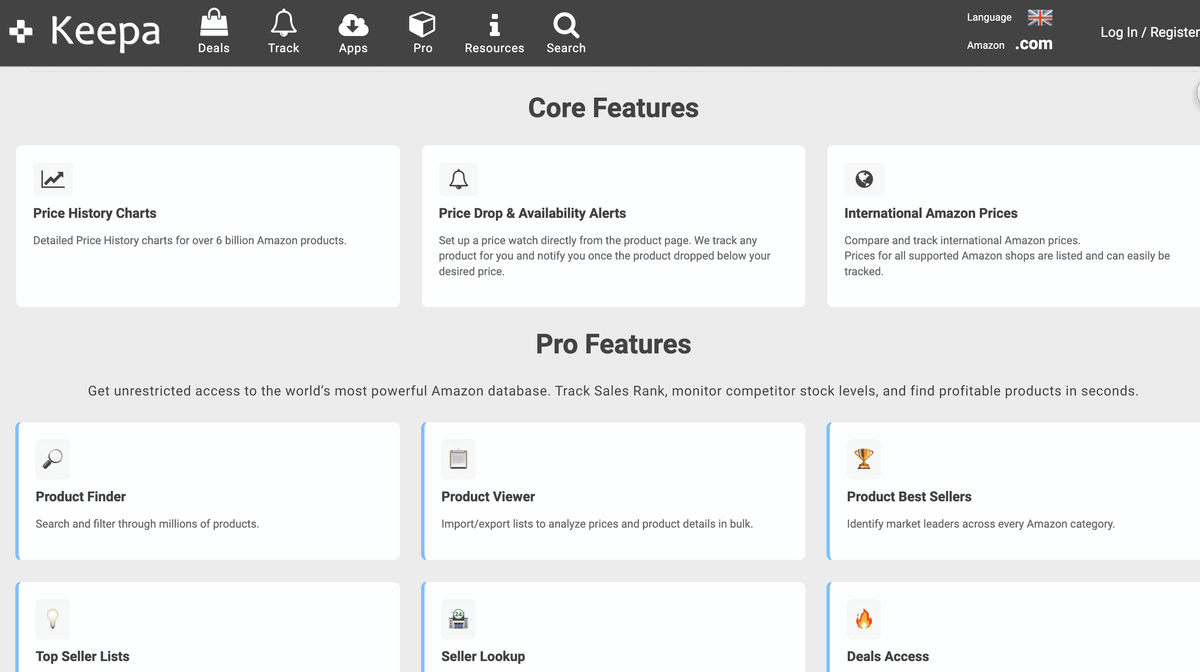
Keepa is the specialist tool that even Helium 10 and Jungle Scout users rely on for one specific job: historical data. While the all-in-one platforms provide current snapshots, Keepa shows you how a product's price and sales rank have moved over months or years — which is critical for identifying seasonal demand patterns and validating whether a product's current performance is sustainable.
Key features for marketers:
- Price History Charts: Visualize price fluctuations across Amazon, third-party sellers, and warehouse deals
- Sales Rank History: Track BSR (Best Seller Rank) changes over time to infer sales velocity trends
- Product Finder: Filter products by historical sales rank thresholds — not just current snapshots
- Deal Alerts: Set price drop notifications for competitor monitoring
- Data Export: Download historical data as CSV for custom analysis
Pricing: Free tier with limited data; full access at approximately €19/month (~$21 USD).
Best for:
- Marketers validating whether a product's demand is consistent or seasonal
- Arbitrage sellers who need price history to identify profitable buying windows
- Any marketer using Helium 10 or Jungle Scout who wants to cross-reference sales estimates with independent historical data
Recommended: Always run Keepa alongside your primary research tool. If a product shows strong current metrics in Helium 10 but Keepa reveals its BSR only spiked in the last 30 days, that's a red flag worth investigating before committing to inventory.
4. Viral Launch — Best for New Product Launch Strategy
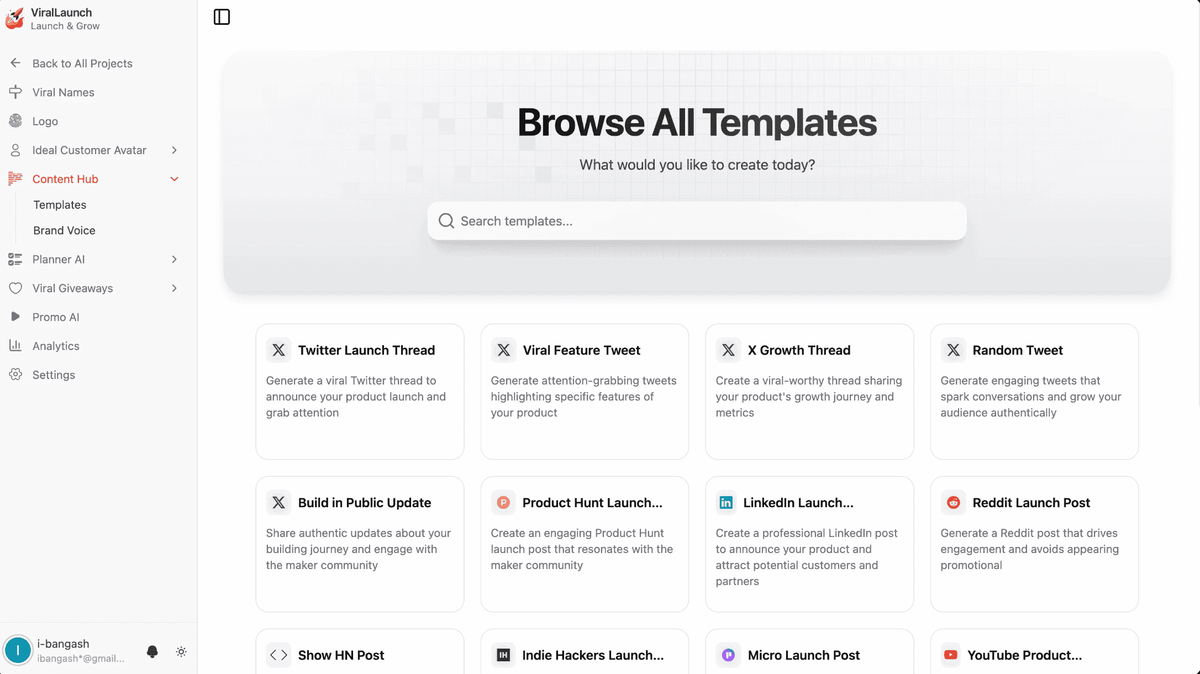
Viral Launch differentiates itself by focusing specifically on the product launch phase — the critical window when a new listing needs to build sales velocity and keyword ranking momentum quickly. Its Market Intelligence tool is particularly strong for pre-launch validation.
Key features for marketers:
- Market Intelligence: Demand forecasting with confidence scores for product viability
- Competitor Intelligence: Real-time tracking of competitor keyword rankings and listing changes
- Keyword Research: Search volume trends with seasonality data
- Listing Analyzer: Scores your listing against top competitors and identifies optimization gaps
- Launch Service: Managed launch campaigns to accelerate initial sales velocity (available as an add-on)
Pricing: Plans from $69/month (Essentials) to $199/month (Pro Plus). Annual billing available.
Best for:
- Marketers planning a new product launch who need demand forecasting before committing to inventory
- Sellers who want competitor keyword tracking with real-time alerts
- Brand managers running multiple simultaneous product launches
5. AMZScout — Best Budget-Friendly Option for Amazon Product Analysis
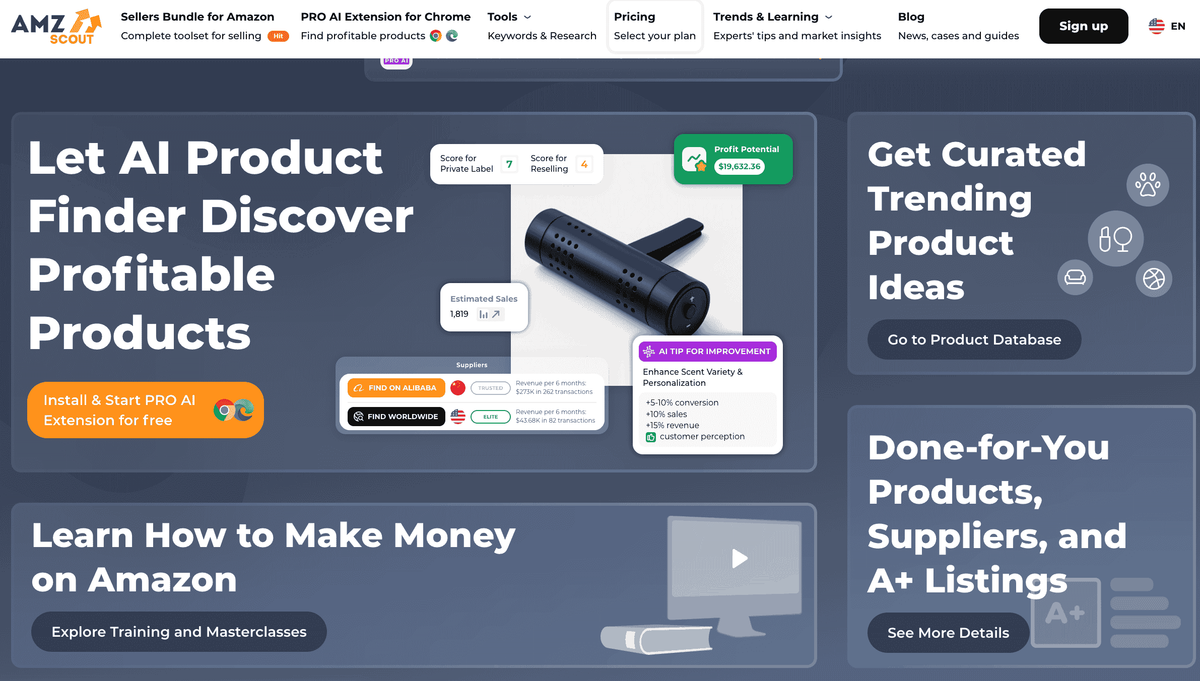
AMZScout offers a solid set of product research and keyword tools at a price point significantly lower than Helium 10 or Jungle Scout. It covers the core use cases — product database search, sales estimation, keyword research, and a Chrome extension — without the premium pricing of the market leaders.
Key features for marketers:
- Product Database: Filter by sales, revenue, reviews, and competition score
- PRO Extension: Real-time product analysis overlay on Amazon search results
- Keyword Tracker: Monitor keyword ranking positions for your listings
- Amazon Dropshipping & Arbitrage Tool: Specialized filters for non-private-label business models
- Stock Stats: Inventory level tracking for competitor products
Pricing: From approximately $30–$50/month depending on plan. Lifetime access options available.
Best for:
- Budget-conscious marketers who need core research functionality without enterprise pricing
- Sellers testing the Amazon channel before committing to a premium tool subscription
- Marketers focused on arbitrage or dropshipping rather than private label
6. DataHawk — Best for Enterprise Brands and Agencies
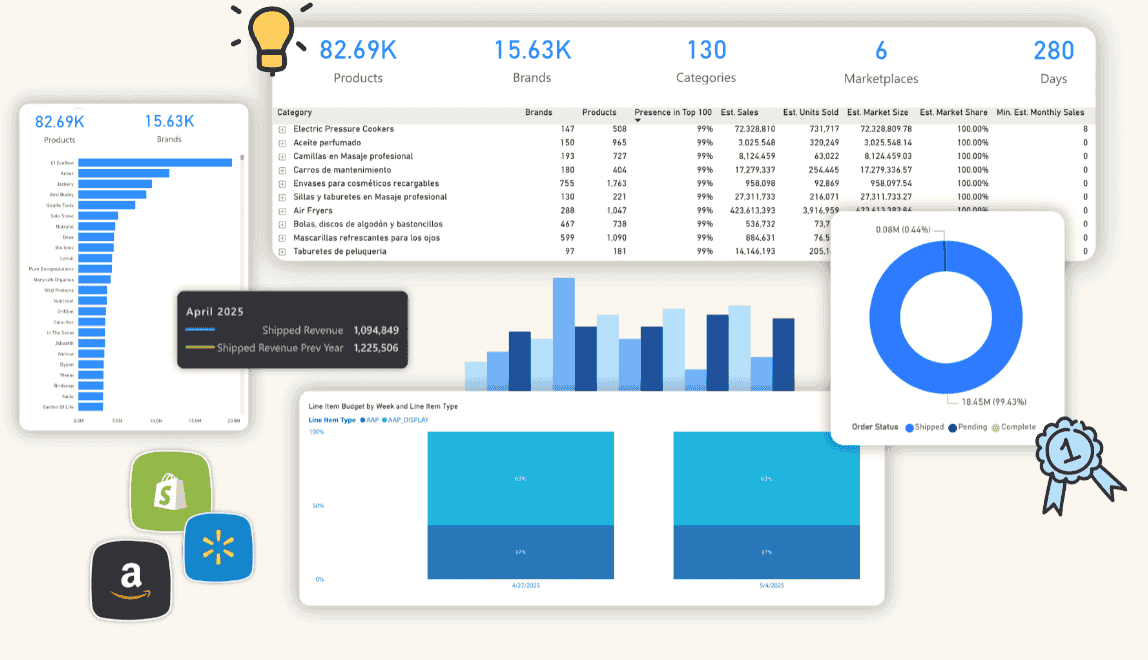
DataHawk is built for larger organizations that need robust analytics, custom reporting, and multi-marketplace tracking. Where tools like Helium 10 are optimized for individual sellers, DataHawk is designed for brand teams and agencies managing complex Amazon portfolios.
Key features for marketers:
- SEO & Keyword Monitoring: Track keyword rankings across multiple ASINs and marketplaces simultaneously
- Market Analytics: Category-level demand analysis and market share tracking
- Advertising Analytics: Deep PPC performance data with attribution modeling
- Custom Dashboards: Build reporting views tailored to specific KPIs and stakeholder needs
- API Access: Integrate Amazon data directly into your existing BI tools
Pricing: Custom pricing; typically $100+/month depending on portfolio size and features required.
Best for:
- Marketing agencies managing Amazon accounts for multiple brand clients
- Enterprise brands that need multi-marketplace tracking (US, EU, JP) in a single platform
- Teams that require custom reporting and API integration with existing analytics infrastructure
Amazon Market Research Tool Comparison Table
Tool | Primary Strength | Free Tier | Starting Price | Best For |
Helium 10 | All-in-one suite | ✅ Limited | ~$39/mo |
What Is the Best Free Amazon Market Research Tool?
If budget is a constraint, several tools offer meaningful free functionality:
- Helium 10 Free: Includes limited searches across most tools — enough to validate 1–2 product ideas per day
- Keepa Free: Provides basic price history charts without a subscription — sufficient for quick validation checks
Warning: Free tiers are intentionally limited. For any serious product research decision — especially before committing to inventory — invest in at least one paid tool. The cost of a monthly subscription ($30–$50) is negligible compared to the risk of sourcing a product with insufficient demand.
Where Does AllyHub Fit in an Amazon Market Research Workflow?
AllyHub is not meant to replace Helium 10, Jungle Scout, or Keepa for structured Amazon market research. Its best role is helping marketers automate the repetitive competitive intelligence work that happens after the first product analysis is done.
Standard Amazon research tools are good at product databases, price history tracking, keyword research, rank tracking, and listing analysis. But marketers still spend hours checking competitor ASINs, reading reviews, copying product data into spreadsheets, and turning scattered findings into client-ready reports.
With AllyHub, marketers can build repeatable AI workflows for:
- Amazon review sentiment analysis: identify recurring complaints, feature requests, and buyer language across competitor products.
- Competitor listing monitoring: track product titles, bullets, images, prices, and positioning changes.
- Bulk Amazon product data extraction: collect product metadata, review snippets, pricing signals, and competitor information across categories.
- Recurring market research reports: turn Amazon data and external signals into structured reports for clients or internal teams.
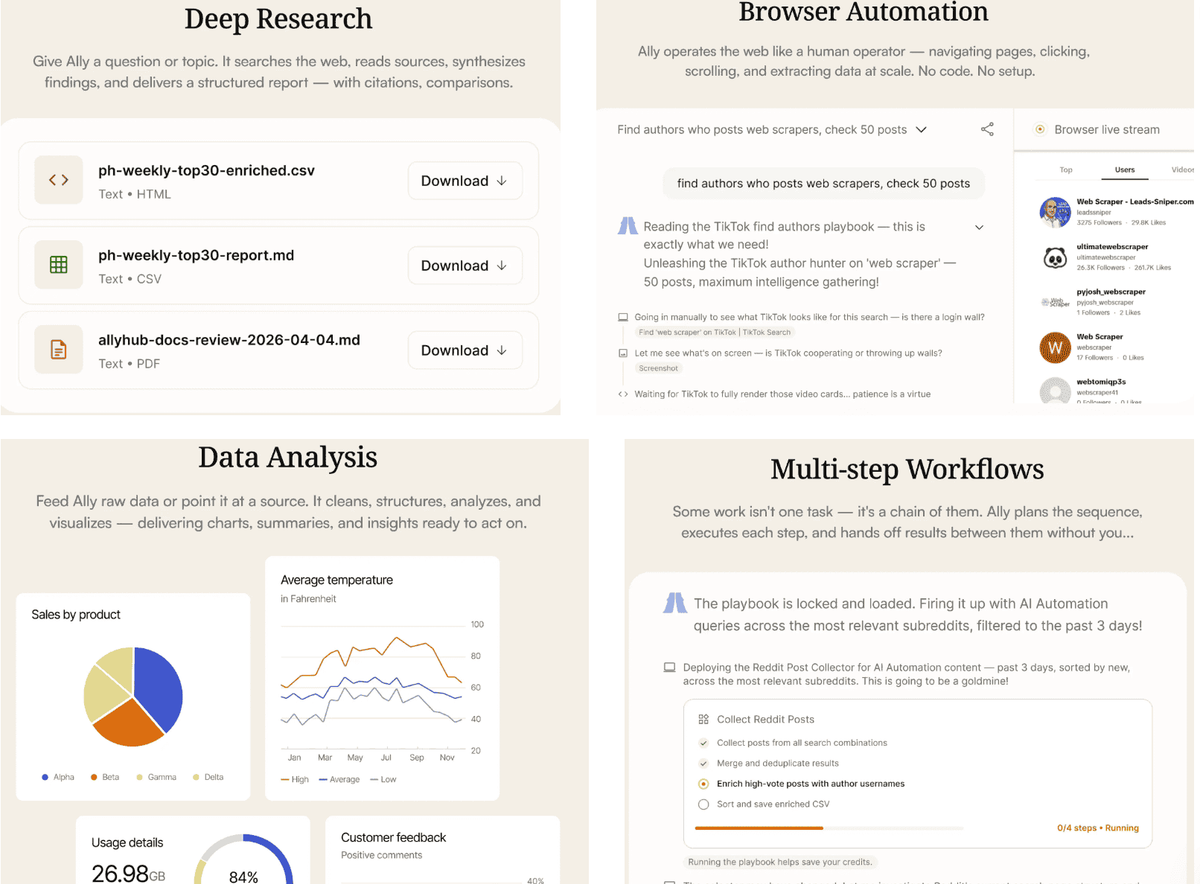
For marketers, the value is not “another Amazon rank tracking tool.” The value is reducing the manual research work that comes after the first product, keyword, or pricing analysis.
Frequently Asked Questions
Are Amazon market research tools actually worth paying for?
Yes, if you are comparing real product opportunities, planning inventory, or managing client research. For early idea browsing, free tools like Product Opportunity Explorer, Google Trends, and Keepa’s free charts may be enough.
Why do Helium 10 and Jungle Scout show different sales estimates?
They use different estimation models, marketplace signals, and historical data, so their numbers will not always match. Treat sales estimates as directional signals and cross-check them with Keepa history, review velocity, pricing movement, and manual competitor analysis.
How do I know if a market research tool is giving me outdated data?
Compare the tool’s recommendation with live marketplace signals: recent reviews, current pricing, ad density, competitor changes, and category saturation. If the dashboard looks positive but the live market has cooled, trust the current marketplace evidence first.
Can these tools work for every Amazon marketplace?
Not equally. Many tools have stronger data coverage for Amazon US, while smaller marketplaces may have weaker estimates, fewer features, or limited keyword data.
How can marketers research competitors beyond standard Amazon tools?
If the research becomes repetitive across many ASINs or clients, use AllyHub to turn competitor checks and review analysis into scheduled workflows instead of doing them manually every week.