Every Amazon seller knows the daily routine: checking your product details and obsessing over that little number. But if you’re managing an active brand, you’ve probably noticed the anomalies. Your sales stay flat, but your rank plummets. Or you hit a record sales day, only to watch your rank drop because of a competitor's flash sale.
Understanding the true Amazon sales rank meaning isn't about memorizing definitions—it's about knowing how to filter out the noise. Let’s break down why this "real-time speedometer" is often a vanity metric, and how experienced sellers actually read the data.
Key Takeaways
- BSR measures sales velocity, not lifetime sales: Amazon updates your rank hourly based on recent sales pace — think speedometer, not odometer.
- A lower number is always better: A product at #10 is selling significantly faster than one at #10,000 in the same category.
- Category context is everything: A #5,000 rank in Home & Kitchen means strong daily sales, while #5,000 in a niche industrial category might mean one sale a week.
- BSR ≠ organic search rank: A great BSR doesn't guarantee page-one keyword visibility — these are two entirely separate systems.
- Practical benchmarks exist: For most major categories, staying under the top 5% of your category means your product is healthy and moving.
- Consistency beats spikes: A steady daily sales rhythm protects your BSR far better than occasional bursts followed by dry spells.
What Does Your Amazon Sales Rank Actually Mean?
To reiterate, an Amazon Best Sellers Rank (BSR) is a metric that reflects the popularity of a product within its specific category and subcategories on Amazon. But for established brands, looking at this number requires a serious reality check.
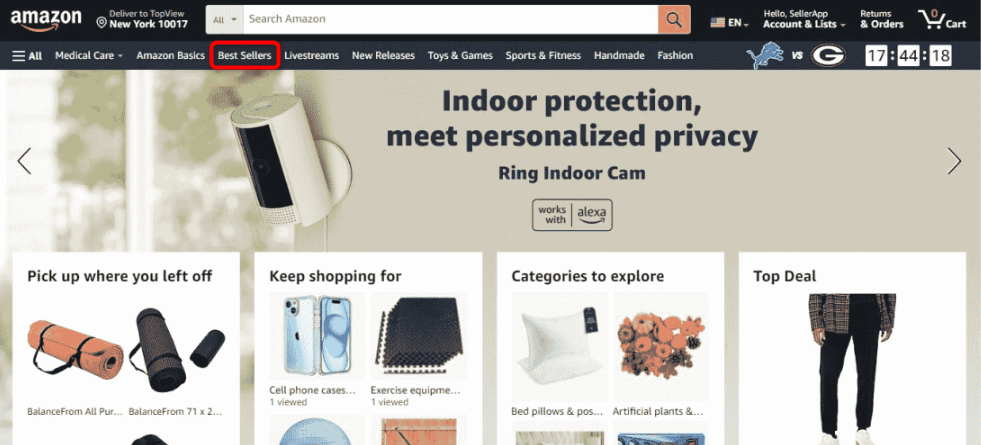
It’s a Speedometer in a State of "Controlled Chaos"
Don't mistake your Sales Rank for a lifetime achievement award. Amazon explicitly states that BSR updates hourly to reflect both recent and historical sales.
Think of it as a speedometer (how fast you are driving right now), not an odometer (how many total miles you’ve driven). A legacy listing with 50,000 lifetime sales that slows down to 3 orders today will be instantly crushed in rank by a brand-new product moving 20 units daily. This hourly "controlled chaos" is normal platform behavior—obsessing over hour-to-hour fluctuations is a waste of time.
The Relativity Trap: Your Rank is Tethered to Your Neighbors and the Macro Market
BSR is entirely relative, which introduces a double layer of unpredictability:
- The Competitor Shift: Selling 15 units on a normal Tuesday might push your rank to #3,500. But on Prime Day, when competitors are running aggressive deals, those same 15 units could drop you to #4,800 because everyone else accelerated faster.
- The Macro Shift: A rank of #5,000 in a normal Q1 means something entirely different from a rank of #5,000 during a massive economic spike or holiday peak. The underlying revenue changes drastically. There is no fixed formula where "X sales per day always equals rank Y."
Ignore the Main Category: The Hidden Strategy of Multiple Rankings
Boasting a #4,800 rank in a massive main category like Home & Kitchen is an empty vanity metric. It tells you nothing actionable because you cannot realistically benchmark your specific product against millions of unrelated listings.
Because Amazon’s system is category-specific, a single ASIN simultaneously holds multiple rankings across its assigned subcategories. The main category is pure noise; the subcategory is your actual battlefield. Ranking #4,800 overall doesn't matter—ranking #23 in Coffee Mugs is where you lock eyes with your real competitors and capture the Best Seller badge.
Amazon BSR vs. Organic Search Ranking
This is the number one point of confusion for new Amazon operators — and it's worth clearing up before we go any further.
Amazon BSR and organic search ranking are two entirely different systems. They operate independently, measure different things, and live in different places on the page. Here's the full comparison:
Feature | Amazon BSR (Sales Rank) | Organic Search Rank (SEO Rank) |
Primary Driver | Pure sales velocity and order volume — how many units sold, and how recently | Keyword relevance, Click-Through Rate (CTR), and conversion history |
Update Frequency | Refreshes roughly every 1–2 hours — highly volatile |
Do They Influence Each Other?
Indirectly, yes. While BSR is not a direct ranking factor in Amazon's search algorithm (A10/COSMO), the sales velocity that drives a strong BSR also signals to Amazon that a product converts well. Products with high and sustained sales velocity tend to receive better organic search placements — not because of their BSR number, but because the underlying sales data tells Amazon's algorithm that customers want this product.
What Is a Good Amazon Sales Rank?
There is no universal "good" BSR number, but there are practical benchmarks that apply across most major categories. As a general rule, staying within the top 1% to 3% of your main category means your product is healthy, active, and competitive.
For a massive category like Home & Kitchen with millions of listed products, a rank under 10,000 puts you solidly in the top tier. For a smaller category like Toys & Games, the same relative performance might mean staying under 6,000.
The table below provides realistic benchmarks for five major Amazon categories. Use this as a quick reference when evaluating your own products or scouting competitors.
Main Category | Amazing Rank (Top 1%) | Decent/Healthy (Top 5%) | Slow/Needs Help |
Home & Kitchen | Under 10,000 | 10,000 – 50,000 | Over 80,000 |
Beauty & Personal Care |
⚠️ Warning: Don't chase BSR at the expense of profit. A common trap is lowering prices to boost sales velocity and improve rank, only to find that the improved rank doesn't compensate for the lost margin. A healthy BSR supports your business — it isn't the business itself.
How to Use Competitors' Sales Rank for Product Research
Beware of "One-Hit Wonders"
A low competitor BSR can be highly deceptive. Sudden rank drops are usually artificial illusions triggered by flash sales, lightning deals, or deep coupon discounts (e.g., spiking to #500 during an 80%-off promo before crashing back to #25,000).
The Fix: Never source products based on a single snapshot. Use tools like Keepa to analyze long-term, 90-day historical trends to ensure the sales velocity is sustainable, not seasonal or promo-driven.
Estimating Sales (And the Sanity Check)
While third-party BSR estimators provide reliable relative scales for market size, Amazon’s actual algorithm remains proprietary.
The Fix: Always cross-reference BSR-based sales estimates with review velocity. If a tool claims a listing sells 500 units a month, but it has only gained 2 reviews in 30 days, treat that data with skepticism.
5 Practical Ways to Improve and Stabilize Your Sales Rank
Pick the Right Subcategory (Browse Node)
This is one of the most underutilized strategies on Amazon — and it's completely free. When you create a listing, you choose which categories and subcategories your product appears in (called browse nodes). Many sellers default to the broadest, most obvious category, but that's often a mistake.
A lower number of daily sales can earn you the orange "Best Seller" badge in a small, tightly-defined subcategory than in a massive one. For example: selling 15 units per day of a garlic press in the "Home & Kitchen" main category puts you nowhere near the top. But in the subcategory "Garlic Presses," those same 15 daily sales might put you at #1 and earn you the badge.
Use Amazon's Browse Tree Guide (BTG) to identify the most specific, relevant subcategory for your product. The more precise your browse node, the easier it is to dominate.
Keep Your PPC Ads Running Steadily
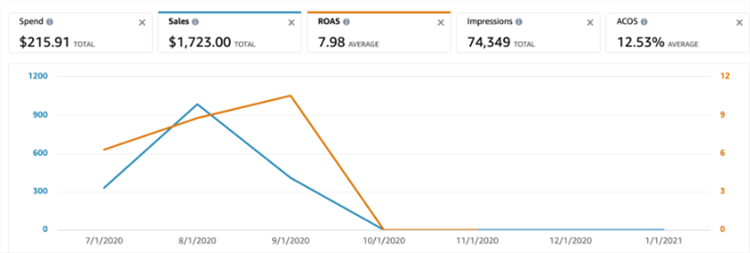
Amazon's BSR algorithm rewards consistency. A slow, steady drip of PPC-driven sales keeps your sales velocity stable, which keeps your BSR from swinging wildly. The pattern to avoid: running ads aggressively for two weeks, seeing a great BSR, then pausing ads to "save money" — and watching your rank collapse.
When you pause ads, your sales drop. When sales drop, your BSR rises (worsens). When your BSR worsens, your organic visibility can suffer — and recovering lost organic rank is significantly more expensive than maintaining it. A modest but consistent PPC budget is almost always better than a feast-or-famine approach.
Price Visually with Coupons
Amazon shoppers are conditioned to respond to visual cues. That green "Coupon" badge on your listing improves click-through rate and conversion rate — more browsers become buyers, and more buyers mean faster sales velocity, which directly improves your BSR.
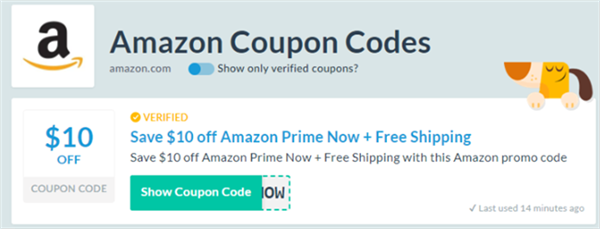
A product priced at $24.99 with a green 10% coupon badge often outperforms the same product listed at a flat $22.49, even though the final price is similar. The coupon badge acts as a psychological trigger. And because BSR responds to purchase velocity, anything that lifts your conversion rate feeds directly into a better rank.
Drive a Little Outside Traffic
A purchase driven by an external TikTok video counts is also good for your ranking performance. External traffic is a powerful BSR lever because it adds sales volume that your competitors aren't getting from the same sources.
A few practical channels:
- TikTok or Instagram Reels: A short product demo can drive dozens or hundreds of clicks.
- Email marketing: If you have a customer list, a dedicated Amazon product link drives high-intent traffic.
- Facebook or Google ads: Sending external traffic directly to your Amazon listing (not to your own site) adds sales volume that directly improves BSR.
Amazon Brand Registry sellers can also use Amazon Attribution to track external traffic performance and earn a 10% Brand Referral Bonus on eligible sales — effectively getting paid to drive your own traffic.
Never, Ever Run Out of Stock
Running out of stock is the ultimate BSR killer. When inventory hits zero, your sales history effectively "freezes," and your rank plummets. It takes twice the ad spend and effort to claw back your old position as it did to build it the first time. Maintain a strict 4-to-6-week inventory buffer.
Practical stockout mitigation:
- Set reorder triggers when inventory drops to 4–6 weeks of cover (not 2 weeks — that's cutting it too close).
- If a stockout is unavoidable, reduce PPC spend gradually (don't cut it to zero) and close the listing when you have just a few units left. This signals to Amazon that the pause is voluntary, which may soften the ranking penalty.
- For extended stockouts, consider slightly raising your price while offering an equivalent-value coupon to maintain some sales velocity before you go dark.
Beyond Manual Tracking: Automating Your Amazon Research
Once understanding what BSR means is, you can monitor competitor ranks, track market shifts, extract product data across dozens of ASINs, and turn that information into decisions.
If you're using traditional automation tools, you are paying fixed costs for every task, and the tool never gets smarter. That is a waste of intelligence.
Enter AllyHub, your deeply browser-native AI autopilot. AllyHub doesn’t just give you advice; it actually executes the heavy lifting for you, and more importantly, it compounds with every task.
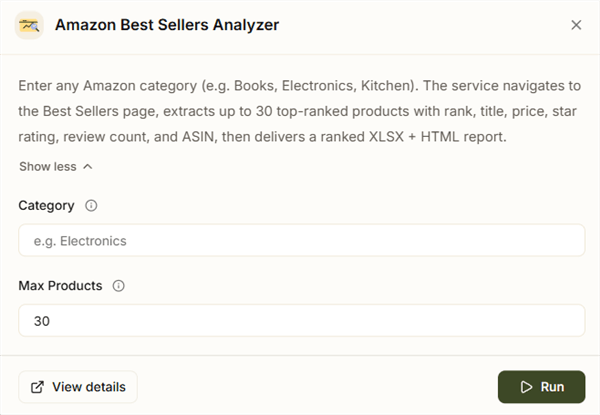
Instead of manually checking listings every day, you can deploy AllyHub to:
- Execute Directly: Automatically navigate Amazon category pages, extract competitor BSR data, and pull review sentiments directly through your browser.
- Create One-Click Services: Once you define your ideal competitor tracking workflow, package it into a reusable Service card.
- Maximize ROTI (Return on Token Investment): The next time you need to audit a new market or track a flash sale, your AllyHub never starts from scratch again. You trigger the Service with one click. Every token you spend builds a smarter asset for your team.
A great BSR requires consistent execution. Stop burning time on repetitive data gathering. Meet AllyHub — the AI that compounds. Install the Chrome extension, hand off the execution to your autopilot, and keep your time for the decisions that truly matter.
Quick Answers to Common BSR Questions
Does getting bad reviews hurt my Sales Rank?
Not directly. The BSR algorithm only tracks order volume, ignoring reviews and star ratings. However, negative reviews tank your conversion rate, leading to fewer sales and a decaying rank over time.
Do canceled orders count toward my BSR?
When a customer places an order, your BSR typically improves almost instantly. If they cancel shortly after, Amazon adjusts the rank accordingly. The initial bump happens on purchase intent, but cancellations are eventually accounted for.
Can a product have multiple BSR numbers?
Yes. A single ASIN can rank across multiple subcategories simultaneously (e.g., #1,200 in Sports & Outdoors but #12 in Yoga Mats). Subcategory rankings are your true competitive battlefields.
Is a better BSR always more important than profit?
No. A great BSR with negative margins is a failing business. A "decent" BSR with healthy margins is often a great business. BSR is a tool for understanding your market position — it should serve your profitability goals, not replace them.
How long does it take to recover BSR after a stockout?
It varies by category and competition level, but a general rule: expect recovery to take roughly twice as long as the stockout lasted. A one-week stockout might take two weeks to recover from. A month-long stockout could take two months. This is why inventory planning is one of the most important BSR protection strategies.
Can external traffic alone sustain a good BSR?
Yes — Amazon doesn't differentiate between sales sources for BSR purposes. If you can drive consistent sales from TikTok, Google Ads, email campaigns, or influencer partnerships, those sales contribute to BSR exactly the same as organic Amazon search sales. Many successful sellers build their BSR primarily through external traffic and then use that rank to capture organic visibility.
Conclusion: Look at the Big Picture
Understanding the true Amazon sales rank meaning allows you to read market demand and evaluate competitors honestly. But never forget: BSR is a vanity metric if you aren't making a profit.
Stop stressing over hourly fluctuations, and never sacrifice your margins just to chase a lower number. What actually matters is long-term consistency, healthy margins, and macro trends over months—not hours.
A stable, profitable business built on sustainable sales velocity is infinitely better than a temporary #1 spot achieved through bleeding capital. Focus on the core fundamentals of product quality, steady traffic, and inventory management. Do that, and the rank will follow.