You spend days planning a YouTube video—researching keywords, scripting, editing, and finally hitting publish. Then a competitor uploads a similar video a few days later and somehow outranks you in search, pulls more views, and sparks far more engagement.
Frustrating? Definitely. But in most cases, fast-growing channels are not simply “winning the algorithm.” They usually have a better understanding of what audiences already care about, what formats are working, and where content gaps still exist.
That’s exactly why YouTube competitor analysis matters. Done right, it helps marketers stop guessing and start building videos based on proven audience demand.
Key Takeaways
- Competitive benchmarking: Measuring competitor publishing frequency, engagement trends, and growth velocity helps set realistic performance targets.
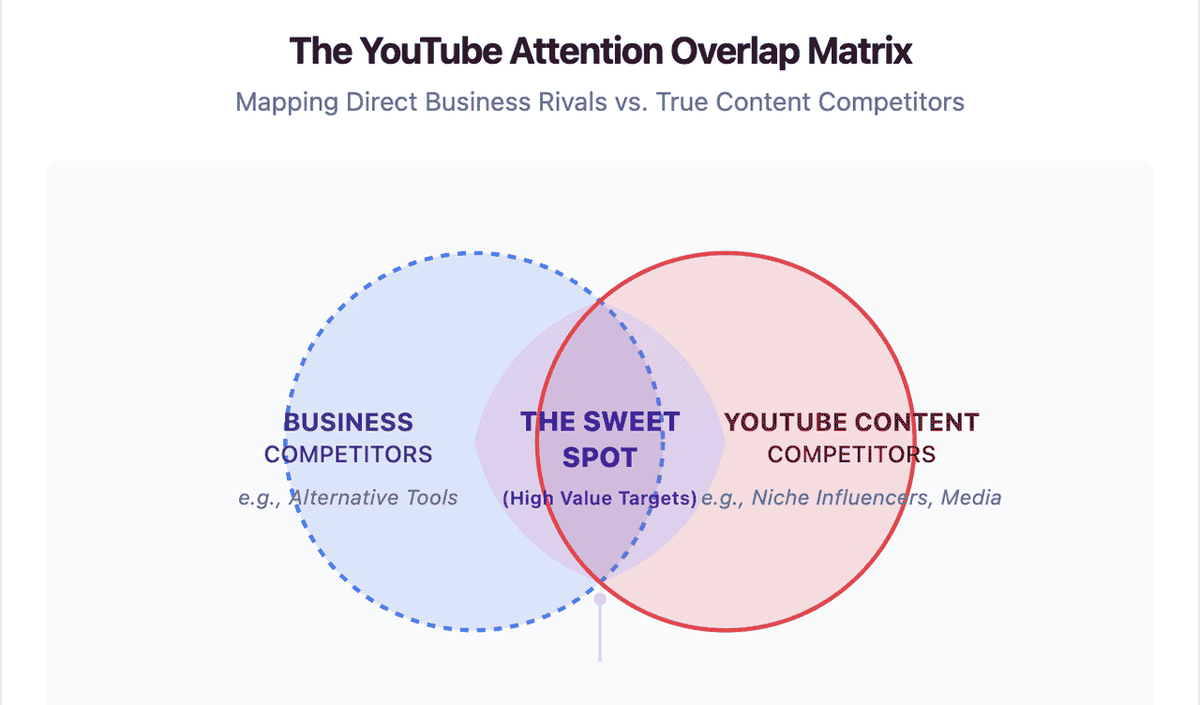
- True competitors differ: Your actual YouTube competitors are channels competing for the same viewer attention and search intent, not necessarily your direct business rivals.
- Comment sections are gold: Monitoring competitor YouTube comments reveals unfiltered audience frustrations and buying intent that no analytics dashboard can show you.
- Free research works: You can run an effective YouTube competitor analysis using YouTube Studio, Social Blade, and manual comment monitoring before paying for tools.
- Marketer's starting point: Begin by benchmarking the last 20 videos of 3–5 direct competitors to establish a realistic performance baseline before planning your next content calendar.
Why YouTube Competitor Analysis Matters for Marketers
On YouTube, content quality matters—but understanding what audiences already respond to matters just as much. Many fast-growing channels outperform larger competitors because they publish videos aligned with proven demand instead of relying on guesswork.
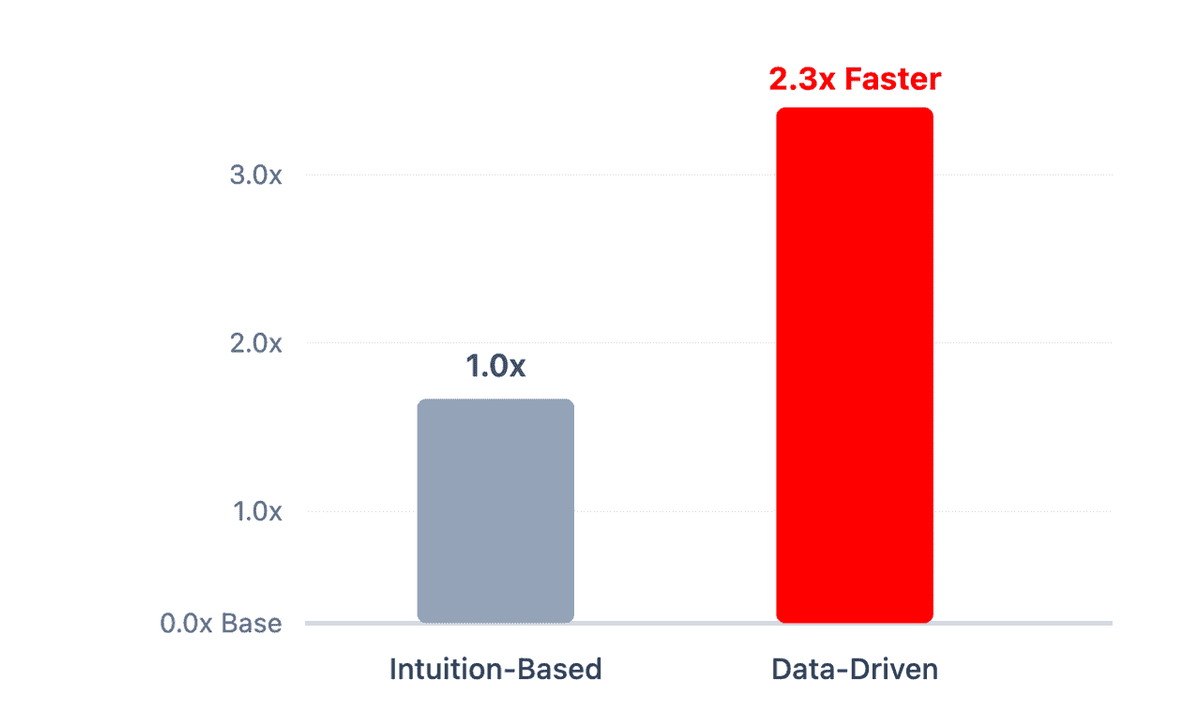
According to Sprout Social's guide on competitive analysis, brands that use competitive intelligence frameworks scale their audience significantly faster than those relying on intuition alone.
For marketing teams specifically, analyzing your YouTube competitors serves three strategic functions:
- Content strategy validation — Confirm which topics, hook angles, and formats are already resonating before you invest expensive video production time.
- Audience intelligence — Understand what your shared buyers are complaining about and requesting directly from competitor comment sections.
- Positioning clarity — Understand how competitors frame topics and audience problems.
Note: YouTube competitor analysis is not about copying what works. It's about understanding the landscape well enough to find the white space — the topics, formats, and audience needs that no one in your industry is serving well yet.
Step 1: Identify Your True YouTube Competitors
The first step in competitor YouTube channel analysis is identifying who you're actually competing with for attention—not just business competitors.
Your YouTube competitors are channels that rank for your target keywords and appear in the "suggested videos" sidebar when your brand's videos play.
How to build your competitor list:
- Search primary keywords: Type your 3–5 core industry terms into YouTube (e.g., "B2B lead generation tutorial") and note which channels consistently hold the top 5 spots.
- Check audience overlap: Open YouTube Studio → Analytics → Audience → "Other channels your audience watches" to see exactly who is competing for your viewers' attention.
- Analyze suggested videos: Open your own top-performing videos in an incognito window and list the channels that YouTube recommends in the right-hand sidebar.
- Cross-reference Google Search: Search your primary keywords on Google; YouTube videos that rank in standard Google Search results are high-priority competitors.
Step 2: Benchmark Competitor Performance Metrics
Once you have your competitor list, the next step in your competitor YouTube channel analysis is establishing performance baselines. This tells your marketing team what "good" looks like in your specific niche.
How to benchmark manually:
- Sort by most popular: Open the competitor's channel, click "Videos," and sort by "Popular" to record the view count of their top 10 videos (reveals highest-demand topics).
- Calculate recent averages: Sort by "Latest" and calculate the average view count for their last 20 videos. This is their true current baseline.
- Calculate publishing cadence: Note the upload dates of their last 10 videos to map out how often they publish (weekly, bi-weekly, erratic).
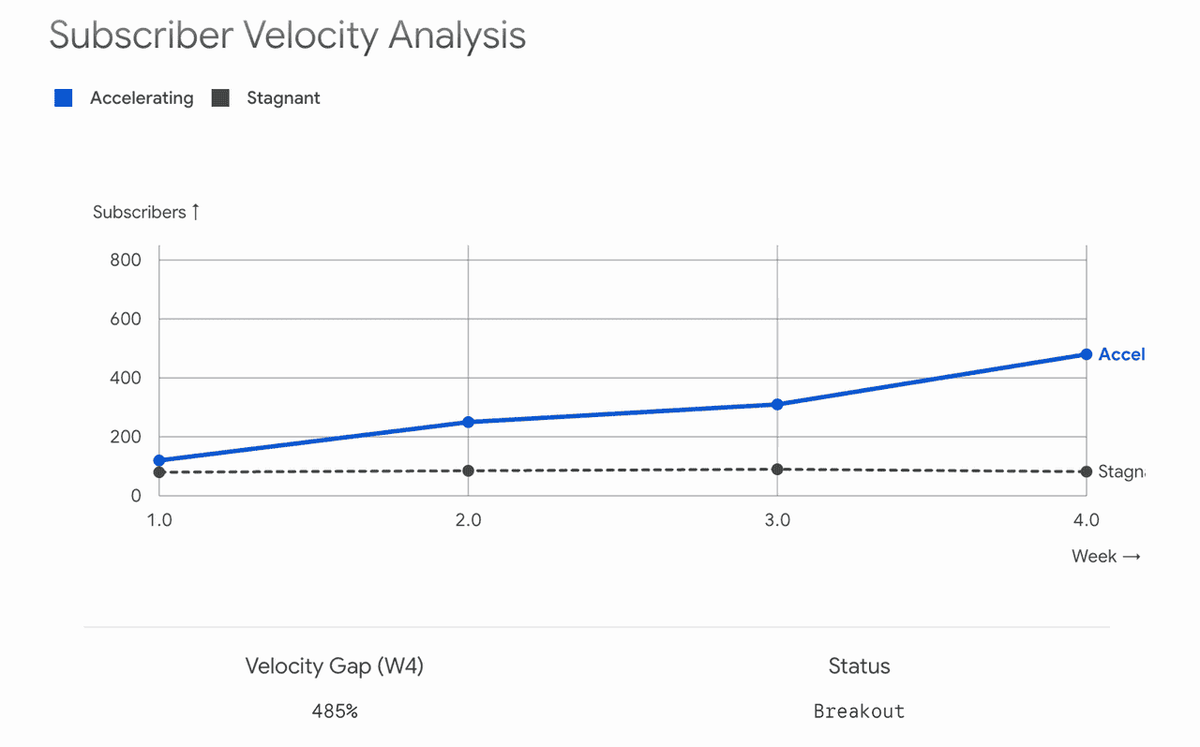
- Track subscriber momentum: Visit Social Blade's tracking tool and input the channel name to view their 30-day subscriber growth trajectory.
Step 3: Analyze Content Formats and Winning Topics
Performance metrics tell you how well a channel is doing; content strategy analysis tells you *why*. You need to move from numbers to patterns.
How to map competitor content formats:
- Analyze thumbnail patterns: Look at their recent 20 videos. Do they use human faces? High-contrast text? Consistent brand colors? Document what visually unifies their highest-CTR videos.
- Deconstruct title structures: Identify their naming conventions. Are they using listicles ("5 Ways to..."), curiosity gaps ("Why I stopped using..."), or strict SEO formats ("How to do X in 2026")?
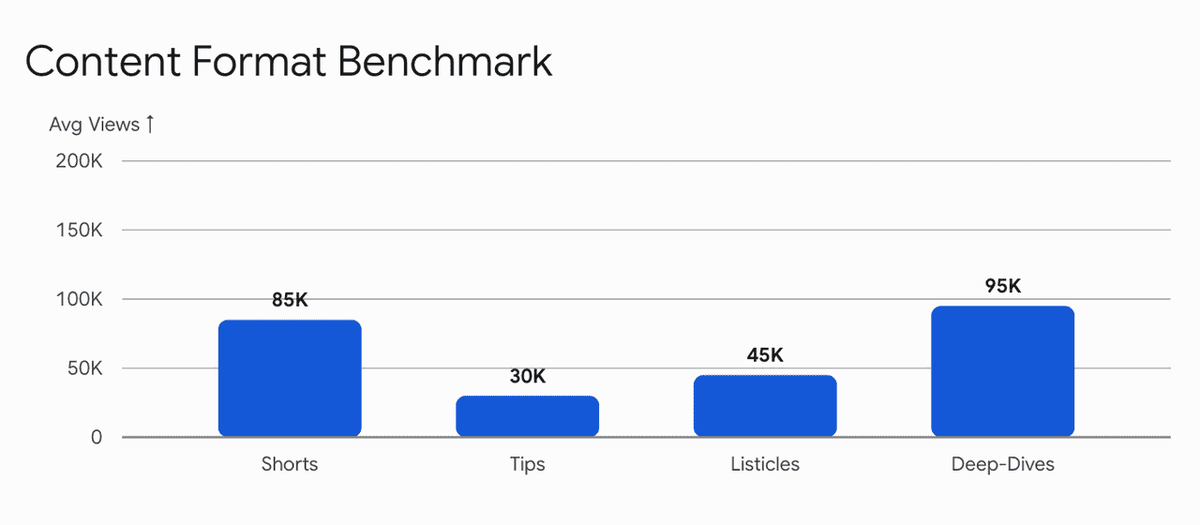
- Map video lengths: Compare the duration of their highest-performing videos. If their 20-minute deep dives consistently outperform their 5-minute quick tips, that signals your audience prefers comprehensive guides.
Step 4: Monitor Competitor YouTube Comments
This is the most underused step in competitor analysis — and the one that delivers the highest ROI for marketers. Comment sections are where your shared audience tells you exactly what they want, what they're frustrated by, and what they're willing to buy.
How to monitor competitor YouTube comments systematically:
- Target high-signal videos: Open the competitor's top 5 highest-viewed videos and their 5 most recent uploads.
- Filter for top comments: Sort the comment section by "Top Comments" (the most upvoted responses), as these represent the collective consensus of the audience.
- Extract content opportunities: Look for comments like "I wish you covered X" or "Does this work for [specific use case]?" — every one of these is a ready-made brief for your next video.
- Mine pain point vocabulary: Record the exact terminology the audience uses to describe their problems. Use these exact phrases in your own H2s and video hooks.
- Identify buying intent: Look for questions about tool recommendations or integrations (e.g., "Is there a software that automates this step?").
Comment Signal Type | Real Example Quote | Your Content Action |
Content Gap | “Great video, but how does this apply to B2B?” | Create a dedicated B2B-focused version of this topic. |
Pain Point Vocabulary | “I always get stuck configuring DNS settings.” |
Step 5: Audit Competitor SEO Tactics
Understanding how competitors get found via search is critical. YouTube SEO determines whether a video has evergreen shelf life.
How to audit their video SEO:
- Check primary keyword placement: Note whether their core keyword appears in the first 50 characters of the title.
- Inspect description optimization: Click "Show more" on their videos. Do they include timestamps? (Timestamps create video chapters, which Google uses for Search Featured Snippets).
- Review outbound link strategy: Check their top-of-description CTAs. Are they driving traffic to a lead magnet, a newsletter, or a product trial?
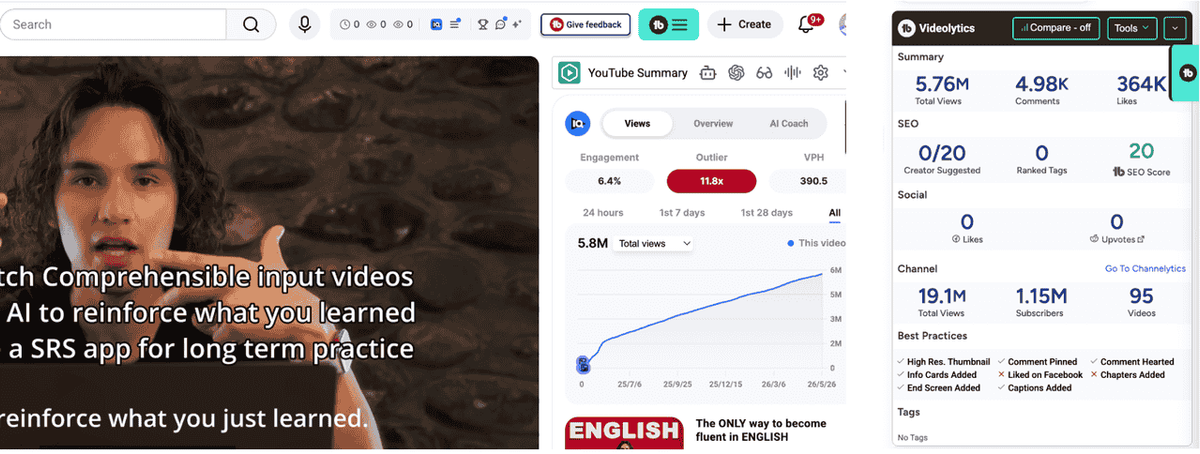
- Examine backend tags: Use the free tier of VidIQ or TubeBuddy to reveal the hidden video tags your competitors are using to group their content.
Step 6: Turn Insights Into a Content Gap Strategy
One pattern appears repeatedly when reviewing fast-growing YouTube channels: they rarely win because of a single viral video.
Most growth comes from repeatedly publishing content around topics that competitors either ignore or only address superficially. Small content advantages compound over time, making competitive analysis more valuable than chasing short-term trends.
The final step is turning all your research into a strategic content calendar. You must move from "what are they doing?" to "what should we do differently?"
How to build your differentiation map:
- Identify Table Stakes: List topics that 4–5 of your competitors have covered. You must create your own (better) version of these, as their absence signals you aren't a serious industry player.
- Isolate the White Space: Highlight topics missing from ALL competitors that you discovered while monitoring competitor YouTube comments in step 4.
- Find the Format Gap: If competitors only cover a topic in 30-minute podcast formats, test creating a concise, 5-minute highly-edited tutorial on the same subject.
- Draft the 90-Day Calendar: Prioritize the "White Space" topics derived from comment sections first, as these have proven audience demand but zero existing supply.
Category | Definition | Your Marketing Action | Priority Level |
Table Stakes | Topics covered by ALL top competitor channels. | Must cover. Absence signals you are not an authority. | Medium |
Competitive Advantage |
Beyond Manual YouTube Competitor Analysis: How AllyHub Automates Research
Manual competitor research works—but it becomes difficult to maintain once you’re tracking multiple channels consistently.
After a few weeks, most marketing teams run into the same problem: competitor videos pile up, comments become impossible to review manually, and insights end up scattered across spreadsheets.
This is where AllyHub becomes useful. Instead of manually collecting data every month, marketers can automate repetitive research tasks such as:
- Tracking newly published competitor videos
- Extracting YouTube subtitles for messaging analysis
- Monitoring recurring audience questions in competitor comments
- Identifying emerging keyword themes across channels
The value is not just speed—it’s consistency. Instead of restarting competitor research from scratch every quarter, marketing teams can continuously monitor shifts in audience demand and content opportunities.
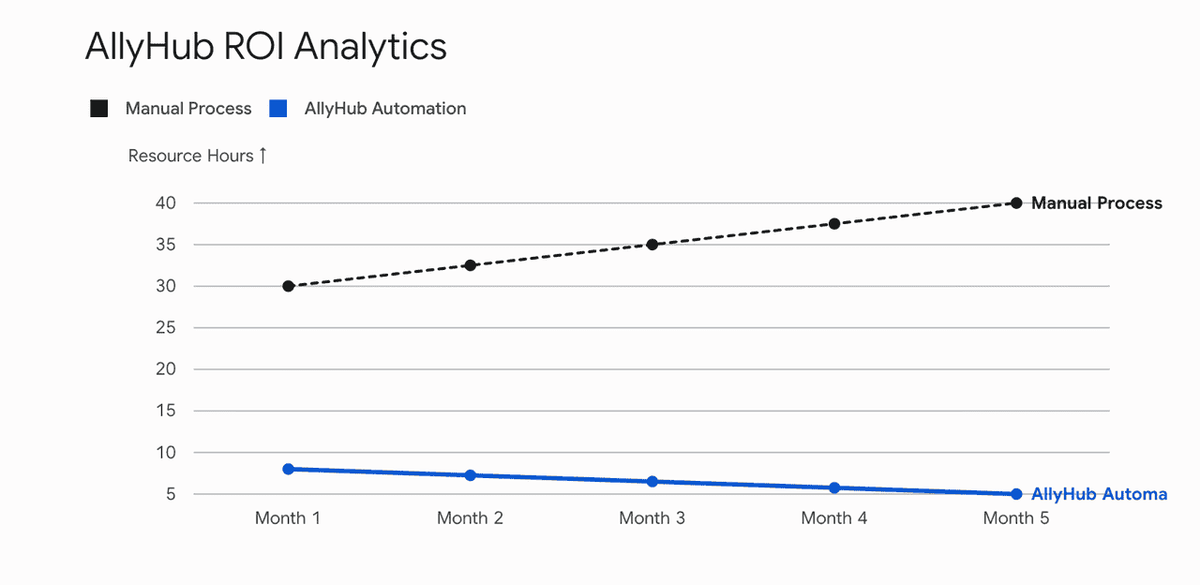
What this ROI-first automation looks like in practice:
- Automatically pull the last 20 videos from your top 5 competitors into a clean spreadsheet every month.
- Scrape and extract YouTube subtitles to analyze exactly what keywords competitors are saying on-camera.
- Aggregate thousands of competitor comments instantly to run keyword frequency analysis on audience pain points.
The goal isn't just to save time; it's to guarantee consistency. When you automate the data extraction layer, your marketing team can spend their time actually building the content strategy that outpaces the competition.
Frequently Asked Questions
What is YouTube competitor analysis?
YouTube competitor analysis is the systematic process of evaluating rival channels in your niche to understand their content strategy, SEO tactics, and audience engagement. For marketers, it is the primary way to identify content format gaps and validate topic demand before investing in video production.
What metrics matter most when analyzing a YouTube channel?
Avoid looking at all-time viral outliers. The most actionable metrics are: average views per video across the last 20 uploads, 30-day subscriber growth trajectory, and upload frequency. These reveal a channel's current operational momentum.
How often should a marketing team run a competitor analysis?
A comprehensive audit (all 6 steps) should be conducted quarterly to inform the upcoming content calendar. However, a lightweight monthly check—reviewing their new uploads and scanning recent comments—is necessary to catch emerging trends early.
What is a competitor YouTube channel analysis?
A competitor YouTube channel analysis is the process of evaluating competing channels to understand their content strategy, audience engagement, publishing frequency, keyword targeting, and growth patterns. The goal is to identify opportunities that can improve your own channel performance.