Amazon’s private label business is small compared with its overall retail operation, but it can be a serious competitive force in specific categories such as apparel, household basics, grocery, baby products, and everyday essentials.
For digital marketers and e-commerce sellers, understanding how Amazon's own brands work helps know market competition and develop product strategies. And customers can get better shopping experience when you recognize these brands and know how does it work.
This guide covers what Amazon private label brands actually are, the best list of brands Amazon owns today, which ones are worth studying, and a step-by-step breakdown of how to launch your own private label business if interested. Let's dive in.
Key Takeaways
- Amazon private label brands are products manufactured by third parties but sold under Amazon-owned brand names — giving Amazon full control over pricing, margins, and positioning.
- Amazon Basics and Amazon Essentials remain two of the most visible Amazon private label brands, while Amazon Grocery, Mama Bear, Presto!, Solimo, and Wag are also important brands to study.
- Amazon private label represents a small share of Amazon’s overall retail business, but it can be much more influential in targeted categories such as apparel, grocery, household essentials, baby products, and commodity goods.
- Starting your own Amazon private label requires product research, a reliable manufacturer, a professional seller account, and an optimized listing — the full process is covered step-by-step below.
What Are Amazon Private Label Brands?
Amazon private label brands are products that Amazon sources from third-party manufacturers but sells under its own proprietary brand names. The products are designed, specified, and branded by Amazon — but the actual manufacturing is outsourced.
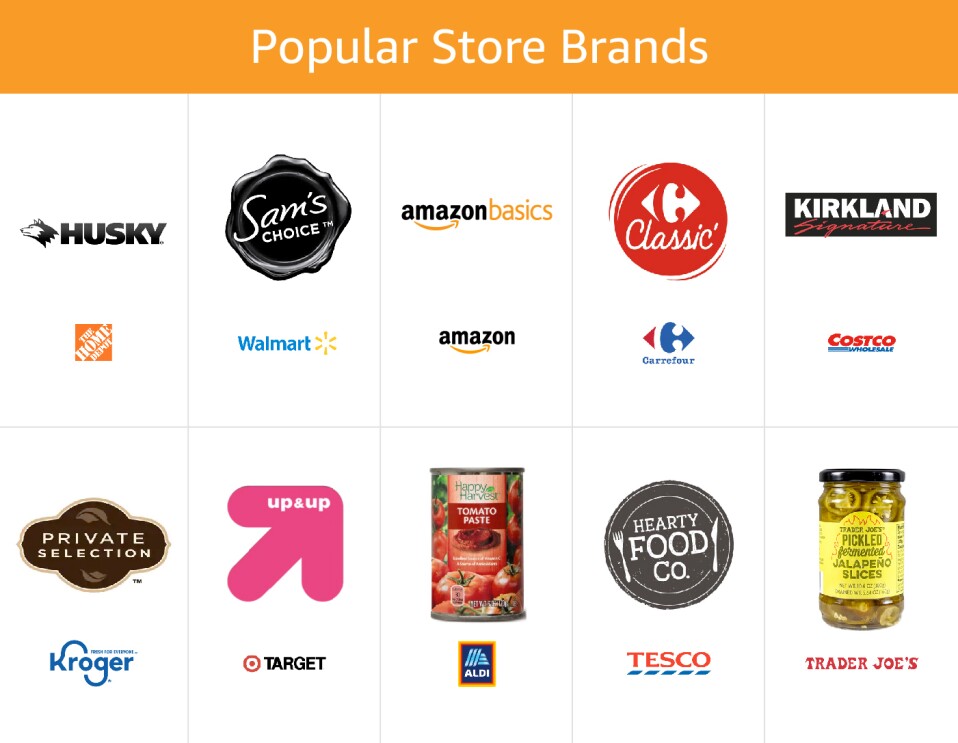
This is the same model used by major retailers like Costco (Kirkland Signature) and Target (Good & Gather). The retailer controls the brand identity, pricing, and shelf placement — while keeping manufacturing costs low by working directly with factories.
Amazon's private label strategy gives the company several structural advantages:
- Higher margins: By reducing reliance on outside brand owners, Amazon may capture more margin per unit.
- Data-informed product development: Amazon has broad marketplace visibility into demand, pricing, reviews, and category gaps.
- Pricing control: Amazon can position private label products as value alternatives to national brands.
- Marketplace visibility: Amazon’s dual role as both marketplace operator and retailer has drawn regulatory scrutiny, especially around whether platform design can favor Amazon’s own retail offers.
How Many Private Brands Does Amazon Have?
Amazon’s private label portfolio is actively evolving. At its peak, Amazon disclosed dozens of in-house brands and a large private-brand product catalog.
Since 2022–2023, Amazon has reduced many underperforming private labels, especially in apparel and furniture, while concentrating on stronger brands such as Amazon Basics, Amazon Essentials, Amazon Aware, and grocery-related labels.
As of 2026, Amazon operates approximately 30+ active private label brands, with the portfolio concentrated in:
Category | Key Brands |
Electronics & Household | AmazonBasics, Solimo, Presto! |
Apparel | Amazon Essentials, Goodthreads, Daily Ritual, Lark & Ro |
Food & Grocery | Happy Belly, Amazon Fresh, 365 Everyday Value |
Amazon Private Label Brands List: Key Brands to Know
Amazon’s private label portfolio changes over time, so it is more accurate to treat this as a seller-focused list of key brands to know rather than a complete, permanent list.
Electronics, Home & Everyday Essentials
Amazon Basics — Launched in 2009. Covers batteries, cables, office supplies, kitchen tools, and hundreds of everyday household items. It's the most recognized Amazon private label brand globally and the benchmark for the category.
Solimo — Household essentials including cleaning products, personal care, vitamins, and kitchen goods. Positioned as a value-first alternative to national brands.
Presto! — Focused on household consumables like paper towels, toilet paper, and trash bags. Competes directly with brands like Bounty and Glad.
Amazon Elements — Premium-positioned vitamins, supplements, and baby products. Differentiates from AmazonBasics with a focus on ingredient transparency and quality.
Apparel & Fashion
Amazon Essentials — The dominant Amazon apparel brand. Covers basics for men, women, kids, and babies: t-shirts, jeans, activewear, and everyday staples. This is Amazon's highest-volume apparel label.
Goodthreads — Men's and women's casual clothing with a slightly elevated aesthetic compared to Amazon Essentials. Think elevated basics: chinos, Oxford shirts, casual blazers.
Daily Ritual — Women's casual and athleisure wear. Focuses on comfort-first, everyday pieces.
Mae — Women's intimate apparel and loungewear.
Amazon Aware — Amazon's sustainable clothing line, featuring products made with recycled or organic materials.
Simple Joys by Carter's — Children's clothing in partnership with Carter's, one of the most recognized baby and kids' apparel brands in the US.
Food, Grocery & Beverage
Happy Belly — Packaged foods and pantry staples: nuts, trail mix, coffee, spices, and snacks. One of Amazon's most active grocery private labels.
Wickedly Prime — Premium snack foods and specialty grocery items. Positioned above Happy Belly in the quality tier.
365 Everyday Value — Whole Foods Market's private label brand, which became part of Amazon's portfolio after the 2017 Whole Foods acquisition. Covers natural and organic products across hundreds of categories.
Amazon Fresh — Amazon's grocery delivery brand, which also includes a range of private label grocery items under the Amazon Fresh name.
📌 Note: Some brands are reducing selling products. Verify it before researching.
Health, Beauty & Personal Care
Basic Care — Over-the-counter health products: pain relievers, antacids, allergy medication, and first aid supplies. Competes directly with CVS Health and Walgreens store brands.
Baby & Kids
Mama Bear — Baby and toddler products including diapers, wipes, baby food, and formula. One of Amazon's most competitive private label plays against established brands like Pampers and Huggies.
Pet Supplies
Wag — Dog food and pet treats. Launched in 2018 to compete with premium pet food brands. Available in dry food, wet food, and treat formats.
4 Best Amazon Private Label Brands Worth Studying
Not all Amazon private label brands are created equal. For e-commerce marketers and sellers, these are the brands worth studying most closely — because they reveal Amazon's most sophisticated competitive strategies:
1. AmazonBasics — The Volume Play
Amazon Basics is one of the clearest examples of Amazon entering high-demand, low-differentiation categories such as batteries, cables, office supplies, and basic household goods.
What to learn from it: Amazon Basics often competes through price, broad selection, Prime eligibility, and high visibility in commodity categories. If you sell in a commodity category, your counter-strategy should be differentiation: better quality, better use-case specialization, stronger branding, bundles, or a niche audience Amazon is not serving well.
2. Amazon Essentials — The Apparel Basics Play
Amazon Essentials is one of Amazon’s most visible apparel private labels. It focuses on everyday basics with broad size, color, and fit coverage.
What to learn from it: Amazon Essentials works because many shoppers buy basic apparel with lower brand loyalty. Apparel sellers should avoid competing only on generic basics and instead build stronger positioning around fit, style, materials, community, or a specific customer identity.
3. Mama Bear — The Trust Category Play
Mama Bear is worth studying because baby products require a higher level of trust than many commodity categories. Parents care about reviews, safety signals, ingredients, softness, fit, and reliability.
What to learn from it: Even in trust-sensitive categories, Amazon may compete with value-focused private label products. The counter-strategy is to build trust that cannot be copied quickly: authentic reviews, product education, clear safety information, strong packaging, and community proof.
4. 365 Everyday Value (Whole Foods) — The Acquired Brand Equity Play
When Amazon acquired Whole Foods, it also gained access to a well-established grocery private label with strong recognition in natural and organic retail.
What to learn from it: Private label success is not only about low prices. Brand trust, product standards, store association, and customer loyalty can also create durable value.
How Do I Get Into Amazon Private Label?
Private label remains one of the most common Amazon seller models, although the exact share varies by survey, year, and seller segment. The basic idea is simple: you create or customize a product, sell it under your own brand name, and control the listing, pricing, positioning, and customer experience.
Here's the complete process:
Step 1: Product Research — Find Your Niche
The most important decision in private label is what to sell. The goal is to find a product with:
- High demand: Consistent search volume and sales velocity
- Low-to-moderate competition: Not dominated by established brands or Amazon's own labels
- Healthy margins: Enough room to cover manufacturing, FBA fees, advertising, and profit
- Differentiation potential: A way to make your version meaningfully better than what's already ranking
How to do it:
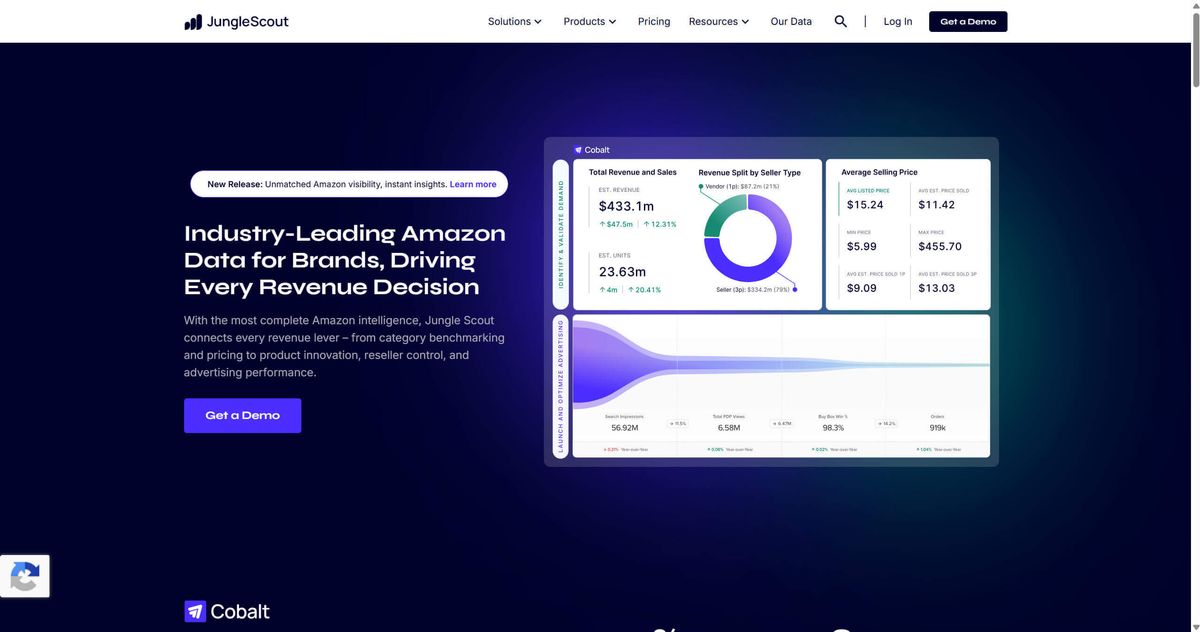
- Use tools like Jungle Scout or Helium 10 to analyze search volume, sales estimates, and competition levels for product categories.
- Read the 1-star and 3-star reviews on top-selling products — these are your product improvement roadmap.
Be cautious in categories where Amazon Basics or other Amazon private label brands already have strong visibility. You do not always need to avoid these categories completely, but you need a clear reason shoppers would choose your product instead: better quality, a more specific use case, stronger branding, bundled value, or a better customer experience.
💡 Pro tip for marketers: Use Amazon's "Customers also bought" and "Frequently bought together" sections to identify adjacent product opportunities. These are high-intent cross-sell signals that reveal real purchase behavior.
Step 2: Source Your Manufacturer
Once you've identified a product, you need a manufacturer who can produce it to your specifications.
- Start with Alibaba: Search for your product category and filter for "Verified Supplier" and "Trade Assurance" manufacturers.
- Request samples from 3–5 suppliers: Never commit to a manufacturer without testing physical samples.
- Negotiate MOQ (Minimum Order Quantity): For first orders, aim for 200–500 units to minimize risk.
- Specify your branding requirements: Logo placement, packaging design, color variations, and any product modifications.
- Use a third-party inspection service: Before your first shipment, hire a quality control inspector (services like QIMA or AsiaInspection) to verify product quality.
⚠️ Warning: Never skip the sample stage. Product quality issues discovered after a 500-unit order are expensive. Quality issues discovered after a 5,000-unit order can be business-ending.
Step 3: Build Your Brand Identity
Your brand is what differentiates you from the hundreds of other sellers in your category — including Amazon's own labels.
- Choose a brand name: Memorable, easy to spell, and not trademarked. Check the USPTO database and Amazon Brand Registry requirements.
- Design your logo and packaging: Invest in professional design — this is not the place to cut costs. Packaging is your first physical touchpoint with the customer.
- Register your trademark: Apply for a trademark through the USPTO (or your country's equivalent). This is required for Amazon Brand Registry, which gives you access to A+ Content, Brand Analytics, and enhanced listing protection.
- Create your brand story: Why does your brand exist? What problem does it solve better than anyone else? This narrative will power your listing copy, social media, and customer communications.
💡 Pro tip: Apply for Brand Registry as early as you are eligible. Amazon generally requires a registered trademark or a pending trademark application issued by an accepted government trademark office, but requirements can vary by country and application path.
Step 4: Create Your Amazon Seller Account
- Create an Amazon Seller Central account and choose the selling plan that fits your goals.
- Complete identity verification (government ID, bank account, credit card).
- Set up your store name and brand profile.
- Enroll in Amazon Brand Registry once your trademark is filed.
Notes: Most private label sellers use the Professional plan because it supports more advanced selling tools, advertising access, and scalable operations. The Professional plan is $39.99/month plus selling fees, while the Individual plan charges per item sold and is better suited for casual or very low-volume sellers.
Step 5: Build an Optimized Product Listing
Your listing is your storefront. A poorly optimized listing will fail even with a great product.
- Title: Include your primary keyword, brand name, key product attributes, and size/quantity. Keep it under 200 characters.
- Bullet points: Five bullets covering the top five customer benefits. Lead each bullet with a capitalized benefit label.
- Product description / A+ Content: If you have Brand Registry, use A+ Content to add comparison charts, lifestyle images, and brand story modules.
- Images: Minimum 7 images — main white-background image, lifestyle shots, infographic showing key features, size/scale reference, and packaging shot.
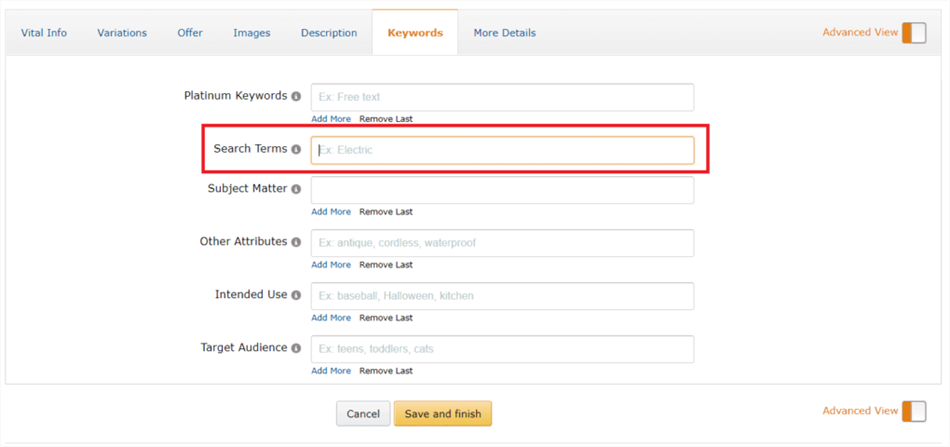
- Backend keywords: Use backend search terms for relevant synonyms, alternate phrasing, abbreviations, and long-tail terms that do not fit naturally in the title or bullets. Avoid repetition, competitor brand names, misleading terms, and irrelevant keywords.
Step 6: Choose Your Fulfillment Method
Fulfillment by Amazon (FBA) is the recommended choice for most private label sellers:
- Amazon stores your inventory in its fulfillment centers
- Amazon handles picking, packing, shipping, and customer service
- Your products qualify for Prime shipping — a significant conversion advantage
- FBA fees are calculated per unit based on size and weight
Fulfillment by Merchant (FBM) can work if you have your own logistics. However, most new private label sellers choose FBA because it simplifies storage, shipping, returns, customer service, and Prime eligibility. Seller Fulfilled Prime may be available to eligible sellers, but it requires strong fulfillment performance.
Step 7: Launch and Drive Initial Sales
New listings need early visibility, qualified traffic, and conversion data. Your launch goal is to help Amazon understand which search terms your product is relevant for and whether shoppers actually buy after clicking:
- Amazon PPC (Pay-Per-Click): Launch Sponsored Products campaigns on day one. Start with automatic targeting to gather keyword data, then shift to manual campaigns targeting your best-performing keywords.
- Vine Program: Enroll your product in Amazon Vine (available through Brand Registry) to get early reviews from Amazon's trusted reviewer network.
- External traffic: Drive traffic from social media, email lists, or influencer partnerships to your Amazon listing. External traffic can help a launch when it brings qualified shoppers who convert, but broad low-intent traffic can weaken conversion performance.
- Pricing strategy: Launch at a competitive price point (even slightly below your target price) to build initial sales velocity and review count.
Step 8: Manage Inventory and Scale
- Set reorder points: Calculate your lead time (manufacturing + shipping) and set inventory alerts in Seller Central to avoid stockouts.
- Monitor your Inventory Performance Index, FBA capacity limits, sell-through rate, and excess inventory risk. Amazon’s thresholds and capacity rules can change, so use Seller Central’s current guidance rather than relying on a fixed number.
- Expand your SKU range: Once your first product is profitable, use the same research process to identify adjacent products for your brand.
- Build off-Amazon channels: A brand that only exists is vulnerable to Amazon algorithm, even when it changes and policy updates. Build an email list, social media presence, and ideally a Shopify store in parallel.
How Smart E-Commerce Marketers Research Amazon Private Label Opportunities
Building a private label brand is a long-term workflow about researching and optimization. You need to review competitor listings, compare pricing and positioning, study customer feedback, check keyword opportunities, and turn those findings into product decisions.
This is exactly where AI-powered research tools are changing the game for e-commerce marketers. AllyHub a browser-native AI copilot for repeatable research, content, and browser workflows. It can help you generate competitor analysis report, do keyword research, track price history, and more tasks without you manually clicking through page after page.
For private label research specifically, AllyHub can:
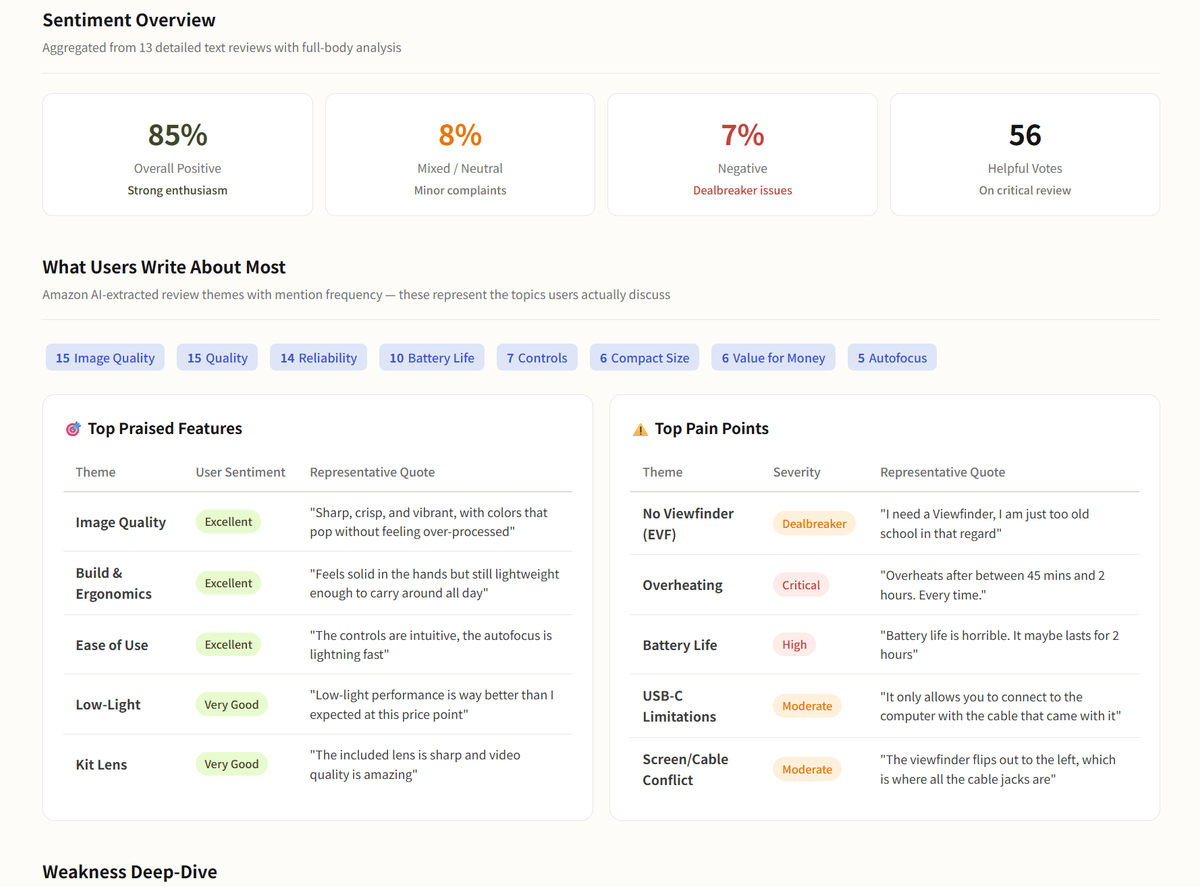
- Extract and analyze Amazon reviews at scale to identify recurring complaints and unmet needs — your product improvement roadmap
- Research competitor listings across multiple categories to identify pricing patterns and positioning gaps
- Compile keyword and trend data from multiple sources into structured research reports
- Automate repetitive research workflows and save them as one-click reusable services — so your next product research cycle takes hours, not days
The core idea: every research task you do manually is a task that could be building a reusable asset. AllyHub's ROTI (Return on Token Investment) framework means every research session makes the next one faster and smarter.
Start with AllyHub for free and run your first Amazon competitor research workflow — no configuration required.
Is Amazon Private Label Still Profitable in 2026?
Yes — but the landscape has changed significantly from the "easy money" era of 2015–2019.
What's harder now:
- Amazon's own brands compete directly in the most profitable commodity categories
- PPC costs have risen significantly as more sellers compete for the same keywords
- Established brands often have advantages that make ranking harder for new sellers: stronger review histories, higher conversion rates, larger ad budgets, better supply chains, and more repeat customers
- Regulatory scrutiny has made Amazon more cautious about how it uses marketplace data
What still works:
- Niche products with genuine differentiation (not just a logo on a commodity item)
- Categories where Amazon's own brands haven't entered (or have entered poorly)
- Brands with strong off-Amazon presence that drive external traffic to Amazon listings
- Products with a clear quality improvement over existing options (validated by 1-star review analysis)
The sellers with the best chance in 2026 are building real brands, not simply putting a logo on a generic factory product. They validate demand, improve the product, control quality, invest in listing assets, build trust, and create off-Amazon demand.
Frequently Asked Questions
Are private label brands cheaper?
Amazon private label brands are generally cheaper than some famous brands, because of high control and margins, and no brand premium. They becomes budget-friendly choices for customers.
What is the best Amazon private label brand?
Amazon Basics is probably the most recognizable Amazon private label brand for everyday household goods and electronics accessories. Amazon Essentials is the key brand to studying apparel basics. For groceries, Amazon Grocery, Happy Belly, Amazon Fresh, and 365 by Whole Foods Market are important. For baby and family essentials, Mama Bear is worth studying.
Is Amazon private label still profitable?
Yes, but profitability depends on product selection, landed cost, FBA fees, return rate, ad cost, pricing power, and differentiation. Generic commodity products are harder to make profitable because they face competition from Amazon private labels, national brands, and other sellers. The strongest opportunities are niche products with clear improvements, healthy margins, strong listing assets, and a plan to build demand beyond Amazon.
What is the difference between Amazon private label and wholesale selling?
Private label: You create your own brand, source products from a manufacturer, and sell under your brand name. You control pricing, branding, and listing content. Higher upfront investment, higher potential margins, and you own the brand equity.
Wholesale: You buy existing branded products at wholesale prices and resell them on Amazon. Lower upfront complexity, but you're competing with other sellers on the same listing and have no control over pricing or brand positioning.