You've spent years building marketing skills — running campaigns, analyzing data, writing copy, managing budgets. But when it comes to starting a YouTube channel, most marketers freeze at the same question: what should I actually make videos about?
The problem isn't a lack of ideas. It's a lack of the right ideas — ones that match your expertise, attract the audience you want, and have real search demand behind them.
This guide breaks down 12 proven YouTube channel ideas for marketers, with specific video topics, content formats, and growth strategies for each. Whether you're building a personal brand, generating leads for your agency, or creating a content engine for your company, there's a channel concept here that fits.
Key Takeaways
- YouTube channel ideas for marketers work best when they're niche-specific: A channel about "digital marketing" is too broad; a channel about "B2B LinkedIn ads for SaaS companies" is a real audience magnet.
- Video ideas for YouTube with the highest ROI: Tutorial and how-to content consistently outperforms opinion content for long-term search traffic and subscriber growth.
- YouTube topics that rank: Educational content, tool reviews, case studies, and "results breakdown" videos dominate the marketing niche on YouTube.
- Consistency beats perfection: Channels that publish one solid video per week outperform channels that publish sporadically, regardless of production quality.
- Start with what you already know: Your best YouTube channel idea is almost always the thing you get asked about most often by colleagues or clients.
What Makes a YouTube Channel Idea Actually Work for Marketers?
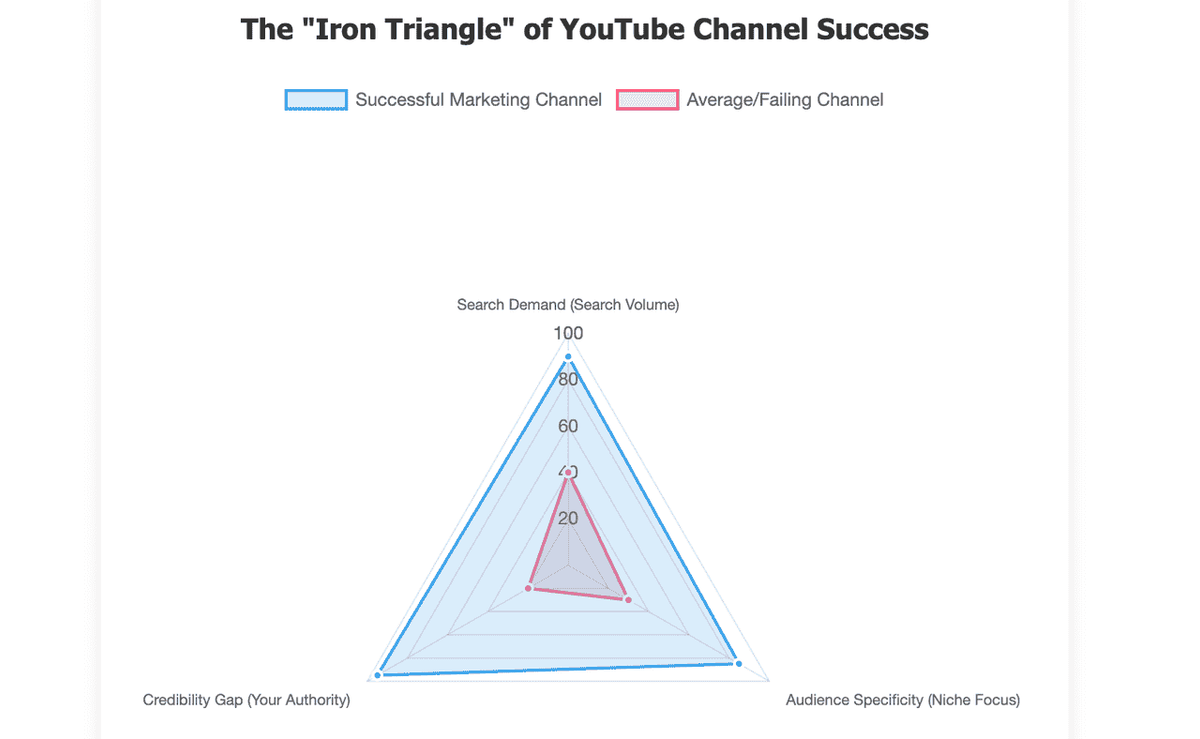
Before diving into specific formats, it is crucial to understand why some marketing channels scale while others stall after ten uploads. Three factors determine whether a concept will actually drive ROI:
- Search demand: Are people actively searching for this content on YouTube? YouTube is the world's second-largest search engine, with over 2.7 billion monthly active users according to official platform data. If your channel topics don't match what people search for, you're building in a vacuum.
- Audience specificity: The more precisely you define who your channel is for, the faster it grows. "Marketing tips" is a category. "Email marketing for e-commerce brands under $1M revenue" is an audience.
- Your credibility gap: The best YouTube channel ideas sit at the intersection of what your audience needs and what you can credibly teach. If you've run 50 Google Ads campaigns, a channel about Google Ads strategy has built-in authority that generic content farms can't replicate.
Pro tip: Before committing to a channel concept, search your top 5 video ideas on YouTube. If the top results are from channels with 100K+ subscribers and millions of views, you're entering a crowded space. Look for topics where the top results have under 50K views — that's your opening.
12 YouTube Channel Ideas for Marketers (With Video Topic Examples)
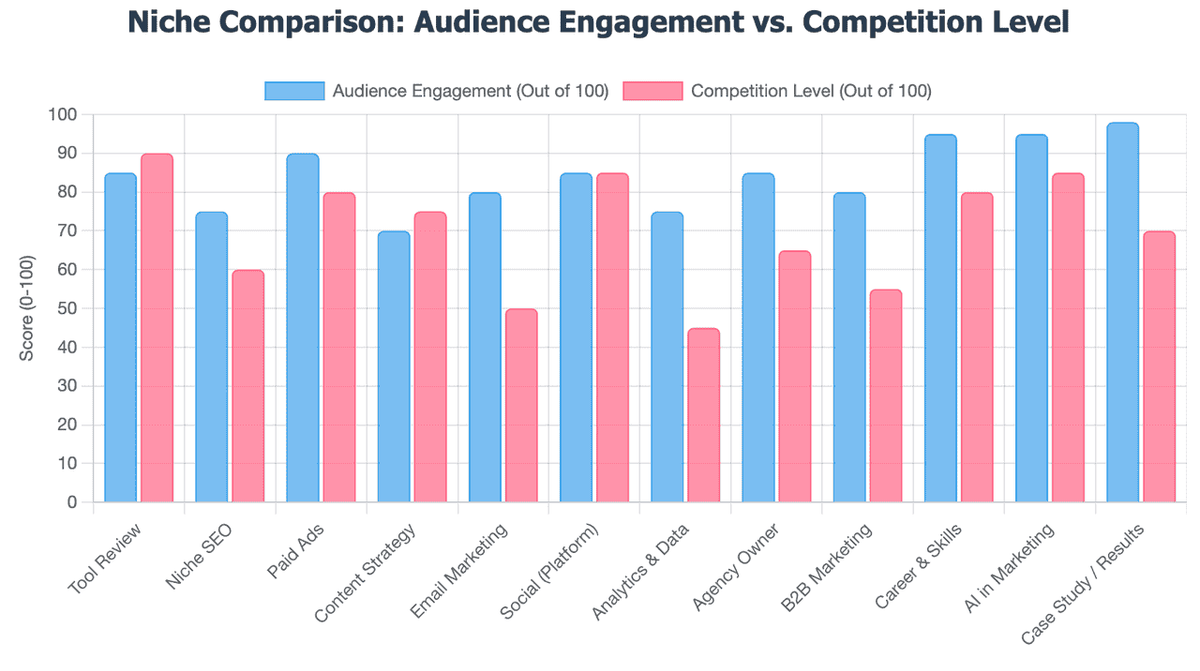
1. The Marketing Tool Review Channel
What it is: In-depth reviews, comparisons, and tutorials for marketing software — SEO tools, email platforms, CRM systems, ad managers, analytics dashboards.
Why it works: Marketers are constantly evaluating new tools. A channel that gives honest, detailed reviews builds trust fast and attracts a highly engaged audience actively making purchase decisions.
Sample video titles:
- "HubSpot vs. Salesforce: Which CRM Actually Wins for Small Teams?"
- "I Tested 7 AI Writing Tools for 30 Days — Here's What I Found"
- "Semrush vs. Ahrefs vs. Moz: The Honest Comparison No One Else Will Give You"
Best for: Marketers with hands-on experience across multiple tools; agency owners who evaluate software regularly; consultants who advise clients on tech stack decisions.
Note: Tool review channels have strong affiliate revenue potential. Most major marketing platforms (HubSpot, Semrush, ConvertKit, etc.) offer affiliate programs with recurring commissions.
2. The Niche SEO Channel
What it is: SEO content focused on a specific industry, platform, or use case — local SEO, e-commerce SEO, YouTube SEO, technical SEO for developers, or SEO for specific CMS platforms.
Why it works: Generic SEO channels are saturated. Niche SEO channels attract a smaller but far more engaged audience — and rank faster because competition is lower.
Topic examples:
- "Local SEO for Restaurants: The Complete 2026 Playbook"
- "How to Rank YouTube Videos in Google Search (Not Just YouTube)"
- "Shopify SEO: The 10 Fixes That Actually Move Rankings"
Best for: SEO specialists with a specific industry focus; agency owners serving a particular vertical; in-house SEOs at companies in a specific sector.
3. The Paid Ads Breakdown Channel
What it is: Detailed walkthroughs of paid advertising campaigns — Google Ads, Meta Ads, LinkedIn Ads, TikTok Ads — with real account data, strategy explanations, and results.
Why it works: Paid ads are high-stakes. Marketers managing ad budgets are desperate for practical guidance from people who've actually run campaigns. Channels that show real numbers (even anonymized) build credibility instantly.
Content ideas:
- "I Spent $10,000 on Google Ads — Here's Exactly What Happened"
- "Meta Ads in 2026: What's Working, What's Dead, and What's Next"
- "LinkedIn Ads for B2B: The Campaign Structure That Gets Results"
Best for: Performance marketers; media buyers; agency owners who can share (anonymized) client results; in-house paid media specialists.
Warning: Always anonymize client data before sharing campaign results on YouTube. Even with permission, sharing identifiable performance data can violate client confidentiality agreements.
4. The Content Marketing Strategy Channel
What it is: A channel focused on content strategy, editorial planning, content distribution, and measuring content ROI — not just "how to write better."
Why it works: Most content marketing channels focus on tactics (how to write a blog post). A channel that addresses strategy (how to build a content engine that drives pipeline) serves a more senior, higher-value audience.
Video ideas for YouTube:
- "How to Build a Content Calendar That Actually Gets Used"
- "Content Distribution: The 10x Strategy for Getting More From Every Piece"
- "How to Measure Content Marketing ROI (Without Lying to Your Boss)"
Best for: Content strategists; marketing directors; agency content leads; B2B marketers responsible for demand generation.
5. The Email Marketing Deep-Dive Channel
What it is: A channel dedicated entirely to email marketing — list building, segmentation, automation, deliverability, copywriting, and A/B testing.
Why it works: According to industry data from Litmus, email marketing has an average ROI of $36 for every $1 spent, yet most feel they underutilize it. This channel attracts a loyal, action-oriented audience.
Sample video concepts:
- "Email Segmentation: The 5 Segments Every E-Commerce Brand Needs"
- "Why Your Emails Are Going to Spam (And How to Fix It)"
- "The Welcome Sequence That Converts 40% of New Subscribers"
Best for: Email marketers; e-commerce growth teams; SaaS marketers focused on lifecycle; marketing automation specialists.
6. The Social Media Marketing Channel (Platform-Specific)
What it is: A channel focused on one social platform — LinkedIn strategy, Instagram growth, TikTok for brands, Pinterest for e-commerce — rather than "social media" broadly.
Why it works: Platform-specific channels rank faster and attract more engaged audiences because viewers know exactly what they're getting. A LinkedIn strategy channel serves a completely different audience than a TikTok growth channel.
YouTube topics to cover:
- "LinkedIn Algorithm in 2026: What's Actually Working Right Now"
- "How to Write LinkedIn Posts That Get 10x More Impressions"
- "LinkedIn Company Page vs. Personal Profile: Where to Focus Your Energy"
Best for: Social media managers with deep expertise in one platform; B2B marketers (LinkedIn); DTC brand marketers (Instagram/TikTok); community managers.
7. The Marketing Analytics & Data Channel
What it is: A channel that teaches marketers how to use data — Google Analytics 4, attribution modeling, dashboard building, A/B testing, and turning numbers into decisions.
Why it works: Data literacy is the skill gap most marketers want to close. A channel that makes analytics accessible (without being condescending) fills a real need and attracts a highly motivated audience.
Content examples:
- "GA4 for Marketers: The Setup Guide That Actually Makes Sense"
- "Marketing Attribution: Which Model Should You Actually Use?"
- "How to Build a Marketing Dashboard in Looker Studio (Free Template)"
Best for: Marketing analysts; growth marketers; marketing ops professionals; anyone who regularly presents data to leadership.
8. The Agency Owner / Freelance Marketer Channel
What it is: A channel about running a marketing business — client acquisition, pricing, service delivery, team building, and the business side of marketing work.
Why it works: There are millions of freelance marketers and agency owners who are excellent at marketing but struggle with the business side. This audience is underserved by most marketing channels.
Ideas on YouTube channel content:
- "How I Went From $0 to $10K/Month as a Freelance Marketer"
- "The Client Onboarding Process That Reduces Scope Creep"
- "How to Price Your Marketing Services (Without Undercharging)"
Best for: Freelance marketers; agency founders; marketing consultants; anyone building a service business around their marketing skills.
9. The B2B Marketing Channel
What it is: A channel focused specifically on B2B marketing — demand generation, ABM (account-based marketing), sales and marketing alignment, and B2B content strategy.
Why it works: B2B marketing is fundamentally different from B2C, yet most marketing YouTube channels treat them the same. A channel that speaks directly to B2B marketers' challenges fills a real gap.
Topic examples:
- "Account-Based Marketing: How to Run ABM Without a $500K Budget"
- "B2B Demand Generation vs. Lead Generation: What's the Difference?"
- "How to Align Sales and Marketing (When They Hate Each Other)"
Best for: B2B marketing managers; demand gen specialists; CMOs at SaaS or professional services companies; revenue operations professionals.
10. The Marketing Career & Skills Channel
What it is: A channel about building a marketing career — skill development, job hunting, salary negotiation, transitioning into marketing, and navigating the industry.
Why it works: There's a massive audience of aspiring and early-career marketers who want guidance from practitioners, not career coaches. This channel type builds a loyal community fast.
Sample titles:
- "How to Get Your First Marketing Job With No Experience"
- "The Marketing Skills That Will Be Most Valuable in 2026"
- "How I Went From Junior Marketer to CMO in 7 Years"
Best for: Senior marketers willing to share their career journey; marketing educators; HR professionals in the marketing space; anyone with a compelling career story.
11. The AI in Marketing Channel
What it is: A channel dedicated to how marketers can use AI tools — prompt engineering for marketing, AI-assisted content creation, AI analytics, and the strategic implications of AI for marketing teams.
Why it works: AI is the fastest-moving topic in marketing right now. A channel that cuts through the hype and shows practical, tested applications attracts a massive audience of marketers trying to stay current.
Sample video titles:
- "The AI Marketing Stack I Use Every Day (And What I've Stopped Using)"
- "How to Write Better Marketing Copy With AI (Without Sounding Like a Robot)"
- "AI for SEO: What Actually Works in 2026"
Best for: Marketing technologists; content marketers experimenting with AI tools; marketing leaders navigating AI adoption; anyone with hands-on experience testing AI marketing tools.
12. The Case Study / Results Breakdown Channel
What it is: A channel built around real marketing case studies — campaigns you've run, strategies you've tested, and results you've achieved — broken down step by step.
Why it works: Case study content is the most credible format on YouTube. It's hard to fake, hard to replicate, and deeply valuable to viewers who want to learn from real experience rather than theory.
Video ideas for YouTube:
- "How We Grew Organic Traffic 300% in 6 Months (Full Strategy Breakdown)"
- "The Email Campaign That Generated $50K in 48 Hours — Here's How"
- "We Tested 5 Landing Page Variants — Here Are the Results"
Best for: Marketers with a track record of measurable results; agency owners with client success stories (with permission); in-house marketers at companies willing to share performance data.
How to Choose the Right YouTube Channel Idea for You
With 12 options on the table, the question becomes: which one is right for you? Use this decision framework:
Your Situation | Best Channel Concept |
Deep expertise in one tool or platform | Tool Review Channel or Platform-Specific Social Media Channel |
Strong track record with measurable results | Case Study / Results Breakdown Channel |
Running an agency or freelance practice | Agency Owner Channel (doubles as lead generation) |
Recommended approach: Pick one concept and commit to 20 videos before evaluating whether to pivot. Most channels don't find their audience until video 15–25. Switching concepts too early is the most common reason marketing channels fail to grow.
YouTube Topics That Consistently Perform in the Marketing Niche
Regardless of which channel concept you choose, certain video formats consistently outperform others:
- "I tested X for Y days — here's what happened": First-person experiment content builds credibility and satisfies curiosity.
- "The [strategy/tool] that [specific result]": Outcome-first titles attract viewers who want results, not theory.
- "[Tool A] vs. [Tool B]: The honest comparison": Captures high-intent viewers making purchase decisions.
- "How to [specific outcome] without [common obstacle]": Removes the objection before the viewer raises it.
- "Why [common belief] is wrong (and what to do instead)": Contrarian takes generate discussion and shares.
Automating Your YouTube Content Operation
A list of YouTube channel ideas won't grow your audience if your production pipeline breaks down after three weeks. Scaling a channel requires treating YouTube like a content operation, not a weekend hobby.
Instead of relying on manual SERP research and waiting for inspiration, smart marketers build automated workflows to handle the heavy lifting.
This is where an AI intelligent autopilot like AllyHub changes the equation. AllyHub handles the research-heavy, repetitive parts of content production so you can focus entirely on strategic delivery.
For a YouTube channel, you can set up AllyHub to:
- Monitor competitors: Automatically track top-performing videos and content gaps across rival marketing channels.
- Aggregate research: Pull keyword data, PAA (People Also Ask) questions, and Reddit discussions for any topic on your calendar.
- Generate structured briefs: Turn a raw idea into a complete SEO brief, complete with title variants and metadata, so you never start from a blank page.
The goal isn't to automate creativity—it's to automate the infrastructure around creativity. If you want to stop guessing what to film and start running a data-backed production schedule, use AllyHub's Services to automate your channel's backend research.
Frequently Asked Questions
How many video ideas for YouTube do I need before starting a channel?
Plan 20–30 video ideas before you publish your first video. This ensures you have enough content to maintain consistency for the first 3–6 months. Use YouTube's search bar autocomplete, Google's People Also Ask box, and Reddit threads in your niche to generate ideas quickly.
What YouTube topics get the most views in the marketing niche?
In the marketing niche, the highest-view content tends to be: tool comparisons (especially for popular platforms like HubSpot or Semrush), "I tested X" experiment videos, and case studies with specific results.
How often should I post on a marketing YouTube channel?
One high-quality video per week is the standard recommendation for growing a marketing channel. Consistency matters more than frequency — a channel that publishes every Tuesday builds audience expectations and algorithmic momentum.
Can I start a YouTube channel about marketing topics without showing my face?
Yes. Screen-share tutorials, animated explainers, voiceover-only walkthroughs, and data visualization videos all perform well without requiring an on-camera presence. The Marketing Analytics, Niche SEO, and Tool Review concepts work particularly well in a faceless format.
How long does it take to grow a marketing YouTube channel?
Most marketing channels see meaningful growth (1,000+ subscribers, consistent views) between months 6–12, assuming weekly publishing and solid keyword targeting.
What's Next
You now have 12 proven YouTube channel ideas for marketers, a framework for choosing the right one, and a clear picture of which video topics perform best.
The next step is simple: pick one concept, plan your first 20 video ideas, and publish your first video within the next two weeks. Don't wait until everything is perfect — the channel that exists beats the channel that's still being planned. Systematize your backend with smart tools, and focus your energy on delivering value on camera.