Not sure what to post on YouTube — or tired of ideas that just don’t get views? The problem usually isn’t effort. It’s picking ideas that don’t trigger clicks in the first place.
Instead of random inspiration, this list focuses on video formats that already work — the kind that consistently get views, watch time, and shares.
Here are 9 proven formats, plus 30 ideas you can use right away.
Key Takeaways:
- Viral ideas aren’t random — they follow repeatable formats (challenges, transformations, lists, tutorials, reactions).
- The first 15 seconds matter most. If it doesn’t hook, it won’t get distributed.
- The best-performing videos mix emotion + value — surprise, teach, or resonate.
- For marketers, virality is leverage: one strong video can outperform months of ads.
- Don’t start from scratch — find what’s already working and make a better version.
Why Most YouTube Videos Never Go Viral (And What Changes That)
YouTube doesn’t reward “good” videos — it rewards videos that hold attention and drive engagement (watch time, clicks, comments, shares).
Research from Neil Patel and multiple YouTube creator studies consistently shows that viral videos share three structural traits:
- Strong hook (first 15 seconds): Creates an open loop, making people keep watching.
- Frequent pattern interrupts: Visual or information shifts every 10–15 seconds to avoid drop-off.
- Emotional payoff: Surprise, curiosity, validation, or shock that drives sharing.
- Audience relevance (for marketers): The content feels personally specific — “this is about me” — which encourages sharing.
With this in mind, the next section breaks down 9 viral formats you can actually use.
1. The "I Tried It So You Don't Have To" Experiment Video
Why it goes viral: This format combines curiosity, entertainment, and genuine utility. The viewer gets the outcome of an experiment without the cost or risk of doing it themselves. It's inherently shareable because it saves time and satisfies curiosity at the same time.
Ideas:
- "I Spent $500 on YouTube Ads for 7 Days — Here's Exactly What Happened" — Document a real ad campaign with daily screenshots of spend, impressions, and conversions. The specific dollar amount and time frame make it irresistible to click.
- "I Posted on YouTube Every Day for 30 Days — Did It Actually Grow My Channel?" — A consistency challenge with honest data. Works for any niche; the "did it work?" framing creates a built-in open loop.
- "I Used AI to Write All My Video Scripts for a Month — The Results Surprised Me" — Taps into the AI curiosity wave while delivering a genuine experiment outcome marketers care about.
- "I Copied My Competitor's Top Video — Here's What Happened to My Views" — Controversial enough to drive clicks, educational enough to justify watching. Marketers and creators both want to know the answer.
- "I Tested 5 Different YouTube Thumbnail Styles on the Same Video" — Split-test content is highly shareable because it answers a question everyone has but nobody has tested.
How to execute it:
- Choose a high-stakes or high-curiosity experiment relevant to your audience.
- Set up the stakes clearly in the first 30 seconds — what are you testing, what's the hypothesis, and what would a surprising result look like?
- Document the process with real data — screenshots, analytics, receipts. Authenticity is the currency of this format.
- Deliver an honest verdict — including what didn't work. Audiences distrust overly positive outcomes.
- End with a clear takeaway — what should the viewer do differently based on your findings?
Best for marketers: Testing ad strategies, content formats, tools, or growth tactics. This format positions you as a practitioner, not just a commentator — which builds authority fast.
💡 Pro tip: The more specific the experiment, the better it performs. "I tested 5 YouTube thumbnail styles on the same video" outperforms "I tested YouTube thumbnails" every time.
2. The Transformation/Before-and-After Video
Why it goes viral: Transformation content taps into one of the most powerful psychological drivers: the desire to see change. Before-and-after videos are visually compelling, emotionally satisfying, and easy to share as proof of what's possible.
Ideas:
- "From 0 to 10,000 Subscribers in 90 Days — The Exact Strategy I Used" — Quantified transformation with a replicable system. The "exact strategy" framing signals actionable depth.
- "I Rebuilt This Brand's YouTube Channel From Scratch — 60-Day Case Study" — Agency and freelance marketers can document a real client transformation (with permission) for massive credibility.
- "How We Took a Dead YouTube Channel to 1M Views in 6 Months" — The resurrection narrative is one of the most compelling transformation arcs. Specificity in the numbers drives clicks.
- "Before and After: Redesigning a YouTube Channel That Wasn't Converting" — Visual transformation content that appeals to e-commerce marketers and brand managers focused on channel aesthetics and CTR.
- "I Fixed My Worst-Performing Video — Here's What Changed" — Relatable for any creator. The "fix" framing implies a teachable lesson, which drives watch time.
How to execute it:
- Define a clear, measurable starting point — a channel with 200 subscribers, a product page with 1.2% conversion rate, a brand with zero social presence.
- Document the transformation process — not just the result. The journey is what keeps viewers watching.
- Show the specific actions taken — viewers want to replicate the result, so the "how" is as important as the "what."
- Quantify the outcome — "from 200 to 12,000 subscribers in 60 days" is infinitely more shareable than "we grew our channel."
- Address what didn't work — this builds credibility and makes the success feel earned, not manufactured.
Best for marketers: Brand case studies, campaign results, product launches, channel growth stories. This format doubles as social proof and educational content simultaneously.
✅ Recommended: Pair transformation videos with a downloadable resource (checklist, template, swipe file) to capture leads from the traffic spike.
3. The Ranked List/Tier List Video
Why it goes viral: List videos are algorithmically strong because they're easy to consume, easy to share, and generate comment engagement naturally ("I can't believe X ranked higher than Y"). Tier list formats in particular drive comment sections because everyone has an opinion.
Ideas:
- "Every Major YouTube Niche Ranked by CPM — Which Pays the Most in 2025?" — Data-driven ranking that every monetization-focused creator wants to see. Generates strong comment engagement.
- "I Ranked Every YouTube Shorts Strategy — Here's What Actually Works" — Tier list format applied to a high-interest topic. The "actually works" qualifier signals honest assessment over hype.
- "The 10 Best YouTube Video Formats for Marketers, Ranked" — Directly relevant to your target audience. Invites disagreement and comment engagement from marketers with strong opinions.
- "Every AI Video Tool Ranked — Which One Should You Actually Use?" — Tool comparison tier lists consistently outperform generic reviews because the ranking format is inherently shareable.
- "Top 10 YouTube Channels in [Your Niche] — And What You Can Steal From Each" — Combines a ranking with actionable takeaways. The "steal" framing is provocative enough to drive clicks.
How to execute it:
- Choose a topic with strong opinions in your niche — "Every major email marketing platform, ranked" or "The 10 best YouTube niches for 2025, ranked by CPM."
- Establish your ranking criteria upfront — this prevents the video from feeling arbitrary and gives viewers a framework to agree or disagree with.
- Use a visual tier system (S/A/B/C/D tiers or numbered rankings) — the visual format is highly shareable as a screenshot.
- Be willing to make controversial placements — safe, consensus rankings don't generate comments. Thoughtful contrarian takes do.
- Invite disagreement in the CTA — "Tell me in the comments where you'd rank [X]" is one of the highest-performing engagement prompts for YouTube.
Best for marketers: Tool comparisons, platform rankings, content strategy rankings, influencer tier lists. This format is particularly effective for e-commerce marketers comparing product categories or ad platforms.
💡 Pro tip: Publish a companion blog post with the same rankings. The video drives traffic; the blog post captures SEO value. Both reinforce each other.
4. The Ultimate Tutorial/How-To Guide
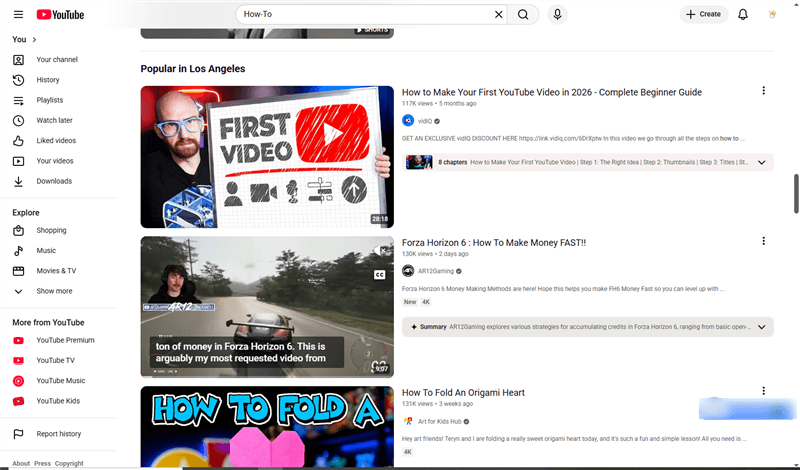
Why it goes viral: According to Google research, more than 7 in 10 viewers turn to YouTube for learning or problem-solving. Tutorial content is evergreen — it keeps generating views long after publication. The "ultimate guide" framing signals comprehensive value, which drives clicks.
Ideas:
- "The Complete YouTube SEO Guide for 2025 — Step by Step" — Evergreen tutorial that captures long-tail search traffic for years. The "complete" and "step by step" framing signals comprehensive value.
- "How to Write a YouTube Script That Keeps People Watching Until the End" — High-intent tutorial for creators and marketers. Directly addresses the #1 retention problem on YouTube.
- "How to Set Up a YouTube Channel for Your Brand in Under 1 Hour" — Specific time constraint ("under 1 hour") reduces perceived effort and increases click-through rate.
- "YouTube Analytics Explained: The 7 Metrics That Actually Matter for Growth" — Cuts through the noise of a complex dashboard. Marketers and creators both struggle with analytics interpretation.
- "How to Create a YouTube Content Calendar That You'll Actually Stick To" — Practical system content with a relatable pain point built into the title ("actually stick to").
How to execute it:
- Target a specific, high-intent problem — not "how to use Instagram" but "how to set up Instagram Shopping for a Shopify store in 2025."
- Structure the tutorial with a clear table of contents — announce it in the first 60 seconds so viewers know exactly what they'll learn.
- Use chapters (YouTube's timestamp feature) — this improves watch time by letting viewers jump to relevant sections, and it signals structure to the algorithm.
- Show, don't tell — screen recordings, live demonstrations, and real examples outperform talking-head explanations for retention.
- Include a "common mistakes" section — this is consistently one of the highest-retention segments in tutorial videos.
Best for marketers: Platform tutorials, tool walkthroughs, campaign setup guides, analytics explainers. Tutorial content also performs exceptionally well in Google Search, giving you dual-channel distribution.
📌 Note: Tutorial videos have a longer production cycle but a much longer shelf life. A well-made tutorial from 2023 can still drive thousands of views per month in 2025 if the topic remains relevant.
5. The Reaction / Commentary Video
Why it goes viral: Reaction content leverages existing viral material — you're essentially borrowing the attention that another piece of content has already earned. Commentary videos add a layer of analysis or opinion that transforms passive viewing into active engagement.
Ideas:
- "I Watched [Competitor Brand]'s Most Viral Video — Here's What They Got Right (And Wrong)" — Reaction + analysis format that builds thought leadership while borrowing existing viral attention.
- "YouTube Just Changed the Algorithm Again — Here's What It Means for Your Channel" — Timely reaction to platform news. Marketers and creators search for this immediately after algorithm announcements.
- "Reacting to the Worst YouTube Marketing Advice on the Internet" — Debunking-adjacent reaction content. The "worst advice" framing generates strong emotional responses and shares.
How to execute it:
- React to something your audience already cares about — a competitor's viral campaign, a controversial industry take, a major platform update, or a trending news story in your niche.
- Add genuine analysis, not just narration — "here's what they did right, here's what I would have done differently, here's what this means for you."
- Take a clear position — wishy-washy commentary doesn't generate engagement. Thoughtful, defensible opinions do.
- Respond to the comments — reaction videos generate high comment volume. Engaging with comments in the first 24 hours signals to the algorithm that the video is driving community activity.
- Keep it timely — reaction content has a short window. Publish within 48–72 hours of the original content going viral.
Best for marketers: Reacting to competitor campaigns, industry news, platform algorithm changes, or viral brand moments. This format is particularly effective for building thought leadership without requiring original research.
⚠️ Warning: Always ensure you have the right to use any third-party content you're reacting to. Use short clips under fair use guidelines, and always credit the original creator.
6. The "Myth Busting"/Debunking Video
Why it goes viral: Debunking content triggers a powerful psychological response — it challenges what people believe they know, which creates cognitive dissonance that demands resolution. Viewers share debunking videos to signal their own sophistication ("I knew that was wrong").
Ideas
- "5 YouTube Growth Myths That Are Wasting Your Time (Backed by Data)" — The "backed by data" qualifier elevates this above opinion-based debunking. Highly shareable among creators who've been misled.
- "The Biggest Lie About Going Viral on YouTube — And What Actually Works" — Direct challenge to a widely-held belief. The contrast between "the lie" and "what actually works" creates a compelling open loop.
- "Why Posting More Often Won't Grow Your YouTube Channel (And What Will)" — Counterintuitive take on a common piece of advice. Generates strong comments.
How to execute it:
- Identify 5–7 widely-held beliefs in your niche that are wrong or oversimplified — "5 YouTube growth myths that are killing your channel" or "The biggest lie about e-commerce conversion rates."
- State each myth clearly before debunking it — this creates the open loop that keeps viewers watching.
- Back every debunk with data or a specific example — opinion-based debunking feels like a rant; evidence-based debunking feels like education.
- Acknowledge why the myth exists — this shows nuance and prevents the video from feeling condescending.
- Replace each myth with the correct mental model — the video should leave viewers with actionable new beliefs, not just demolished old ones.
Best for marketers: Debunking common misconceptions about SEO, paid ads, influencer marketing, email marketing, or social media algorithms. This format positions you as a trusted expert who cuts through noise.
7. Series Content + Shorts Trend-Jacking
Why it works: Series builds loyalty and repeat views through open loops, while Shorts trend-jacking drives rapid discovery. Combined, they create both consistent retention and viral reach.
Ideas
- "Building a YouTube Channel From $0 — Week-by-Week Series" — Documented journey series with a clear starting point and measurable goal. Viewers return weekly to see progress.
- "I'm Testing Every YouTube Growth Strategy for 90 Days — Follow Along" — Ongoing experiment series that combines the experiment format with the series format for maximum retention.
- "One YouTube Tip Per Day — 30-Day Shorts Series" — Micro-content series that builds a habit loop. Each Short is a standalone tip, but the series format drives subscribers.
- "POV: You Just Discovered [Trending Tool/Strategy] for the First Time" — POV-format Shorts consistently outperform standard talking-head Shorts. Adapt the trending POV format to your niche for an algorithmic boost.
How to execute:
- Plan a clear series arc upfront, with a defined end goal.
- End each episode with a real cliffhanger to drive return viewers.
- Ensure each video works standalone but encourages binge-watching (use playlists + consistent branding).
- Repurpose key moments into Shorts using trending formats or audio.
- Post Shorts during trend windows (3–7 days) to maximize exposure, keeping them 30–45 seconds with a strong first-frame hook.
Best for marketers:
Documenting builds (e.g., brand from scratch, 90-day challenges) while using Shorts for top-of-funnel growth and testing ideas before scaling into long-form.
Pro tip: Use Shorts for discovery, then funnel viewers into your series playlist for deeper engagement and conversion.
8. The "Behind the Scenes" / Authentic Process Video
Why it goes viral: In an era of polished, produced content, authenticity is a differentiator. Behind-the-scenes content builds parasocial connection — viewers feel like they're getting access to something real, which drives loyalty and sharing.
How to execute it:
- Show the messy reality, not just the highlight reel — a campaign that didn't perform as expected, a product launch that hit unexpected obstacles, a team meeting where the strategy changed.
- Narrate your thinking in real time — "here's why we made this decision" is more valuable than "here's what we did."
- Include the people behind the brand — faces, names, and personalities make content shareable in a way that faceless brand content never can.
- Don't over-produce it — the production value of behind-the-scenes content should feel lower than your main content. Over-polished "behind the scenes" feels staged.
- Connect the process to a result the audience cares about — "here's how we built the campaign that generated 10,000 leads" gives the behind-the-scenes content a payoff.
Best for marketers: Brand storytelling, team culture content, product development documentation, campaign post-mortems. This format is particularly effective for B2B marketers building trust with a professional audience.
Viral Video Format Comparison Table
Format | Best For | Production Effort | Viral Potential | Shelf Life |
Experiment / "I Tried It" | Authority building, niche education | Medium | Very High |
Beyond Viral Ideas: How Marketers Research and Scale What Works
Finding viral video ideas is only half the job. The other half is knowing what’s already working in your niche — and turning that into repeatable patterns.
Most people still do this manually: checking competitor channels, scanning top videos, and guessing why they performed.
AI tools like AllyHub help streamline this process by pulling together key signals from YouTube — including video performance, engagement data, and comment insights — and surfacing recurring content patterns and gaps.
How to Use AllyHub for YouTube Research:
Step 1. Input 3–5 competitor channels. Let AllyHub collect top videos + key performance signals.
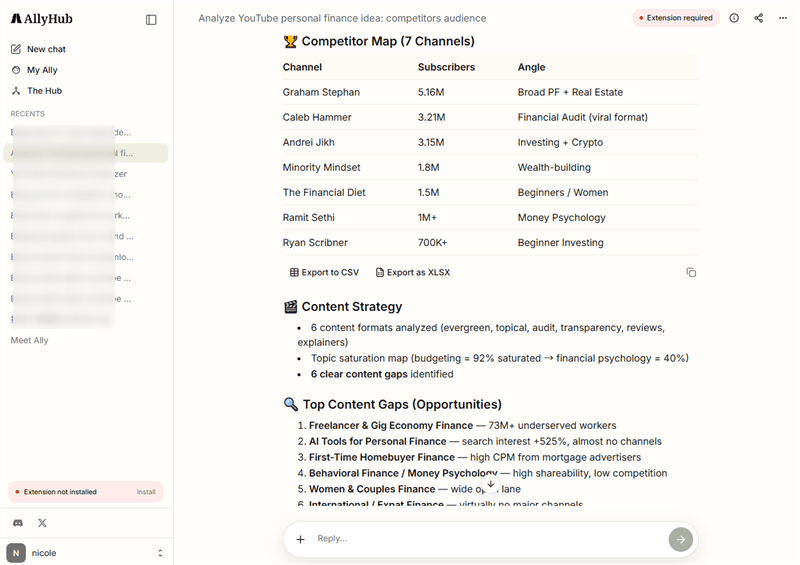
Step 2. Review patterns: formats, topics, hooks that repeat.
Step 3. Turn those patterns into your next video ideas.
FAQ
What type of YouTube content gets the most views?
Tutorial and how-to content consistently generates the highest total view counts because it's evergreen — it keeps attracting search traffic long after publication. For rapid view spikes, experiment videos and reaction content tend to go viral fastest because they're highly shareable and algorithm-friendly.
How long should a viral YouTube video be?
Research suggests videos in the 8–15 minute range perform best for long-form viral content — long enough to build watch time, short enough to maintain retention. YouTube Shorts (under 60 seconds) have a separate viral pathway through the Shorts feed. For tutorials and series content, 15–25 minutes is optimal.
Do I need a large audience to go viral on YouTube?
No. YouTube's algorithm distributes content based on engagement signals, not subscriber count. A channel with 500 subscribers can go viral if the video generates strong click-through rates and watch time in its first 24–48 hours. This is why the hook and thumbnail are more important than follower count.
What are the best video ideas to go viral for a new channel?
For new channels, the highest-probability viral formats are: (1) YouTube Shorts trend-jacking for discovery, (2) experiment videos that document a specific, measurable test, and (3) myth-busting content that challenges a widely-held belief in your niche. All three can perform well without an existing audience.
How do I find viral video ideas for my specific niche?
The most reliable method is competitor research: identify the top 5–10 channels in your niche, sort their videos by "Most Popular," and analyze the top 20 performers for format patterns, title structures, and topic clusters. Reddit threads and YouTube comment sections are also goldmines for understanding what your audience actually wants to see.
How important is the thumbnail for a viral video?
Extremely important. YouTube's algorithm uses click-through rate (CTR) as a primary signal for distribution — if your thumbnail doesn't get clicks, the algorithm stops showing the video. A strong thumbnail should communicate the video's core value proposition in under 2 seconds, use high contrast, and include a human face where possible (faces increase CTR by 30–40% on average).
Can marketers use viral YouTube content for lead generation?
Yes, and it's one of the highest-ROI content strategies available. The key is to pair viral content with a clear next step: a lead magnet mentioned in the video, a link in the description to a landing page, or a pinned comment with a CTA. Tutorial and how-to content converts particularly well because viewers are already in a "learning and taking action" mindset.
What to Do Next
These 9 formats already work across niches. Success comes from execution, not invention. Pick one format, study a few strong examples, then improve the hook, clarity, and payoff.
If you want to accelerate the research phase — competitor analysis, content gap identification, trend monitoring — AllyHub can automate the data-heavy work so your team focuses on the creative decisions that actually require human judgment.