You can rewrite your Amazon title, update backend keywords, launch PPC campaigns, and improve product images — but if you are not tracking keyword rankings, you are still guessing. A product may be moving from page three to page one, losing ground to a competitor, or ranking well for the wrong search terms without you noticing.
For marketers, an Amazon rank tracker is not just a reporting tool. It is the feedback loop that shows whether listing optimization, PPC spend, pricing changes, and competitor activity are actually changing product visibility.
This guide compares 7 of the best Amazon rank trackers for marketers. It also explains how to track Amazon product rankings, what data matters, and how to turn ranking changes into better marketing decisions.
Key Takeaways
- Best overall option: Helium 10 is the strongest Amazon rank tracker for marketers who need keyword tracking, competitor benchmarking, and broader Amazon SEO tools in one platform.
- Best beginner option: Jungle Scout is easier to use if you want clean Amazon keyword ranking data without a heavy learning curve.
- Best PPC-focused option: SellerApp is useful when you need to compare organic ranking movement with Amazon advertising performance.
- Best budget option: AMZScout gives smaller teams basic keyword tracking and product visibility data without paying for a full enterprise stack.
- Best workflow: Track rankings by ASIN and keyword, collect a baseline, then connect major rank changes to real marketing actions.
- Best automation layer: AllyHub helps marketers automate the competitor research and reporting work that happens after rank data is collected.
Comparison Table of Best Amazon Rank Trackers
Tool | Starting Price | Best For | Main Strength | Best Fit |
Helium 10 | Platinum $129/month (billed yearly) | Advanced Amazon SEO | Keyword tracking plus full Amazon toolset |
Pricing note: Pricing changes often, and tool plans may vary by marketplace, keyword count, ASIN count, or reporting needs. Always check the official pricing page before choosing a tool.
Why Does Amazon Rank Tracking Matter for Marketers?
Amazon rankings change constantly because of sales velocity, pricing, reviews, PPC activity, inventory, and competitor moves. Rank tracking gives marketers a way to see whether listing edits, campaigns, and competitor changes are actually affecting product visibility.
Without rank tracking, you can't:
- Measure the impact of listing optimizations (title rewrites, bullet point changes, A+ content updates)
- Detect when a competitor overtakes you on a high-value keyword
- Identify which keywords are driving organic traffic vs. which ones you're invisible for
- Justify marketing spend to stakeholders with concrete before/after data
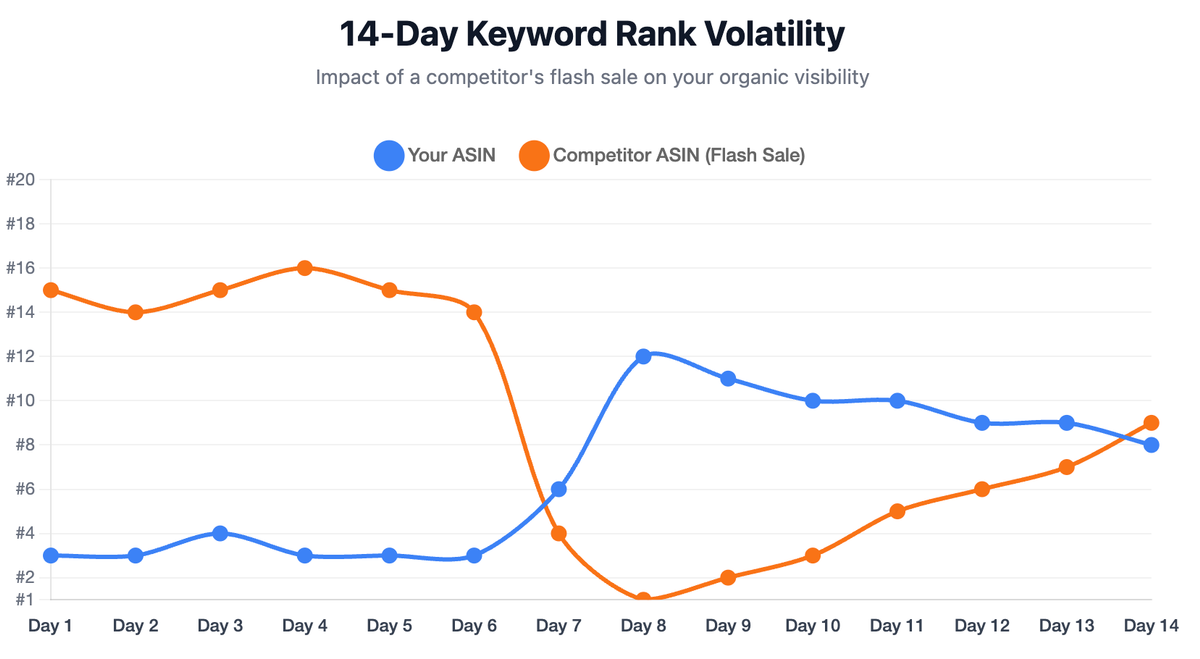
Note: Amazon rank positions vary by marketplace (US, UK, DE, etc.), device type, and even user location. A reliable rank tracker should specify which marketplace and conditions it's measuring under.
What Are the 7 Best Amazon Rank Trackers for Marketers?
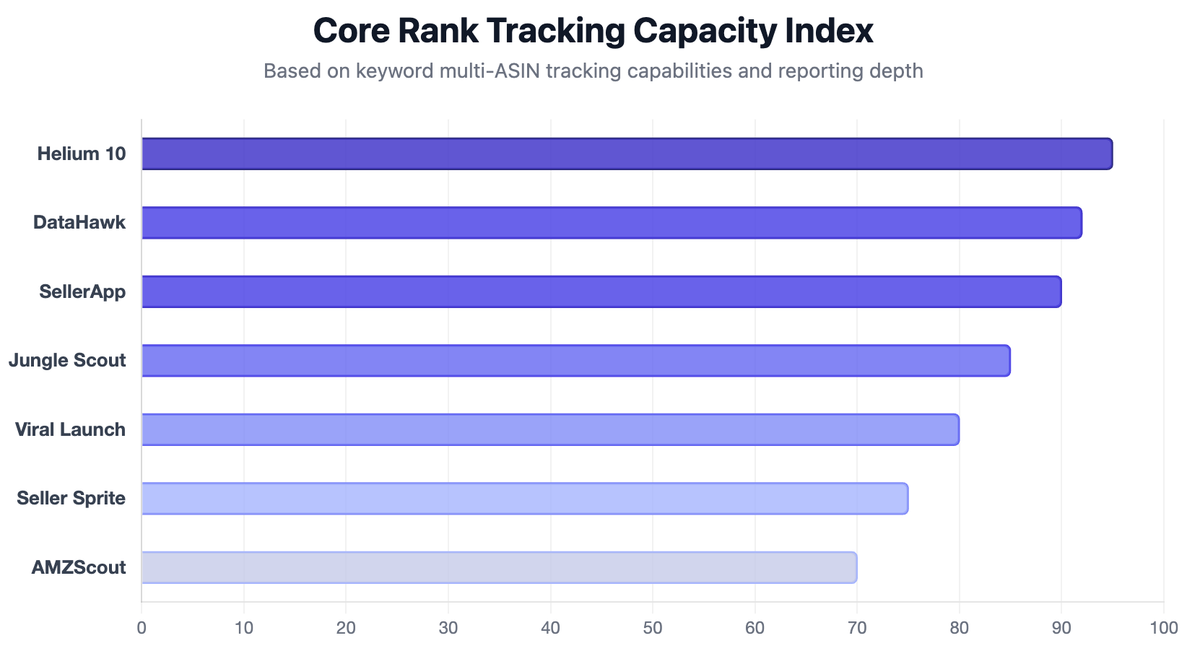
1. Helium 10 — Best Overall Amazon Rank Tracker
Helium 10 is the strongest option if rank tracking is only one part of your Amazon SEO workflow. It works best when you also need keyword research, reverse ASIN analysis, listing optimization, and competitor benchmarking.
What it tracks:
- Keyword rank tracking by ASIN
- Rank history and trend monitoring
- Competitor benchmarking
- Organic and sponsored visibility insights
- Integration with broader Helium 10 keyword and listing tools
Best for:
- Marketers managing multiple Amazon products or brands
- Teams that need keyword tracking and listing optimization in one platform
- Agencies that need rank data for reporting and client strategy
- PPC teams that want to monitor organic movement after ad campaigns
Limitations:
Helium 10 can feel heavy if you only need a simple rank tracker. It is strongest when you also use its keyword research, reverse ASIN, listing, and market analysis tools.
2. Jungle Scout — Best Amazon Rank Tracker for Ease of Use
Jungle Scout is better for marketers who want ranking data in a cleaner product research workflow. It is less intimidating than larger seller suites and easier for small teams to adopt.
Useful features for marketers:
- Amazon keyword rank tracking
- Historical ranking performance
- Organic and sponsored rank views
- Keyword performance analysis
- Integration with Jungle Scout’s product and keyword research tools
Best for:
- Marketers new to Amazon SEO
- Small and mid-size brands tracking fewer products
- Teams that want a cleaner interface than advanced seller suites
- Marketers who need ranking data connected to product research
Limitations:
Jungle Scout is easier to use, but it may not be as deep as Helium 10 for advanced keyword workflows, multi-ASIN tracking, or heavy competitor research.
3. SellerApp — Best for PPC and Organic Rank Tracking
SellerApp stands out for marketers who run Amazon advertising alongside organic optimization. Its rank tracker connects keyword position data directly to your PPC campaign performance, making it easier to see how ad spend affects organic rank.
Where it helps most:
- Amazon keyword position tracking
- Historical keyword ranking analysis
- Competitor rank monitoring
- Keyword opportunity analysis
- PPC and listing optimization support
Best for:
- Marketers managing Amazon PPC and organic visibility together
- Brands that want to understand whether ads support organic movement
- Agencies that need keyword and campaign context in one workflow
- Teams optimizing listings based on both ranking and ad signals
Limitations:
SellerApp works best when PPC and keyword analysis are part of the same workflow. If you only need basic rank tracking, a simpler or lower-cost tool may be enough.
4. Viral Launch — Best for Product Launch Rank Monitoring
Viral Launch is most useful when rank tracking is part of a launch or market validation workflow. It is a better fit for teams watching ranking movement during the first weeks of a product push.
Launch tracking capabilities:
- Keyword rank tracking
- Market intelligence context
- Keyword research and trends
- Listing analysis
- Launch planning support
Best for:
- Marketers preparing a new Amazon product launch
- Brands that need to monitor rankings during launch windows
- Teams that want ranking data tied to market and listing analysis
- Sellers comparing launch performance against competitors
Limitations:
Viral Launch is not always the first choice for teams that only need daily keyword rank tracking. It makes more sense when launch strategy and market validation are also important.
5. AMZScout — Best Budget Amazon Rank Tracker
AMZScout is the most cost-effective Amazon rank tracker for marketers working with tighter budgets. It covers the core rank tracking functionality without the premium price tag of Helium 10 or Jungle Scout.
Core tracking features:
- Keyword rank tracking
- Product rank history
- Competitor product tracking
- Chrome extension support
- Product and niche research tools
Best for:
- Solo marketers and small teams
- Budget-conscious Amazon sellers
- Teams testing Amazon before paying for a larger tool stack
- Marketers who need basic tracking rather than advanced analytics
Limitations:
AMZScout is useful for core tracking, but it may not provide the same depth of reporting, competitive intelligence, or enterprise workflow support as higher-end tools.
6. Seller Sprite — Best for Competitive Keyword Intelligence
Seller Sprite is particularly strong for marketers who need deep competitive intelligence alongside rank tracking. It's widely used in markets with strong cross-border commerce activity and provides unique data on competitor keyword strategies.
What marketers can analyze:
- Keyword rank tracking
- Competitor ASIN research
- Reverse ASIN keyword discovery
- Search volume trend analysis
- Marketplace and niche research
Best for:
- Marketers focused on competitor keyword strategy
- Brands selling across competitive Amazon categories
- Teams looking for keyword gaps and market opportunities
- Sellers who want rank tracking plus product and competitor research
Limitations:
Seller Sprite can be data-rich, but the workflow may not feel as polished as tools built primarily for beginner-friendly reporting.
7. DataHawk — Best for Enterprise Reporting
DataHawk is built for larger marketing teams and agencies that need enterprise-grade reporting, multi-marketplace tracking, and data export capabilities. It's less of a day-to-day optimization tool and more of a strategic analytics platform.
Reporting and analytics capabilities:
- Keyword rank tracking
- Daily organic search performance monitoring
- Marketplace analytics
- Custom dashboards and reporting
- Data exports and BI-friendly workflows
Best for:
- Marketing agencies managing multiple brands
- Enterprise teams that need marketplace-level reporting
- Brands tracking Amazon and Walmart visibility
- Teams that need dashboards rather than only keyword lists
Limitations:
DataHawk may be more than a small seller needs. It is best suited to teams that care about reporting, multi-marketplace analytics, and portfolio visibility.
What Should You Track Besides Amazon Keyword Rank?
Amazon keyword rank is useful, but it is not enough by itself. A rank increase only matters if it connects to business outcomes such as impressions, clicks, conversions, sales, and profitability.
Marketers should track rank data alongside:
- Organic and sponsored placement: separate paid visibility from true organic growth.
- Conversion rate: check whether higher rank actually leads to sales.
- Click-through rate: measure whether images, price, rating, and title earn clicks.
- Review velocity: monitor whether review growth supports ranking stability.
- Price changes: compare rank movement with discounts or competitor pricing.
- Competitor ASINs: track whether ranking gains are category-wide or specific to your product.
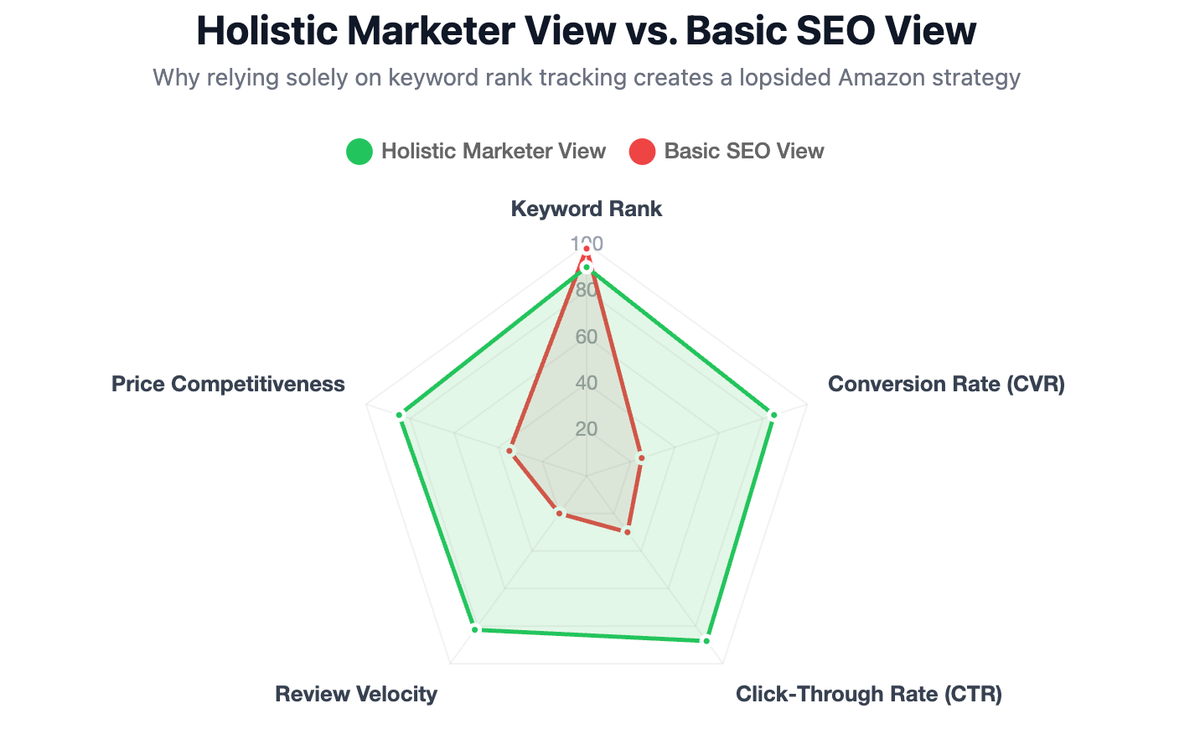
This is where many rank tracking dashboards become only the starting point. The real marketing work is connecting rank changes to the reason behind them.
Using AllyHub as Your Competitive Intelligence Agent
A rank tracker tells you that your keyword position dropped to page two. But it doesn't tell you why. Finding the "why" behind ranking fluctuations usually means opening dozens of Amazon tabs, manually reading reviews, and copy-pasting competitor data into spreadsheets.
This is where AllyHub completely changes the workflow. Instead of acting as just another analytics dashboard, AllyHub serves as your dedicated e-commerce AI agent. There is no complex setup, and no need to rebuild the workflow from scratch. You simply pick a ready-to-run Service Card, fill in the target ASINs, and let the AI do the actual browsing, extracting, and reporting for you.
When your rank tracker signals a market shift, you can immediately deploy AllyHub to execute:
- Competitor Price & BSR Monitoring: If your rank slips, use this task to automatically track your competitors' daily pricing and BSR. AllyHub delivers a clean comparison table, CSV export, and report changes in a structured table so you know exactly who triggered a race to the bottom.
- Amazon Review Mining: Did a competitor's organic rank suddenly spike? Extract and summarize recent reviews from approved sources — to uncover buyer complaints and pain points. AllyHub summarizes sentiment patterns and recurring themes, showing you exactly how to counter-position your listing.
- Automated Competitor Deep Dives: Instead of manually compiling competitor profiles to see why they own the Buy Box, AllyHub generates a complete market report detailing their strengths, weaknesses, and differentiation opportunities.
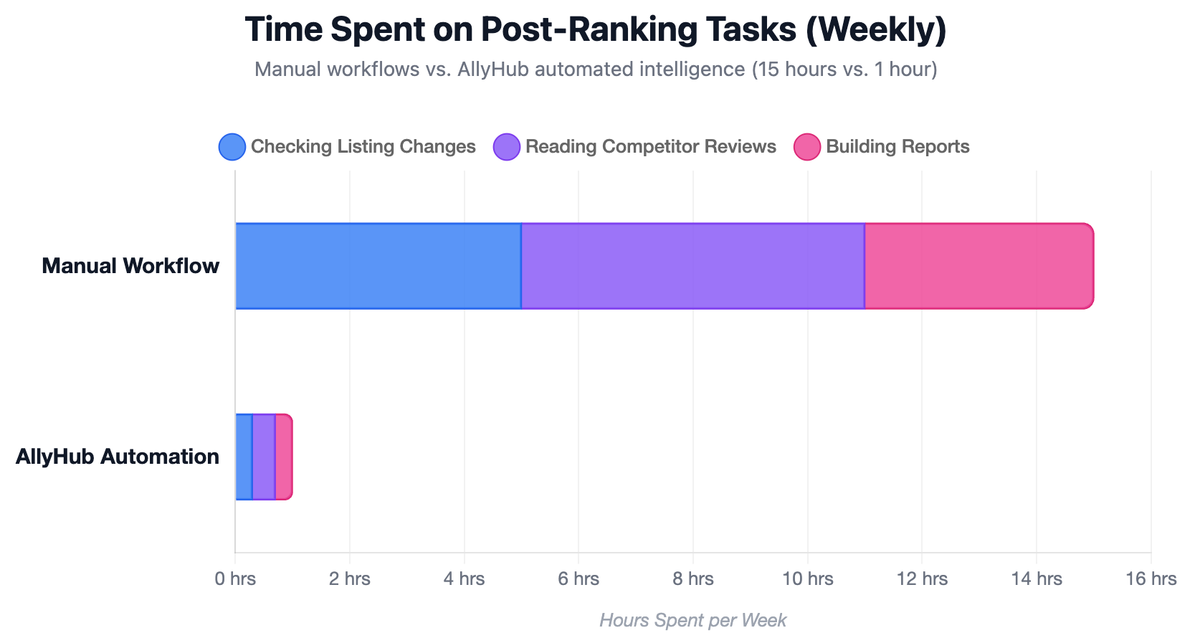
For marketers, the real work begins after the keyword rankings update. By handing the repetitive data extraction over to AllyHub, you transform hours of manual competitor research into a repeatable workflow that gets easier to run over time.
Frequently Asked Questions
Does Amazon show keyword rankings inside Seller Central?
No. Seller Central can show search term, impression, click, and ad-related data, but it does not give a clean organic keyword rank position for every ASIN and keyword.
Why do my Amazon keyword rankings change so often?
Amazon rankings can shift because of sales velocity, PPC activity, price changes, reviews, inventory, and competitor promotions. This is why marketers should look at trends over several days instead of reacting to one ranking change.
How many Amazon keywords should I track per product?
Most marketers should start with 10–30 keywords per ASIN. Track the keywords that are relevant, searchable, and tied to real listing or PPC decisions.
Can I track Amazon rankings without a paid tool?
You can manually search Amazon, but the results are inconsistent and difficult to compare over time. Free or low-cost tools can help with early checks, but serious tracking usually requires a dedicated rank tracker.
Can AllyHub help after I collect rank tracking data?
Yes. AllyHub can help marketers automate competitor checks, review analysis, bulk product data extraction, and recurring reports after the rank tracker shows where rankings changed.
What Should You Do Next?
Choose your Amazon rank tracker based on the decision you need to make first: keyword visibility, PPC impact, launch monitoring, competitor movement, or executive reporting.
Start with 10–30 target keywords per ASIN, collect a short baseline, and review rank changes alongside the marketing actions that may have caused them. Once rank tracking becomes repetitive reporting work, use AllyHub to automate competitor checks, review analysis, and recurring research summaries.