When you get access to Manus, you may face a harsh reality in daily business use: they are expensive per run, and they start from scratch every time. If you find Manus task reliability drops on long multi-step runs, or just need an autonomous AI agent to execute real work, a Manus alternative is the solution.
We evaluated the top agentic AI platforms available right now. Whether you need an agent for coding, marketing research, or business ops, here are the 9 best Manus alternatives that actually execute tasks.
Key Takeaways
- Best for browser tasks & marketers: AllyHub is one of the strongest ready-made AI copilots inside your Chrome browser. It executes browser tasks and compounds value over time through Skills and memory.
- Best open-source option: AutoGPT is open-source and self-hostable, with no per-task fee — but setup is non-trivial.
- Best for business workflows: Lindy excels at inbox/calendar/CRM-style automations for small teams.
- Best for developer agents: OpenHands is the leading open-source coding-and-automation agent.
- Best for deep search synthesis: Genspark.
- What to look for: The biggest differentiators are (1) real browser execution vs. prompt-only output, (2) whether workflows can be reused, and (3) how pricing scales as you run more tasks.
Quick Comparison Table of Manus Alternatives
Not every alternative below is a direct Manus replacement. Some specialize in specific capabilities Manus popularized — browser automation, coding agents, research, or business workflows.
Tool | Best For | Pricing | Standout Feature |
AllyHub | Knowledge workers who want compounding workflows | Free tier + paid plans | Skills system — workflows get cheaper over time |
Genspark |
AllyHub — Best for Browser Automation & ROI
While Manus aims to be a general-purpose agent that handles everything from coding to booking flights, AllyHub hyper-focuses on the exact tasks knowledge workers and marketers do every day: web research, data extraction, and content execution directly in the browser.
Manus is optimized around autonomous task execution, while AllyHub focuses on accumulating reusable workflow assets over time — operates on a ROTI (Return on Token Investment) framework. If you scrape competitor pricing on Monday, it can reduce repeated setup time and make recurring workflows more efficient.
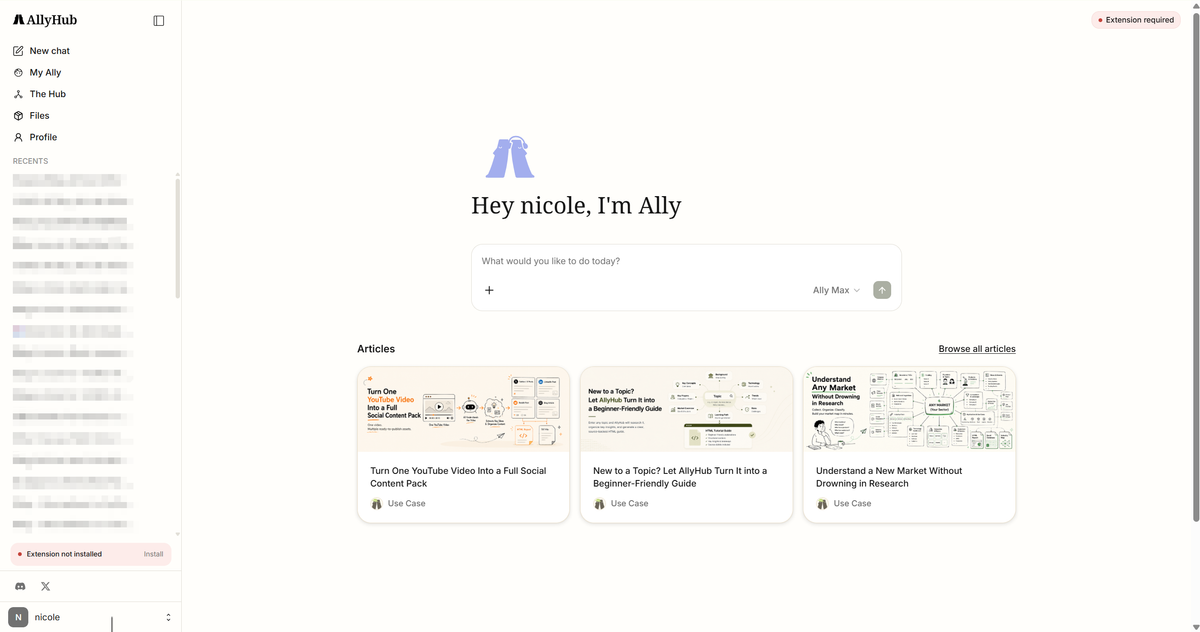
Key features:
- Real browser execution — clicking, form-filling, scrolling, screenshots, data extraction
- Skills system + Web Notes for persistent context across sessions
- One-click Service cards that package any workflow for reuse or sharing
- It runs as a Chrome extension, utilizing your actual logged-in sessions
- Continuous learning via interaction history and accumulated workflow context
Pricing: Freemium to start; $15.99/mo (Pro, billed annually).
Best for: Knowledge workers and consultants who run the same research, scraping, or content workflows repeatedly and want each run to cost less (in time and tokens) than the last.
Limitations:
- Browser-extension-first, so headless/server-side background runs aren't its native model
- Newer ecosystem than Manus — fewer third-party integrations and templates today
- Requires occasional oversight on sensitive workflows (logins, payments) — by design
Genspark — Best for Deep Research Quests
Genspark takes the agentic approach to search. Instead of clicking links, you give it a "Quest" (e.g., "Compare 10 SaaS pricing models"), and multiple agents work in the background to synthesize a structured "Sparkpage" with citations.
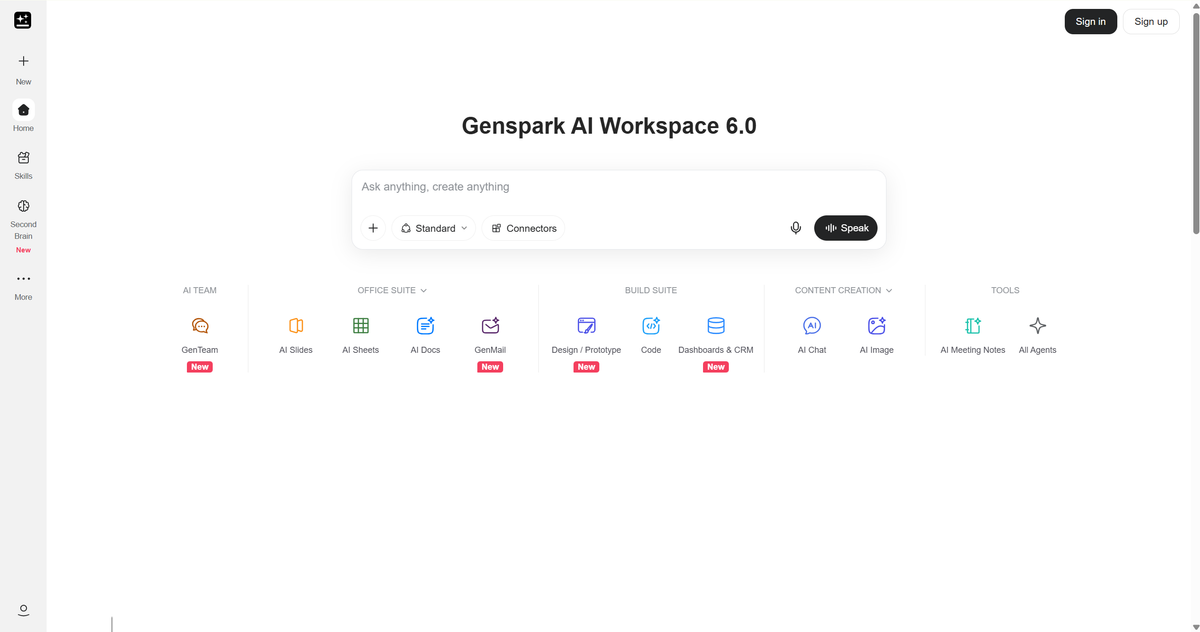
Key features:
- "Sparkpages" — auto-generated structured summaries from multi-source research
- Multi-step research quests with citations
- Built-in writer mode for turning research into drafts
Pricing: Free tier with daily usage limits; Team plan is $30/month.
Best for: Marketers, analysts, and content researchers who need fast, cited research outputs.
Limitations:
- Less suited for browser-execution tasks (form submission, logins, shopping)
- Credit-based pricing can burn quickly on deep quests
- Less control over agent step-by-step behavior than developer-focused tools
OpenHands — Best Open-Source Alternative for Coding
If your primary interest in Manus was its ability to write code and manipulate software environments, OpenHands (formerly OpenDevin) is the best open-source alternative. It is an autonomous software engineer that lives in your terminal. It can write code, run commands, browse documentation, and debug its own errors in a continuous loop.
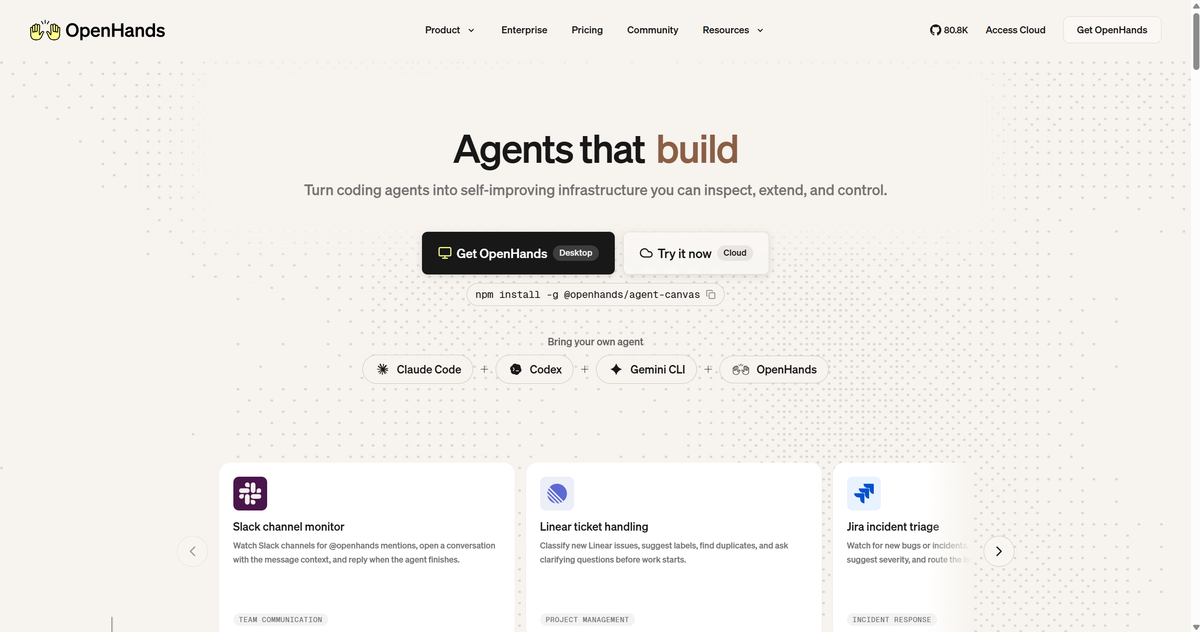
Key features:
- Fully open-source (MIT-friendly license)
- Browser + terminal + code execution in one agent loop
- Active contributor community and plugin ecosystem
Pricing: Free if you self-host; Individuals need a key or use their providers at-cost; Enterprise gets custom pricing when you need full control and support.
Best for: Developers and technical founders who want full control over their agent stack and don't mind getting their hands dirty.
Limitations:
- Real setup overhead — Docker, model keys, config
- No native concept of reusable workflows or memory across runs
- UX is developer-first; not approachable for non-technical users
Lindy — Best AI Employee as Manus Alternative
If you want an agent to triage your inbox, update HubSpot, and schedule meetings, Lindy is the answer. As an "AI employee", it uses natural language to build autonomous workflows connecting your everyday SaaS apps.
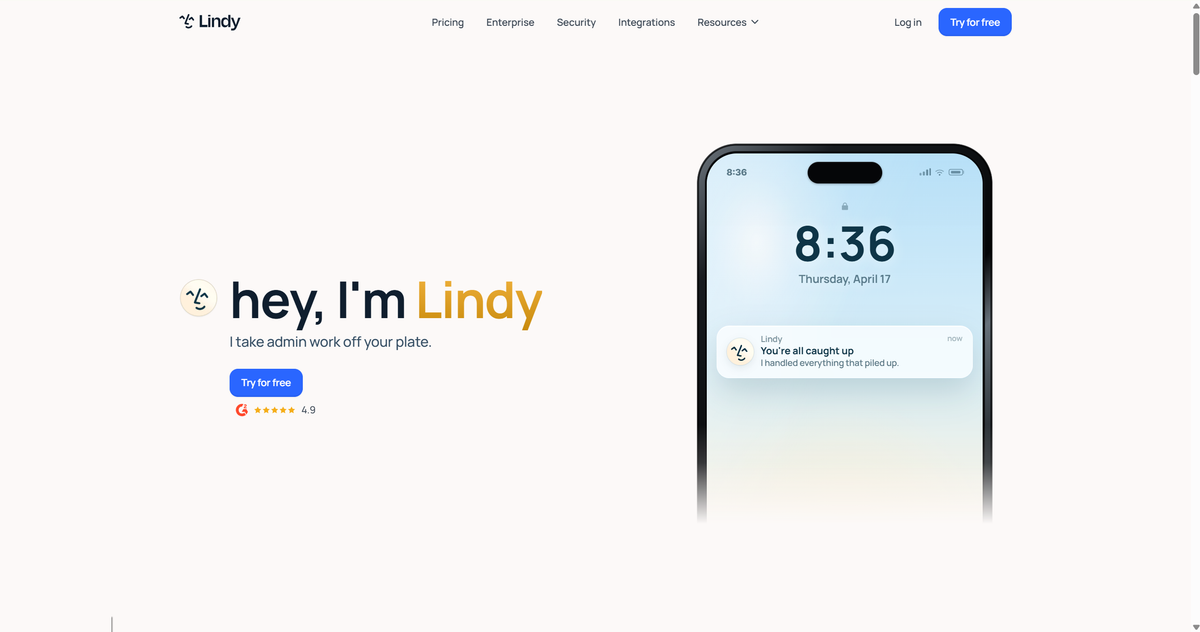
Key features:
- Template library for common business automations
- Natural-language workflow builder
- Integrations with Gmail, Calendar, Notion, HubSpot, Slack
Pricing: Free tier; paid plans around $49/month for heavier use.
Best for: Solo founders, executive assistants, and small ops teams who want inbox/calendar/CRM automations live in an afternoon.
Limitations:
- Less focused on deep browser automation or scraping
- Heavily template-driven — fully custom workflows can feel constraining
- Per-action pricing on higher tiers can add up
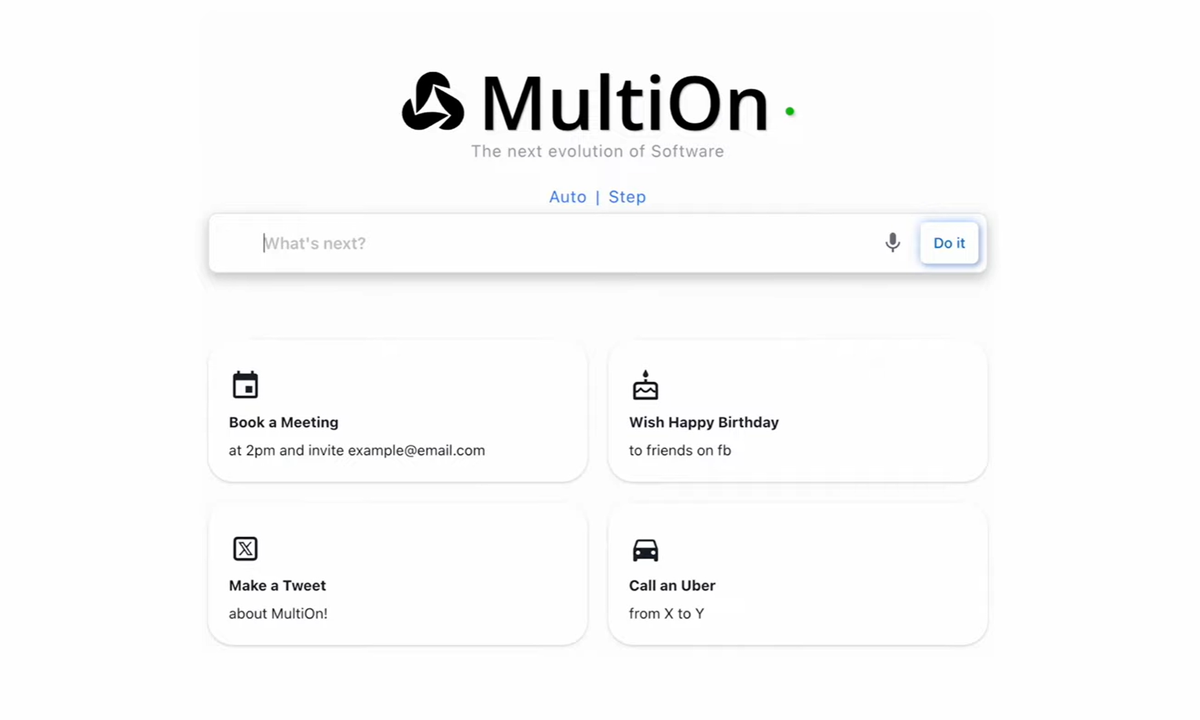
MultiOn — Best for Personal Consumer Tasks
MultiOn is a browser-agent focused on consumer-style web tasks. As a pure consumer action agent. If you specifically want an AI to navigate DoorDash, book a flight, or fill out a checkout form for you, this is the most direct parallel to Manus's consumer demos.
Key features:
- Chrome extension that takes over browser actions
- Optimized for shopping, booking, and account-creation flows
- Session memory for returning to in-progress tasks
Pricing: Free tier; paid plans for higher-volume task execution.
Best for: People who want a true "browse and act" agent for personal tasks.
Limitations:
- Narrower task scope than Manus — weak for research or content
- Limited workflow reuse — you can't easily package and replay automations
- Site-by-site reliability varies; logins/captchas still cause friction
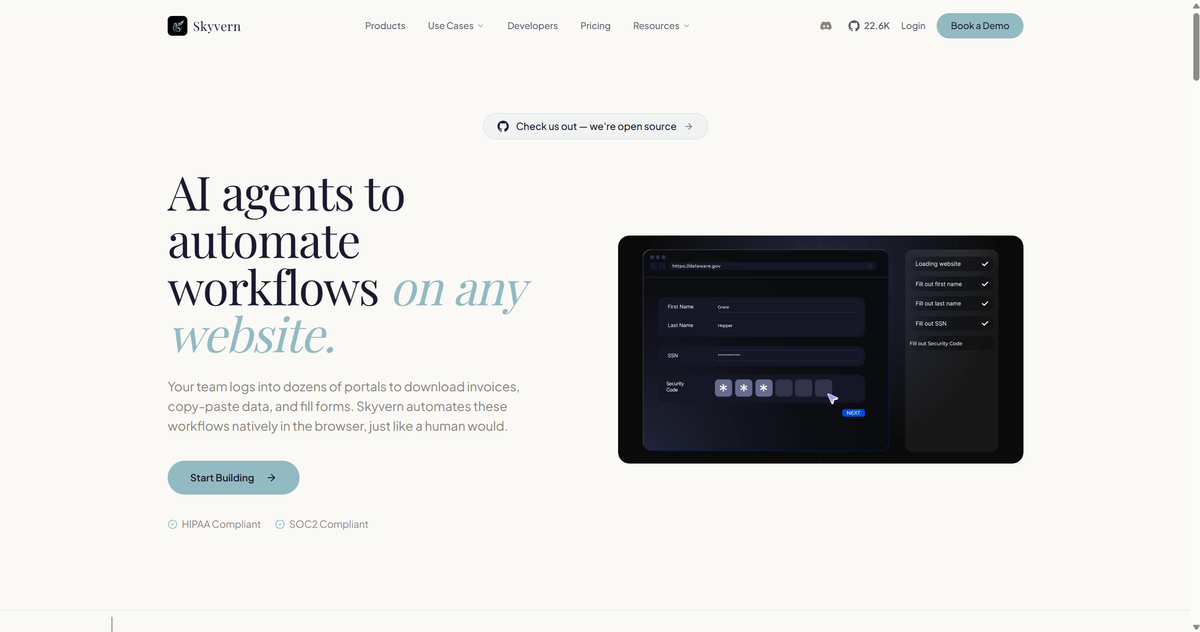
Skyvern — Best for Workflow Automation in SaaS Ops
Skyvern uses LLMs to visually interpret web pages, making it incredibly resilient to UI changes. It’s perfect for ops teams processing hundreds of invoices across different supplier portals.
Key features:
- Open-source core with managed cloud version
- Visual workflow builder + LLM-driven element selection
- Strong on forms, PDFs, and structured data extraction
Pricing: Free tier with 5,000 credits/month; Hobby goes $29/month with 30,000 credits; Pro is $149/month with 150,000 credits; and custom Enterprise pricing with unlimited credits.
Best for: Ops teams running high-volume browser automation across many similar-but-not-identical sites.
Limitations:
- Engineering-flavored UX; not built for casual end users
- No long-term memory or skill accumulation across runs
- Setup still requires comfort with config files and APIs
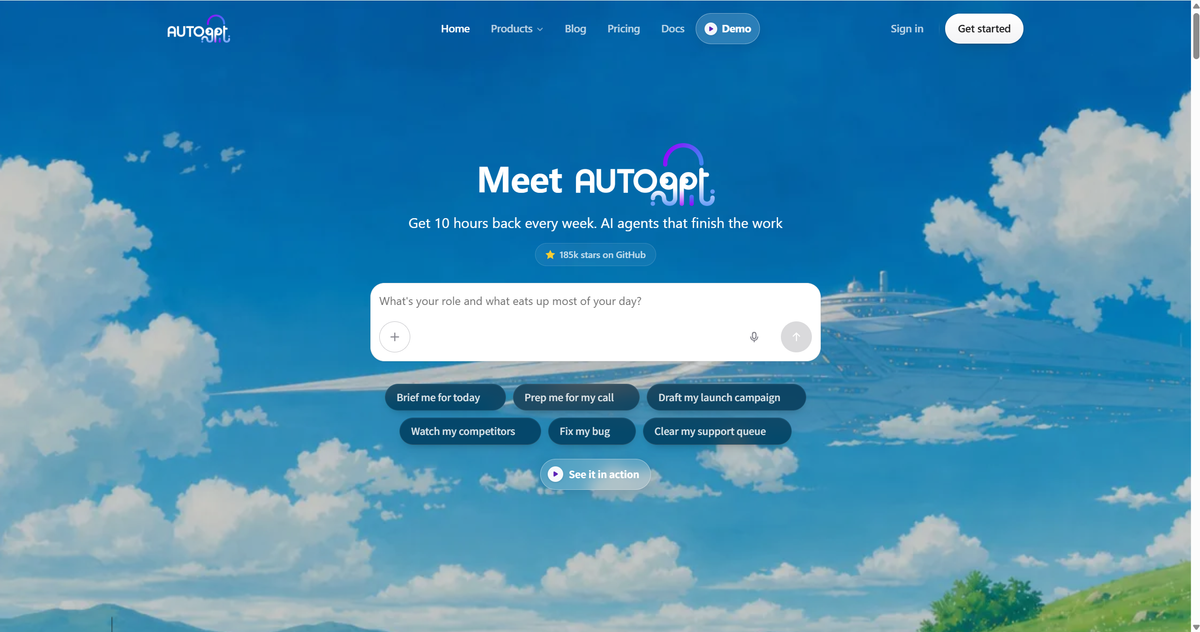
AutoGPT — Best for Open-Source Agent Building
AutoGPT is the original autonomous-agent framework that kicked off the post-GPT-4 agent wave. Today, AutoGPT has evolved into a broader agent platform with both self-hosted and cloud options. For tinkerers who want full transparency into agent reasoning loops, it remains the reference implementation.
Key features:
- Fully open-source and self-hostable
- Plugin ecosystem and active experimental branches
- Strong community examples and tutorials
Pricing: Self-hosted version is free and open source. The hosted AutoGPT platform offers paid plans, including Pro at $42.50/month when billed annually.
Best for: Developers and AI researchers who want to study, modify, or extend agent architectures.
Limitations:
- Not a productized tool — high setup and maintenance burden
- Tends to drift on long tasks without careful prompt engineering
- Browser automation capabilities depend on the platform version
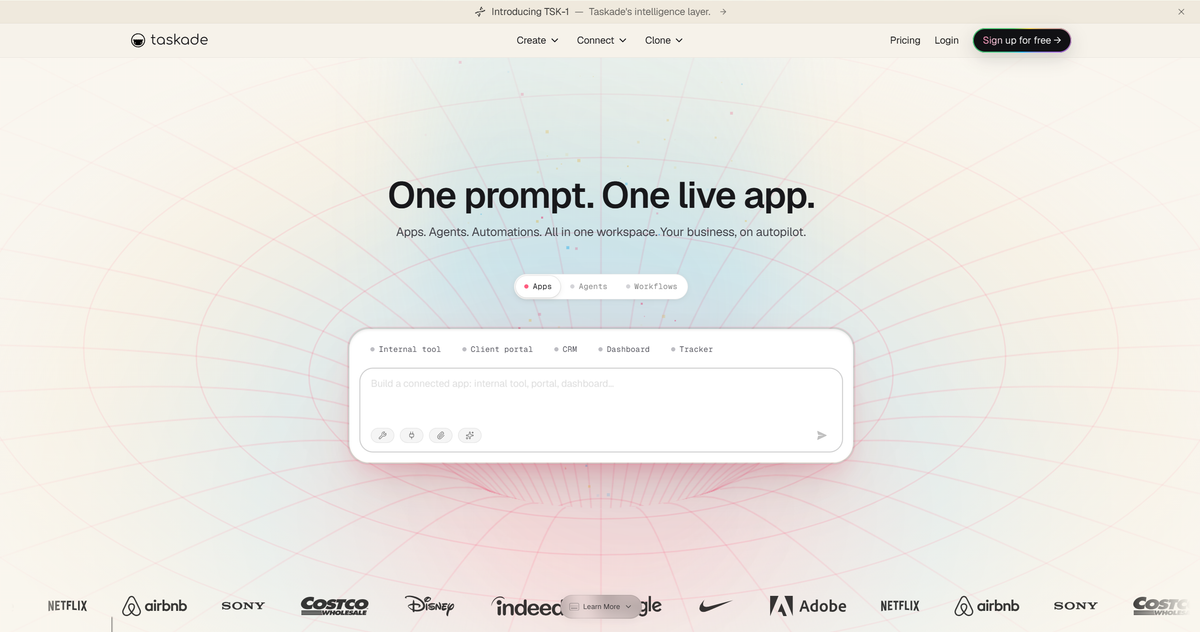
Taskade — Best for Teams Combining Agents with Project Management
Taskade blends AI agents with a project-management workspace. Each project can host its own set of agents that operate on the project's tasks, notes, and data. For teams that want agents embedded in their daily workflow rather than as a separate tool, Taskade is a compelling choice.
Key features:
- Agents embedded in projects, tasks, and knowledge bases
- Pre-built agent templates for marketing, ops, and research
- Built-in chat, docs, and task management
Pricing: Free tier; paid plans start around $10/month, billed annually.
Best for: Small teams that want one workspace for agents + project management.
Limitations:
- Agent execution power is shallower than dedicated agent platforms
- Less focused on browser automation
- Jack-of-all-trades positioning means it doesn't fully replace a specialized agent tool
SmythOS — Best for Building Custom Multi-Agent Systems
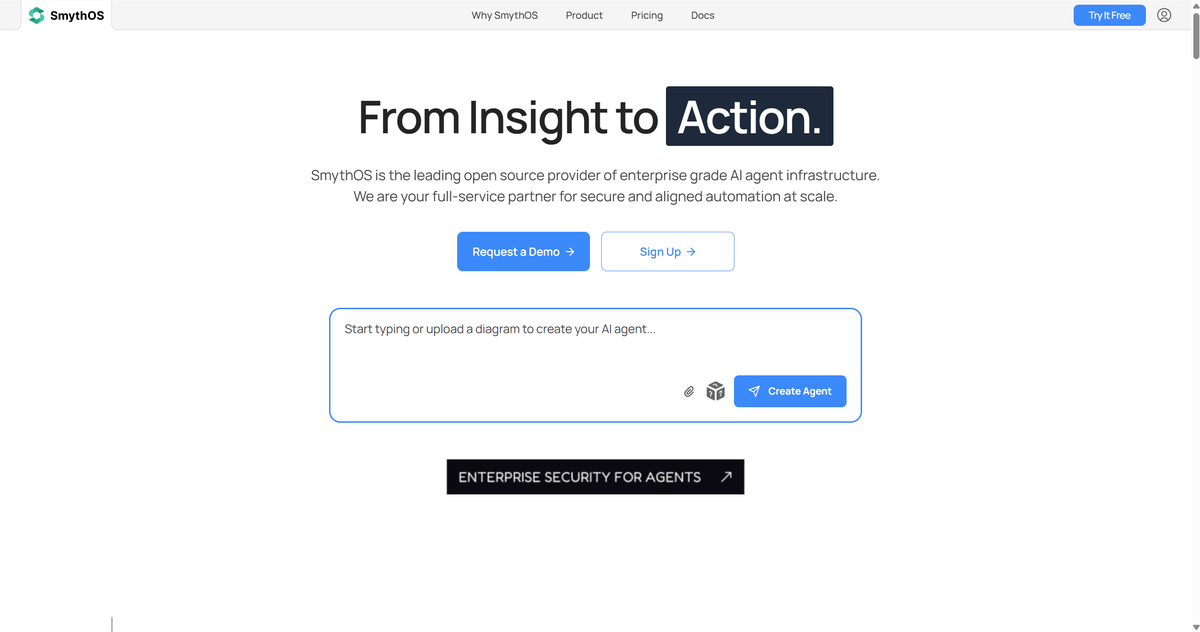
SmythOS is a platform for building and deploying custom multi-agent applications. If your use case requires orchestrating several specialized agents (research agent + writer agent + reviewer agent), SmythOS gives you the orchestration layer.
Key features:
- Visual multi-agent orchestration
- Deploy agents as APIs or scheduled jobs
- Enterprise-grade controls and observability
Pricing: Custom pricing, enterprise-focused, starting from Builder $39 per seat/month.
Best for: Engineering teams building agent-powered internal tools or customer-facing products.
Limitations:
- Not an end-user tool — requires build effort
- Pricing not transparent for SMB buyers
- Overkill for individuals or simple task automation
How to Choose the Right Manus Alternative for Your Needs
Use this decision framework to pick the right tool from the list above:
1. What kind of tasks are you automating?
Your Primary Task Type | Best Pick |
Repeated research/scraping/content workflows | AllyHub |
One-off research with citations | Genspark |
Inbox/calendar/CRM ops | Lindy |
2. Do you need to reuse workflows?
If yes — you run the same type of task weekly or daily — strongly prefer tools with a reusable-workflow concept: AllyHub (Service cards) and Lindy (templates). Tools without reuse force you to re-explain the task every time, which is the same problem many users have with Manus itself.
3. Are you technical or non-technical?
- Non-technical end users: AllyHub, Lindy, MultiOn, Genspark
- Comfortable with setup: Skyvern, Taskade
- Developers / engineers: OpenHands, AutoGPT, SmythOS
4. What's your budget model?
- Free / open-source: AutoGPT, OpenHands (self-hosted)
- Free tier + transparent paid plans: AllyHub, Lindy, Taskade, MultiOn, Genspark
- Custom / enterprise: SmythOS
⚠️ Warning: Credit-based agent pricing can spiral quickly on multi-step tasks. Before committing to any paid plan, run 3–5 real workflows (not demos) and measure actual credit consumption. Tools with reusable-workflow architectures tend to score better on this metric over a 3-month horizon.
FAQ: Manus Alternatives
What is the best free Manus alternative?
For non-technical users, AllyHub and Genspark both offer functional free tiers for real task volume. For developers willing to self-host, AutoGPT and OpenHands are fully free and open-source.
What is the difference between Manus and AllyHub?
Manus is a general-purpose, server-driven agent designed for a wide array of tasks but treats every prompt as a new instance. AllyHub is a browser-native copilot that specializes in marketing and ops workflows. It utilizes a ROTI framework, which can learn your repetitive workflows and get faster every time you run them.
Can these alternatives run browser tasks reliably?
Browser execution is the hardest part of any AI agent. Browser-native tools (AllyHub, MultiOn, Skyvern) currently outperform chat-first tools on real browser tasks. Reliability still drops on sites with logins, captchas, or aggressive bot detection — plan for human-in-the-loop checkpoints on those.
How much do Manus alternatives cost?
Most fall in the $0–$50/month range for individual users, with enterprise plans scaling up. The hidden cost is per-task credit burn: a tool that looks cheaper per month can cost more in credits if it doesn't reuse prior work. Always price over a 30-day realistic usage window, not a demo.
Which alternative is best for teams?
For small teams (5–20 people): Taskade and Lindy have strong collaboration features. For larger orgs or those building agent-powered products: SmythOS. AllyH ub works for both individual power users and small professional teams that share Service assets.
Do Manus alternatives work offline or self-hosted?
OpenHands, AutoGPT, and Skyvern (open-source core) can be self-hosted. Most other options on this list are cloud-only. Self-hosting trades setup effort for data control and predictable costs.
Conclusion
The "best" Manus alternative depends entirely on what you want the AI to do. If you want an AI software engineer, grab OpenHands. If you want an AI administrative assistant, use Lindy. But if you are a professional tired of repeating the same web research, data extraction, and content tasks every week, choose AllyHub. Now try a small pilot workflow with AllyHub and watch what happens in your browser.