Genspark is genuinely impressive at what it does. Its Super Agent can orchestrate multiple AI models, generate Sparkpages, create presentations, and even handle AI-powered phone calls. However, for knowledge workers, entrepreneurs, and professional teams using AI every day, different needs start to emerge: predictable costs, reusable workflows, specialized automation, and tools that compound value over time.
This guide covers 8 Genspark alternatives that address those needs — whether you want deeper research capabilities, more reliable automation, better content workflows, or an AI system that becomes more valuable the more you use it.
Key Takeaways
- The Direct Replacement (Search): Perplexity AI. If you just want a better, faster AI search engine with bulletproof source citations, this is the industry standard.
- The "Next-Level" Upgrade (Execution): AllyHub. If you are tired of just reading research summaries and want an AI agent that actually extracts data, navigates websites, and executes browser tasks for you.
- Best for presentations: Gamma produces polished, shareable decks faster than Genspark's AI Slides with more reliable export.
- Best for workflow automation: Lindy connects your SaaS stack (Gmail, HubSpot, Notion) and executes multi-step automations that Genspark can't reach.
- Bottom line: If you're running the same types of tasks repeatedly, any tool that learns from prior runs will outperform Genspark's fixed-cost, zero-memory model over time.
Why Knowledge Workers Look for Genspark Alternatives
People are searching alternatives to Genspark commonly because:
- Unpredictable credit consumption
- No learning or memory across tasks
- Unreliable export quality
- Limited depth in specialized workflows
- Customer support and transparency gaps
Quick Comparison: Genspark Alternatives at a Glance
Alternative | Best For | Starting Price | Free Plan? |
Perplexity AI | Real-time research with source citations | $20/mo Pro | ✅ Yes |
Perplexity AI — Best for Real-Time Research with Reliable Source Citations
If you are leaving Genspark because you just want a cleaner, faster research experience, Perplexity AI is your destination.
Perplexity is purpose-built for research. It pulls from real-time web sources, cites every claim with a clickable reference, and supports iterative follow-up questions that build on prior context.
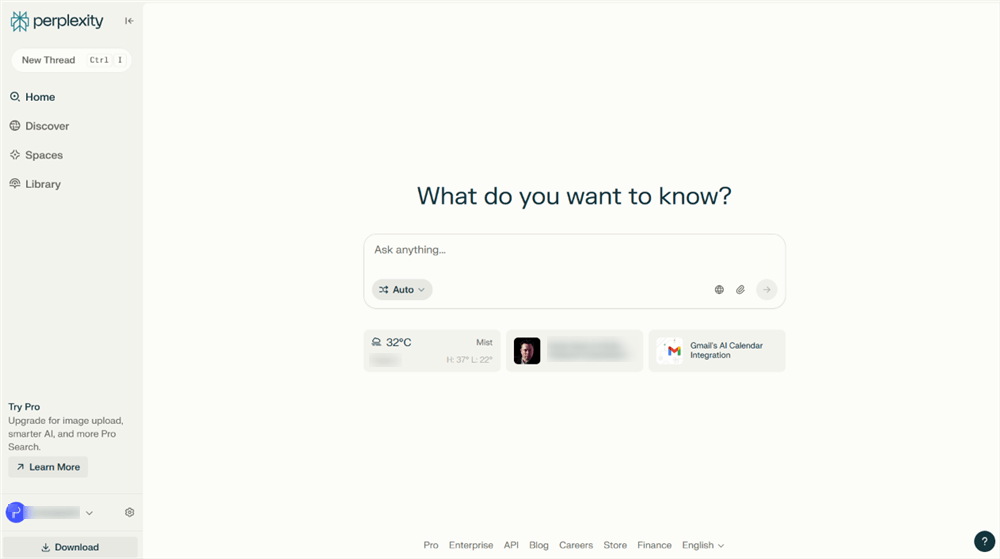
Why it wins on research: While Genspark focuses on generating dynamic "Sparkpages," Perplexity acts more like an oracle. It pulls real-time data and rigorously cites every single claim with a clickable footnote. If you are doing professional research where hallucination is unacceptable, Perplexity’s citation engine is far more trustworthy.
Key features:
- Real-time web access with cited sources on every response
- Pro Search mode for deeper, multi-step research queries
- Spaces for organizing research projects
- API access for developers
- Supports follow-up questions with full context retention
Pricing vs. Genspark: Perplexity Free (unlimited basic searches) vs. Genspark Free (100 credits/day). Perplexity Pro at $20/month vs. Genspark Plus at $24.99/month — and Perplexity's Pro searches are unlimited, not credit-gated.
Best for: Knowledge workers who need verifiable, source-backed research for reports, articles, or decision-making.
Limitations vs. Genspark: Perplexity doesn't generate slides, spreadsheets, or make phone calls. It's a research tool, not an all-in-one workspace. No browser automation or multi-step task execution.
AllyHub — Best for Repeatable Workflows That Get Smarter Over Time
If Genspark gives you a summary page, AllyHub gets the job done. It is a browser-native AI copilot that actually operates your web browser.
Instead of just asking an AI to "research competitors," you can instruct AllyHub to navigate to 5 competitor websites, extract their pricing tiers, log into your active Google Sheets session, and format the data. It clicks, scrolls, and extracts data natively in your Chrome browser.
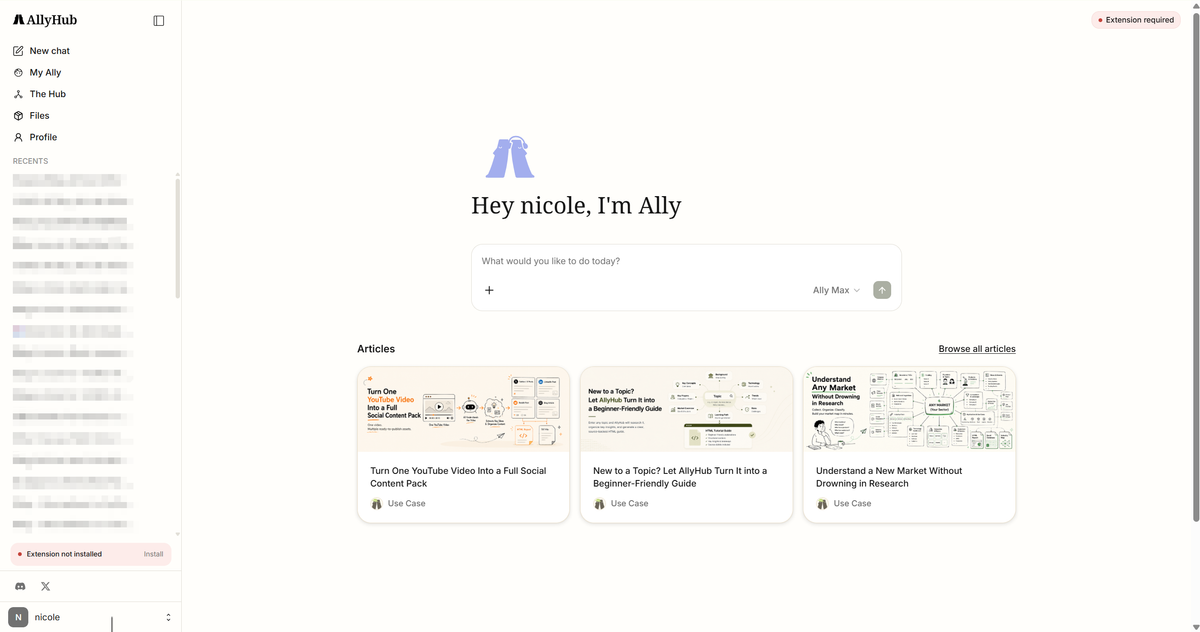
Why it beats Genspark for repeatable workflows: Genspark's Super Agent is stateless — it starts fresh every time. AllyHub's ROTI (Return on Token Investment) model means each completed task builds reusable assets. A benchmark from the AllyHub community showed the same Amazon scraping task dropping from 101 credits on Run 1 to 50 credits on Run 3 while processing 33× more data. That compounding efficiency is structurally impossible on Genspark.
Key features:
- Chrome extension that directly operates your browser
- Skills system: every task builds reusable knowledge that improves future runs
- One-click Services: package any workflow into a reusable card, no re-explaining required
- 50+ pre-built Services in The Hub covering research, data extraction, content, and more
- Three agent modes (Lite / Pro / Max) to match model power to task complexity
- Credit-based pricing with daily free credits and monthly reset
Pricing vs. Genspark: AllyHub Free (daily credits); Pro at $15.99/month; AllyHub's per-task cost decreases as your Skills library grows, while Genspark's stays fixed.
Best for: Knowledge workers, entrepreneurs, and professional teams who run the same types of research, data extraction, or content workflows repeatedly and want each run to build on the last.
Limitations vs. Genspark: AllyHub requires the Chrome extension and an active browser session — there's no cloud/background execution. It doesn't have Genspark's built-in phone call feature, AI video generation, or native slide creation. No mobile app currently.
Claude (Anthropic) — Best for Long-Form Reasoning and Document Analysis
Genspark is great for scanning the live web, but if you need to analyze a 100-page PDF report or synthesize complex internal documents, Claude 3.5 is vastly superior. Its massive 200K context window and unmatched reasoning capabilities make it the tool of choice for heavy text synthesis, completely outpacing Genspark's standard outputs.
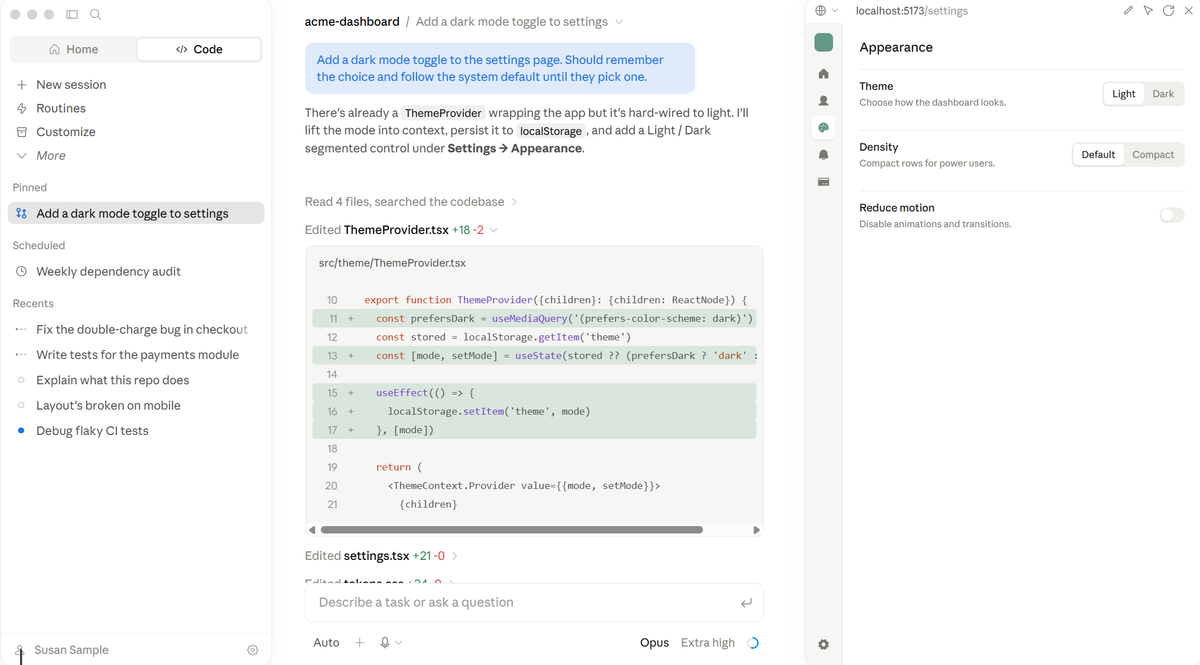
Why it beats Genspark for document work: Claude's context window and reasoning depth make it the better choice for any task involving large documents, complex analysis, or writing that needs to sound genuinely human.
Key features:
- 200K token context window (Claude 3.5 and above)
- Exceptional long-form writing, synthesis, and analysis
- Projects feature for organizing ongoing work with persistent context
- Artifacts for generating and iterating on code, documents, and structured content
- Strong performance on nuanced reasoning and multi-step logic
Pricing vs. Genspark: Claude Free (limited daily usage); Claude Pro at $20/month.
Best for: Entrepreneurs and knowledge workers who need high-quality writing, document analysis, or complex reasoning — not just fast first drafts.
Limitations vs. Genspark: Claude doesn't generate slides, make phone calls, or execute browser-based tasks. It's a language model, not an agent platform. No built-in web search on the free tier.
ChatGPT (OpenAI) — Best for Flexible AI Tasks Across the Broadest Use Cases
ChatGPT remains the most versatile general-purpose AI platform available. With GPT-4o, the Operator computer-use feature, and a growing library of GPTs, it covers more ground than Genspark for most everyday knowledge work.
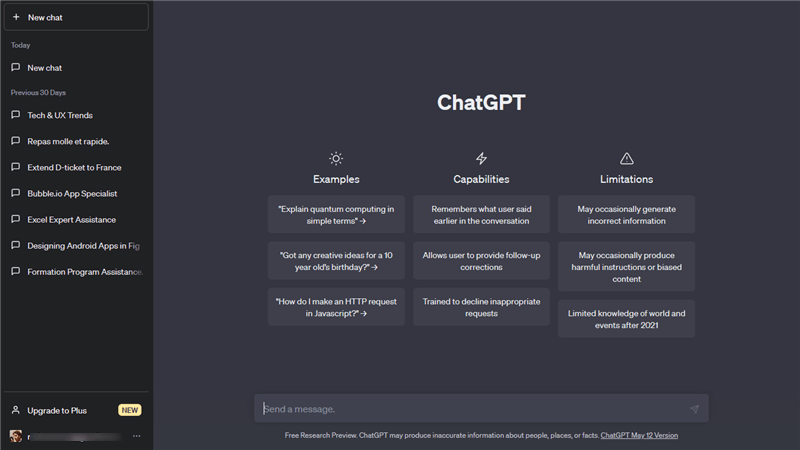
The key difference: ChatGPT's ecosystem is broader. The GPT Store, code interpreter, image generation (DALL-E), and voice mode give it a range that Genspark's more structured workspace can't match. For teams that need one tool to handle everything from drafting emails to analyzing data to generating images, ChatGPT is the safer default.
Key features:
- GPT-4o for text, vision, and voice tasks
- Code interpreter for data analysis and Python execution
- DALL-E 3 image generation built in
- Operator for computer-use automation tasks
- GPT Store with thousands of specialized GPTs
- Memory feature for persistent context across sessions
Pricing vs. Genspark: ChatGPT Free (GPT-4o with limits); Plus at $20/month.
Best for: Knowledge workers who want one tool for the widest range of tasks without committing to a specialized platform.
Limitations vs. Genspark: ChatGPT's agent/computer-use features are less mature than Genspark's Super Agent for structured multi-step tasks. No built-in slide or spreadsheet generation comparable to Genspark's dedicated tools.
Lindy — Best for SaaS Workflow Automation
Genspark cannot read your emails or update your CRM. If your goal is to automate business operations, Lindy provides "AI employees" that connect directly to your SaaS stack (Gmail, HubSpot, Notion). It uses natural language to set up triggers and actions, bridging the gap between research and back-office automation.
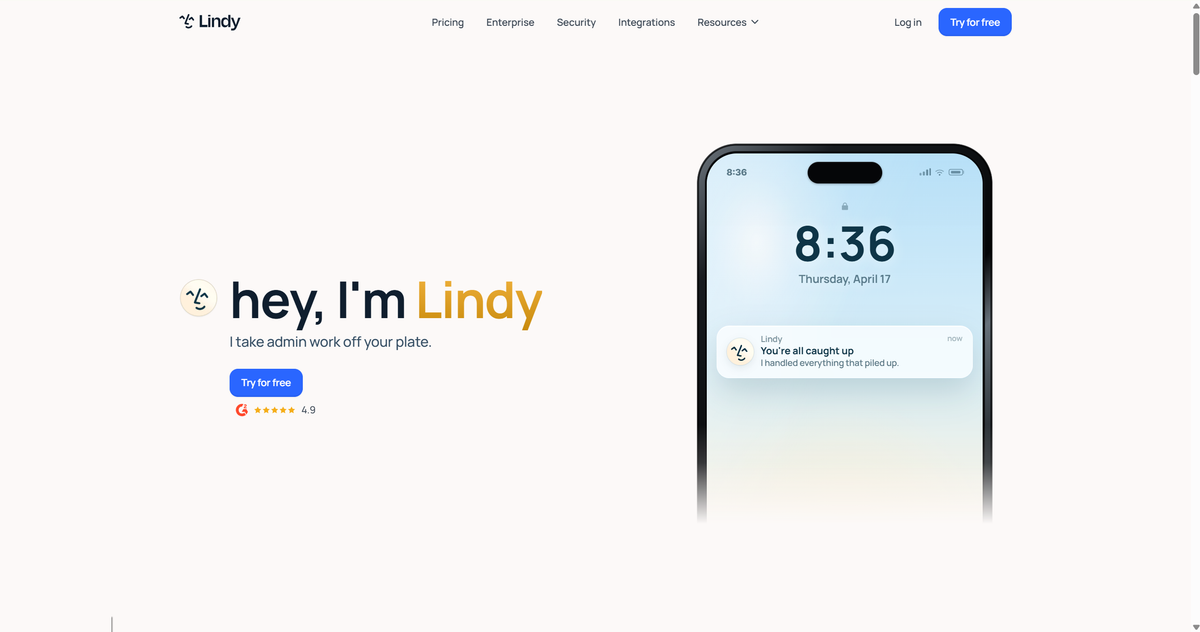
Why it beats Genspark for SaaS automation: Lindy's deep integrations and trigger-based automation model mean it can actually execute actions in your existing tools — not just generate content about them.
Key features:
- 100+ native integrations (Gmail, HubSpot, Notion, Slack, Salesforce, and more)
- AI agents that monitor triggers and execute multi-step workflows
- Email management, lead qualification, meeting scheduling automation
- SOC2 and HIPAA compliance for enterprise use
- No-code workflow builder
Pricing vs. Genspark: Lindy Free (limited tasks); Lindy Plus at $49.99/month. Lindy is pricier, but covers a fundamentally different use case.
Best for: Entrepreneurs and professional teams who need AI to take action inside their existing SaaS tools, not just generate content.
Limitations vs. Genspark: Lindy doesn't generate slides, do general research, or make phone calls. It's an automation platform, not a content creation workspace. Higher price point than Genspark.
Gamma — Best for AI-Generated Presentations
If you were hoping Genspark would help you build slide decks, you'd probably noticed the formatting could get messy. Gamma is an AI platform purpose-built for presentations. You simply paste your raw research into Gamma, and it generates a polished, web-native slide deck in seconds that you can share via link or export flawlessly to PowerPoint.
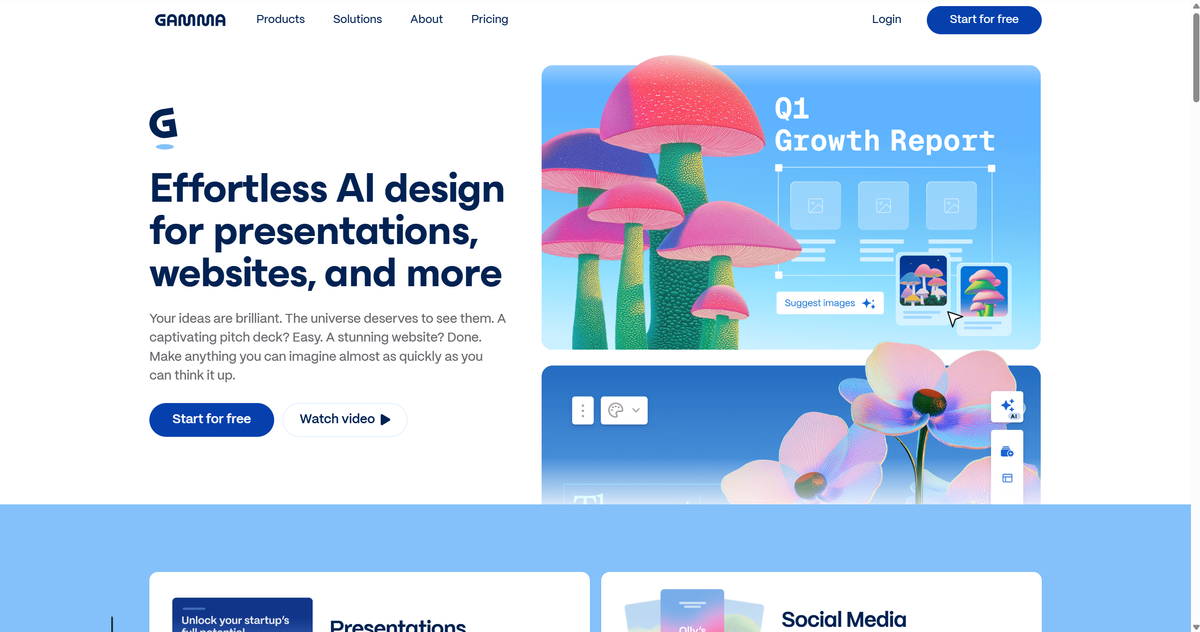
Why it beats Genspark for presentations: Gamma is purpose-built for presentations. Its design quality, template library, and export reliability are all significantly better than Genspark's AI Slides feature.
Key features:
- Text-to-presentation in under 2 minutes
- Web-native decks shareable via link (no download required)
- Reliable PowerPoint and PDF export
- AI-assisted editing and redesign
- Analytics on deck views and engagement
- Supports documents, webpages, and presentations in one tool
Pricing vs. Genspark: Gamma Free (limited AI credits); Gamma Plus at $10/month. Gamma is significantly cheaper for presentation-focused use.
Best for: Knowledge workers, consultants, and teams who regularly create presentations and need reliable, polished output without manual cleanup.
Limitations vs. Genspark: Gamma is a presentation tool, not an all-in-one workspace. No research agent, phone calls, or spreadsheet generation. Less versatile than Genspark for varied task types.
Manus AI — Best for Deep Autonomous Research and Task Execution
Manus operates as a proactive autonomous agent. Give it a complex research brief and it will browse the web, synthesize sources, and produce a structured report without requiring step-by-step guidance. It's more autonomous than Genspark's Super Agent for open-ended research tasks.
Why it beats Genspark for autonomous research: Manus's agent architecture is designed for deep, multi-step research tasks that require genuine autonomy. It handles complexity that Genspark's more structured workspace approach struggles with.
Key features:
- Autonomous multi-step research and task execution
- Web browsing, data synthesis, and structured report generation
- Manus Collab for team-based agent workflows
- Web App Builder for creating simple tools from research outputs
- Cloud-based execution (no browser extension required)
Pricing vs. Genspark: Manus Free (limited tasks) vs. Genspark Free (100 credits/day). Manus Pro at $20/month vs. Genspark Plus at $24.99/month.
Best for: Knowledge workers who need an AI agent to handle complex, open-ended research tasks with minimal supervision.
Limitations vs. Genspark: Manus can be significantly more expensive per task than Genspark for equivalent workloads (community benchmarks show Manus using ~10× more credits than AllyHub for comparable tasks). No built-in slide creation, phone calls, or spreadsheet tools. No self-evolution — each task starts from zero.
Perplexity Comet — Best for AI-Native Browsing
If you are tired of copying data from a website and pasting it into Genspark's workspace, Perplexity Comet offers a radical alternative: it puts the AI directly into a brand-new web browser.
Why it beats Genspark: Cross-tab context. Because Comet is an actual Chromium-based browser (not just a website), its built-in AI understands everything you are looking at across multiple open tabs. You can ask it to synthesize information from Tab A, Tab B, and Tab C seamlessly.
Key features:
- Chromium-based AI browser (no extension needed)
- Cross-tab context: AI understands your full browsing session
- Voice commands for hands-free browsing assistance
- Integrated Perplexity search and research capabilities
- Real-time web access with source citations
Pricing vs. Genspark: Perplexity Pro at $20/month (includes Comet access) vs. Genspark Plus at $24.99/month.
Best for: Knowledge workers who want AI assistance woven into their browsing experience rather than a separate workspace.
Limitations vs. Genspark: Comet requires switching your default browser. No slide generation, phone calls, or spreadsheet tools. Less capable for structured content creation than Genspark's all-in-one workspace.
The Final Verdict
If you love the AI search engine concept but want better citations and no credit-drain anxiety, make the switch to Perplexity AI. It is the reigning champion of pure AI research.
However, if you are a professional who spends hours doing repetitive web research, data extraction, and moving information between browser tabs, a search engine isn't enough. You need an execution agent. By installing the AllyHub Chrome extension, you upgrade from merely searching the web to having an AI that operates the web for you—getting faster and more cost-effective with every task.
FAQ: Genspark Alternatives
Is there a truly free alternative to Genspark?
Yes, Perplexity AI offers a highly capable free tier for real-time web search with citations. If you need a free tier to test actual browser task automation, AllyHub offers daily credits to let you try out real execution workflows.
Why do Genspark credits run out so fast?
Genspark’s "Super Agent" consumes varying amounts of credits depending on how many models it queries to build a Sparkpage. Complex searches can burn anywhere from 5 to 80 credits per query.
What is the best Genspark alternative for knowledge workers?
For knowledge workers who run repeatable workflows, AllyHub is the strongest alternative because it compounds value across tasks. For one-off research, Perplexity AI is the most reliable choice. For writing and analysis, Claude is the best option.
How does Genspark compare to ChatGPT?
Genspark's Super Agent is more structured for multi-step task execution and includes built-in tools like AI Slides, AI Sheets, and phone calls. ChatGPT is more versatile across general use cases, has a broader ecosystem (GPT Store, DALL-E, Code Interpreter), and is generally more reliable for everyday knowledge work.