For FBA sellers and marketers, product research is the risk-control stage before inventory, ads, packaging, and launch work begin.
This guide compares 7 of the best Amazon product research tools: Helium 10, Jungle Scout, AMZScout, Viral Launch, ZonGuru, Keepa, and SellerApp. It also explains how to choose the right tool, what data matters most, and where automation tools like AllyHub fit when research becomes repetitive across many ASINs, categories, or client accounts.
Key Takeaways
- Best overall options: Helium 10 and Jungle Scout are the strongest starting points for most Amazon product research workflows.
- Best beginner choice: Jungle Scout is easier for new sellers who want a cleaner product validation process.
- Best validation layer: Keepa is essential for checking price history and BSR movement before trusting a product’s current numbers.
- Best budget option: AMZScout can work for sellers who need core product research features without a larger tool stack.
- Best workflow: Use one product research tool, one historical validation tool, and manual review analysis before making sourcing decisions.
- Best automation layer: AllyHub helps marketers automate review analysis, competitor data extraction, price checks, and recurring research reports after the first product shortlist is built.
What Is an Amazon Product Research Tool — and Why Do FBA Sellers Need One?
An Amazon product research tool is software that pulls data directly from Amazon's marketplace to help sellers identify profitable product opportunities. Instead of manually browsing categories and guessing at sales volumes, these tools surface real data: estimated monthly sales, revenue, review counts, keyword search volume, competition levels, and profit margins.
For FBA (Fulfillment by Amazon) sellers, this data is non-negotiable. Amazon's marketplace has over 350 million products listed. Without a research tool, you're essentially making a $5,000–$20,000 sourcing decision based on gut feeling.
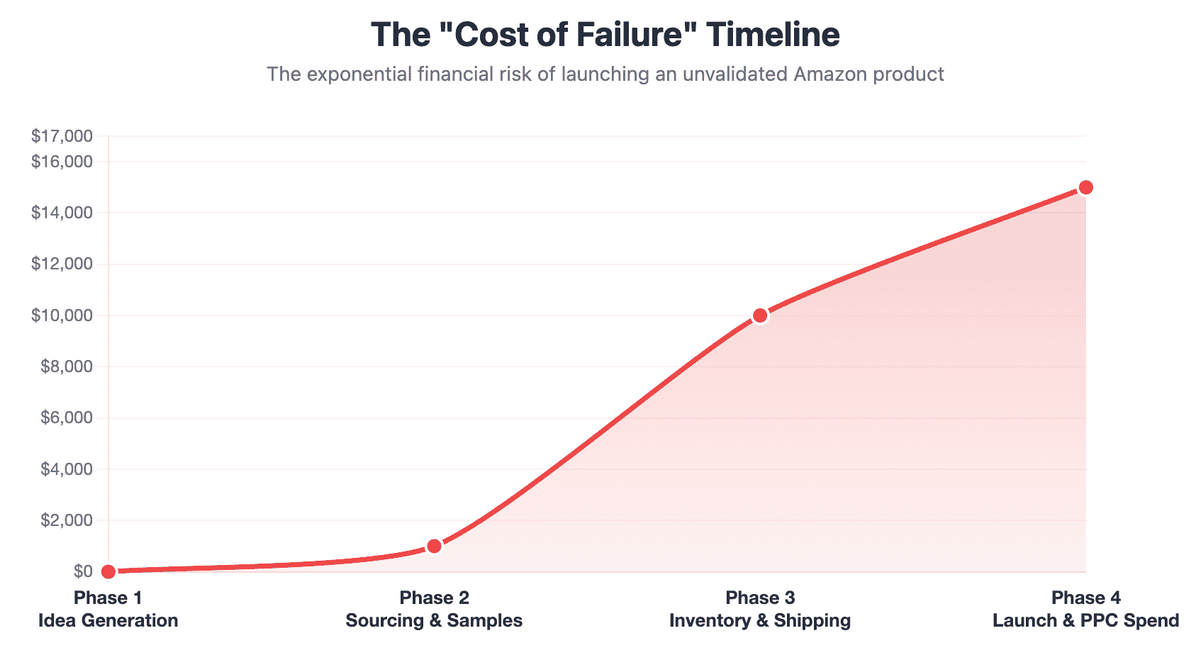
Note: No tool has direct access to Amazon's internal sales data. All sales estimates are algorithmic approximations based on Best Seller Rank (BSR) and other signals. Treat estimates as directional, not exact.
What Should the Best Amazon Seller Research Tools Actually Do?
A useful Amazon seller research tool should help you move from product idea to product validation. The most important features are not the ones that look impressive in a dashboard; they are the ones that reduce sourcing risk.
Look for these capabilities:
- Product database: Filter Amazon listings by category, price, estimated sales, reviews, ratings, and competition.
- Sales estimator: Estimate monthly unit sales and revenue for a product or ASIN.
- Keyword research: Find the search terms buyers use before they purchase.
- Competitor analysis: Compare pricing, reviews, listing quality, and positioning.
- Profit calculator: Estimate FBA fees, referral fees, shipping, COGS, and possible margin.
- Historical trend data: Check whether current demand is stable, seasonal, or temporarily inflated.
- Review analysis: Understand buyer complaints, feature gaps, and product differentiation opportunities.
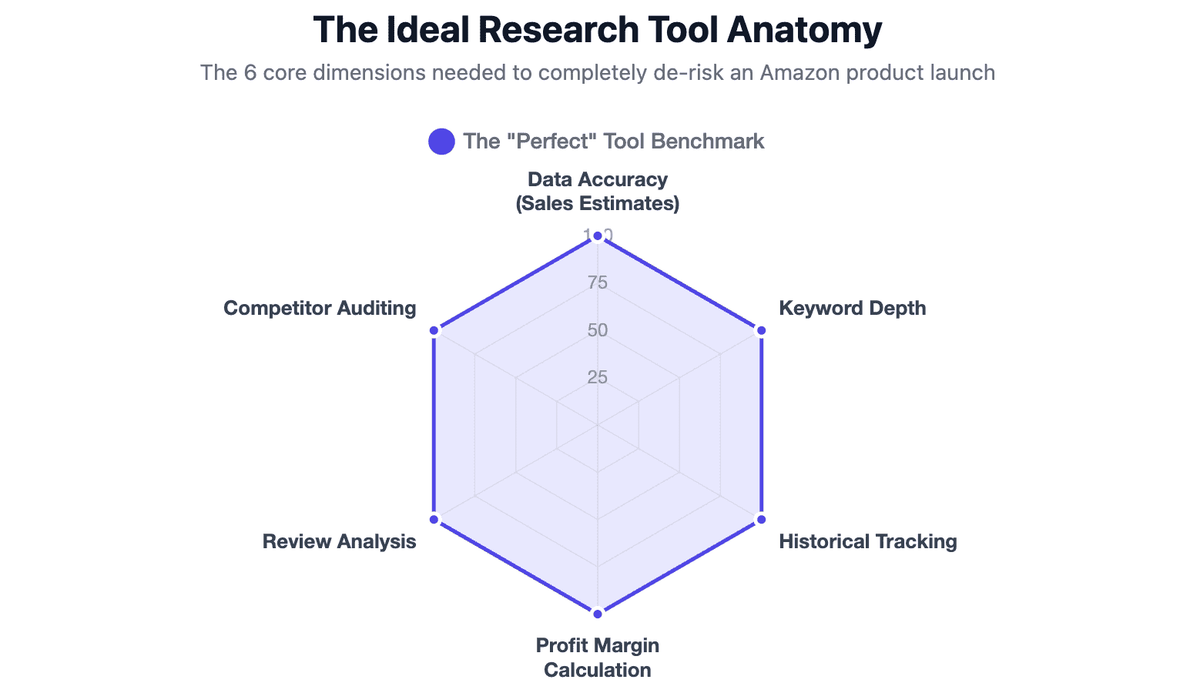
The strongest product research workflow usually combines quantitative signals with qualitative review analysis. Numbers tell you whether a product may be worth exploring; reviews tell you why buyers are unhappy and where a better product can win.
What Are the 7 Best Amazon Product Research Tools?
1. Helium 10 — Best All-in-One Amazon Product Research Suite
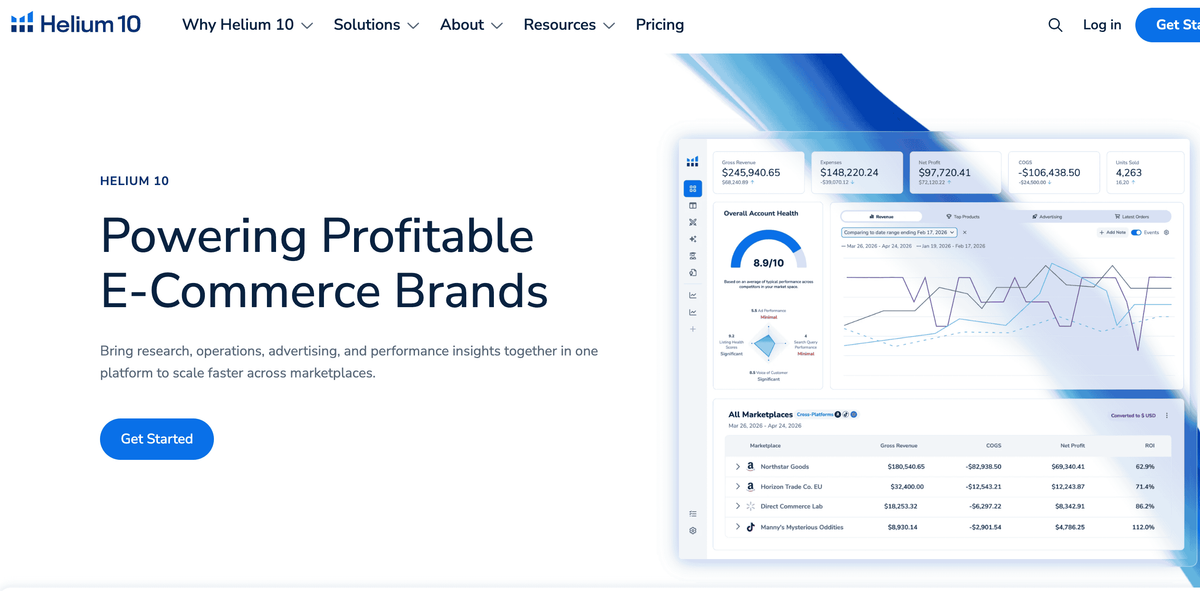
Helium 10 is best for sellers and marketers who want product research, keyword research, listing optimization, and competitor analysis in one platform. It is a strong choice when product discovery is only one part of a larger Amazon SEO or launch workflow.
Where it helps most:
- Black Box: Find product ideas with filters for category, revenue, review count, price, and demand signals.
- Xray: Analyze products directly on Amazon search result pages.
- Cerebro: Reverse-engineer competitor ASIN keywords.
- Magnet: Build keyword lists for listing and PPC planning.
- Trend tools: Review demand and sales rank movement over time.
Best for:
- Sellers managing multiple products.
- Marketers who need product and keyword research together.
- Agencies working on Amazon SEO or launch strategy.
- Teams that want one platform instead of several small tools.
Limitations:
Helium 10 can feel heavy if you only need basic product validation. It is strongest when you use several parts of the platform together.
2. Jungle Scout — Best for Beginners and Product Validation
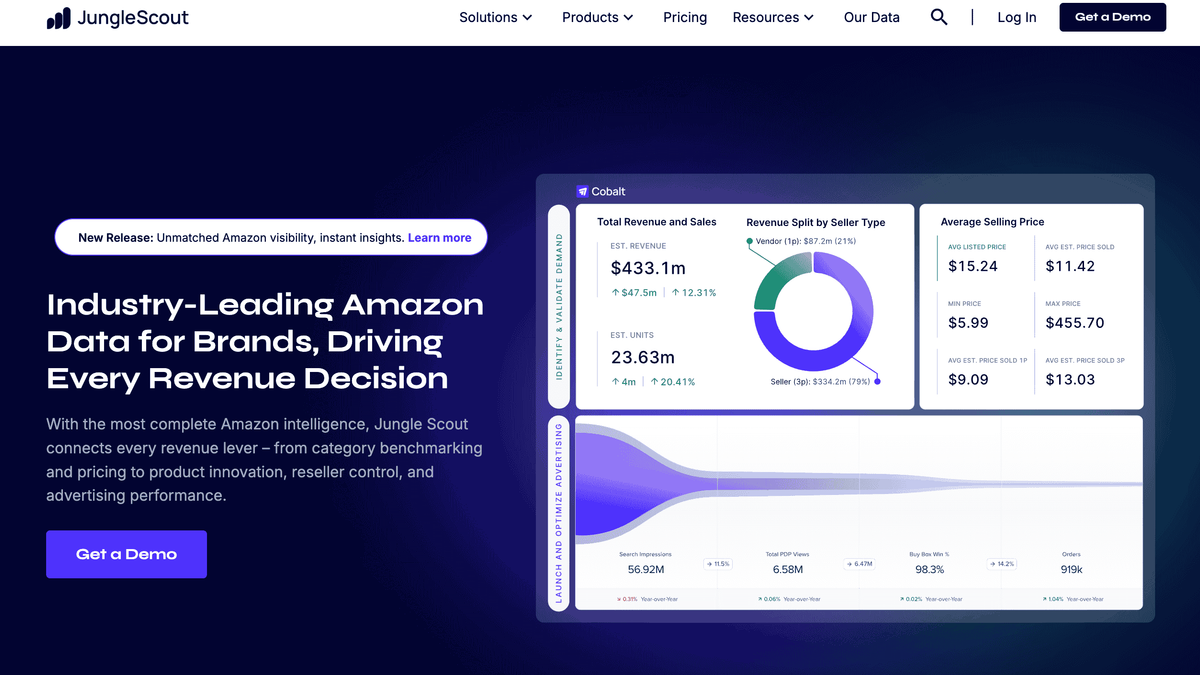
Jungle Scout is a strong choice for new FBA sellers who want a cleaner product research process. It is easier to learn than many larger seller suites and works well for building an early shortlist of product ideas.
Useful research features:
- Product Database: Search Amazon products by category, estimated sales, revenue, reviews, and competition.
- Opportunity Finder: Discover niches based on demand and competition signals.
- Product Tracker: Monitor selected products over time before making sourcing decisions.
- Browser Extension: Review product and category data while browsing Amazon.
- Supplier Database: Connect product ideas with sourcing research.
Best for:
- First-time FBA sellers.
- Marketers who want a guided research workflow.
- Small teams that need product validation without too much complexity.
- Sellers comparing early product ideas before ordering samples.
Limitations:
Jungle Scout is easier to use, but advanced marketers may still prefer Helium 10 for deeper keyword workflows, reverse ASIN research, and broader optimization features.
3. AMZScout — Best Budget-Friendly Amazon Product Research Tool
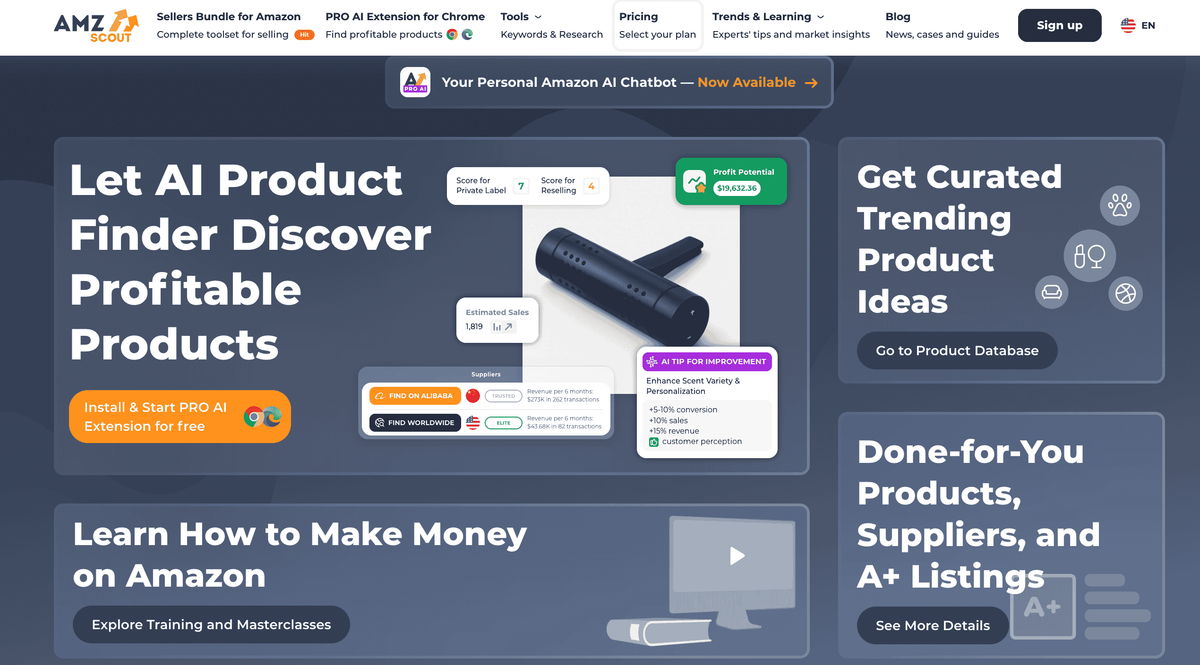
AMZScout is useful for sellers who need core Amazon product research features without committing to a larger tool stack. It works best as a practical starting point for early validation and niche exploration.
Core research capabilities:
- Product Database: Filter products by demand, price, niche score, and competition.
- PRO Extension: Review sales estimates and product data on Amazon pages.
- Product Score: Evaluate product viability using demand and competition signals.
- Niche Finder: Find categories with potential demand.
- FBA Calculator: Estimate fees and possible profit margins.
Best for:
- Sellers on a tighter budget.
- New Amazon sellers testing product ideas.
- Small teams that need basic research tools.
- Marketers who want early validation before upgrading.
Limitations:
AMZScout may not offer the same depth of keyword research, reporting, or competitor intelligence as more advanced platforms.
4. Viral Launch — Best for Market Intelligence and Launch Planning
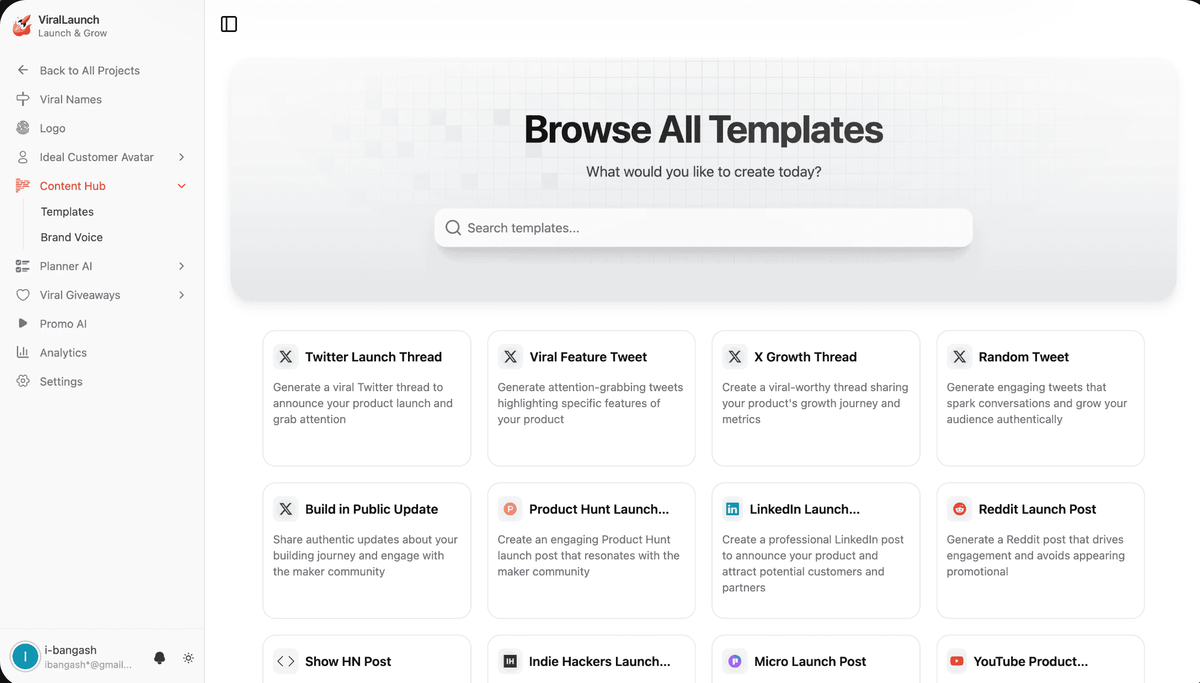
Viral Launch is useful when product research is connected to launch strategy. It can help sellers compare market demand, analyze competitors, and evaluate whether a category is worth entering.
Market research capabilities:
- Market Intelligence: Review demand, competition, and market signals.
- Product Discovery: Search for product opportunities using filters and trend indicators.
- Competitor Intelligence: Monitor competitor ranking, pricing, and listing changes.
- Keyword Research: Find search terms related to a product category.
- Listing Analyzer: Identify listing weaknesses before launch.
Best for:
- Sellers preparing a new product launch.
- Marketers comparing competitive categories.
- Teams that want product research plus launch context.
- Sellers who care about market positioning, not only product discovery.
Limitations:
Viral Launch may be more useful for launch-focused workflows than for sellers who only need simple product research.
5. ZonGuru — Best for Private Label Product Differentiation
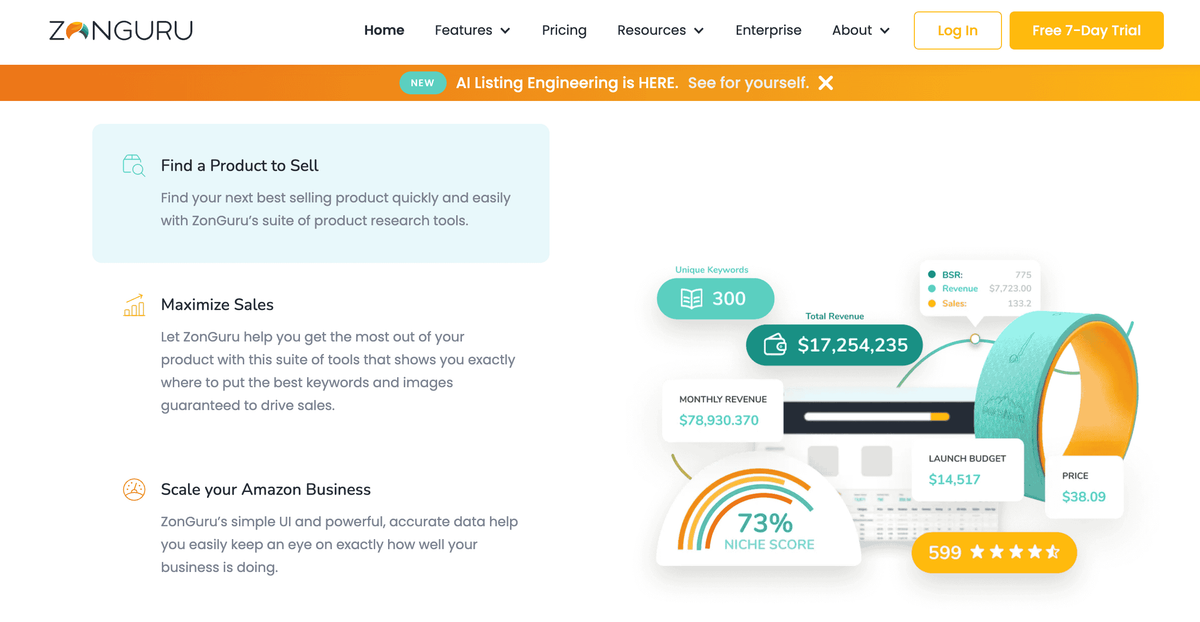
ZonGuru is a good fit for private label sellers who need product research, keyword research, and review analysis in one workflow. Its strongest value is helping sellers understand product gaps and buyer complaints.
Private label research features:
- Niche Finder: Find product niches using demand and competition signals.
- Product Pulse: Track sales and BSR movement for selected ASINs.
- Keywords on Fire: Discover search terms for product and listing strategy.
- Business Dashboard: Monitor product performance and keyword data.
- Love-Hate: Analyze competitor reviews to find common praise and complaints.
Best for:
- Private label sellers.
- Sellers looking for product differentiation ideas.
- Marketers who want review analysis inside the research process.
- Teams building products around buyer pain points.
Limitations:
ZonGuru is more specialized than Helium 10 or Jungle Scout. It is strongest when review analysis and private label positioning are important.
6. Keepa — Best for Price and BSR History
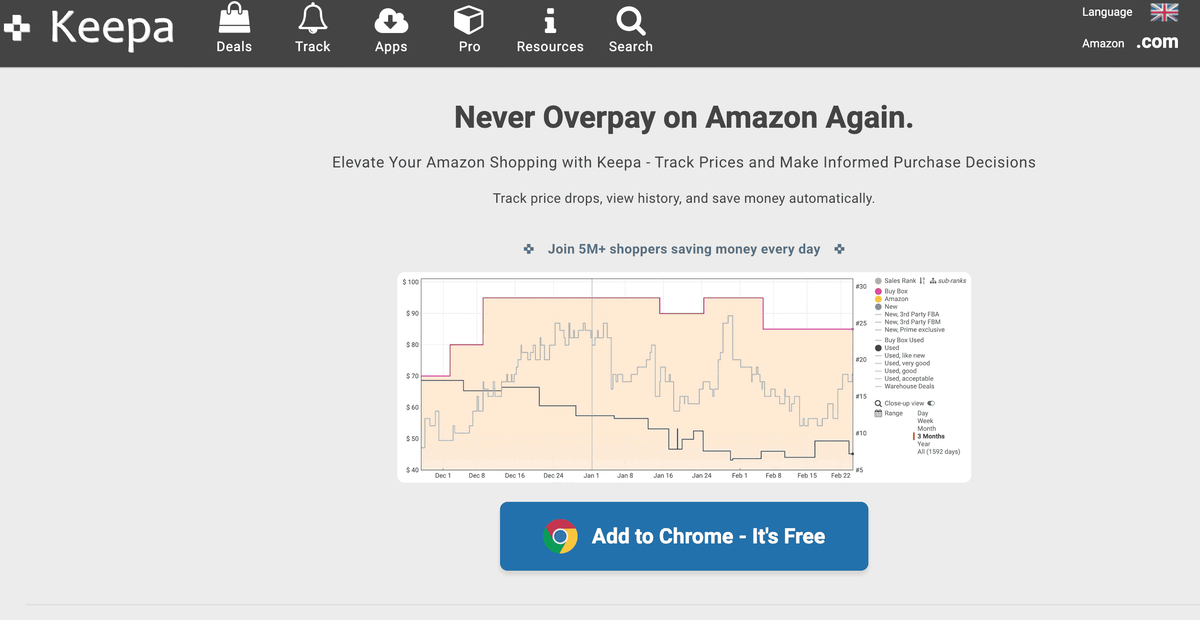
Keepa is not a full Amazon product research suite, but it is one of the most important validation tools. It helps sellers check whether current product demand and pricing are stable or just the result of a short-term spike.
What it validates:
- Price history: Check how a product’s price has changed over time.
- BSR history: Review sales rank movement as a proxy for demand patterns.
- Price alerts: Monitor price drops and competitor pricing changes.
- Product Finder: Search products using historical filters.
- Browser charts: View historical price and BSR data directly on Amazon pages.
Best for:
- Validating product ideas before sourcing.
- Checking whether demand is seasonal.
- Cross-checking data from Helium 10 or Jungle Scout.
- Avoiding products with unstable pricing or temporary demand spikes.
Limitations:
Keepa is best as a validation layer, not a complete research stack. It does not replace product databases, keyword research, or profit planning tools.
7. SellerApp — Best for Data-Driven Amazon Marketers
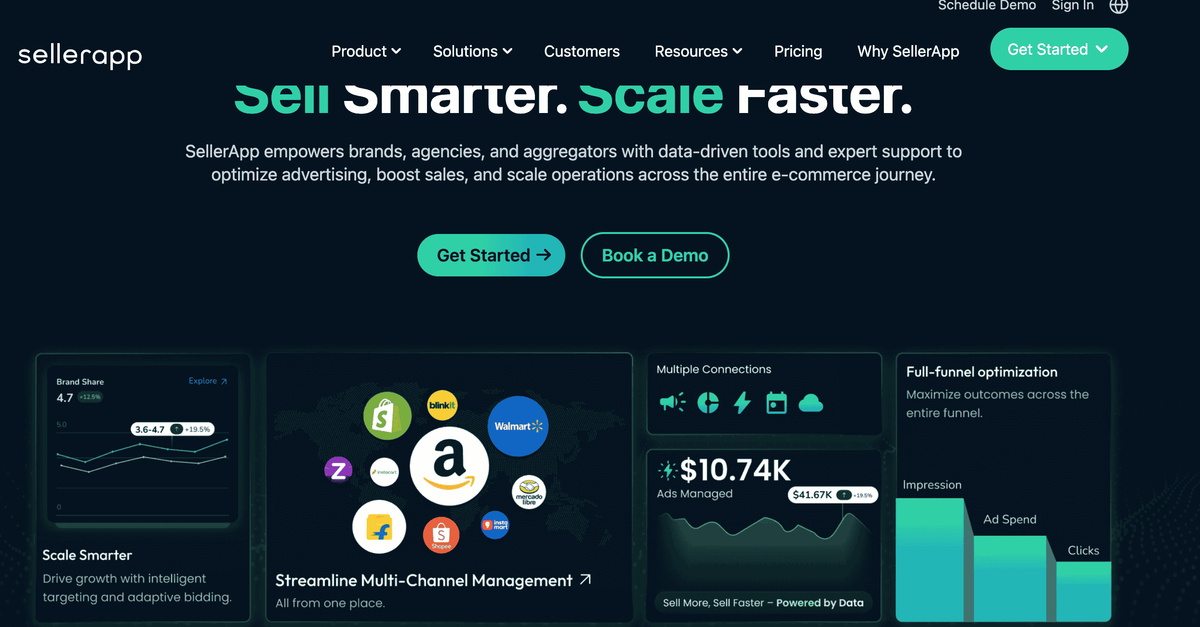
SellerApp combines product research, keyword research, and advertising analytics. It is useful for marketers who want to evaluate products while also thinking about PPC, listing optimization, and performance tracking.
Where the data helps:
- Product Intelligence: Review product performance, price, BSR, fees, and margin signals.
- Keyword Research: Find search terms for listings and PPC campaigns.
- Competitor Research: Monitor competitor ASINs, rankings, and listing updates.
- Profit Dashboard: Review sales and profitability when connected to Seller Central.
- PPC Analysis: Compare advertising data with product and keyword performance.
Alt: SellerApp — Best for Data-Driven Amazon Marketers
Name: sellerapp-best-for-data-driven-amazon-marketers
Best for:
- Marketers managing both Amazon SEO and ads.
- Sellers who want product research tied to performance data.
- Teams that need product, keyword, and PPC context together.
- Agencies working on paid and organic Amazon growth.
Limitations:
SellerApp may be more than a beginner needs if they are only validating one or two product ideas.
How Do the Best Amazon Product Research Tools Compare?
Tool | Best For | Main Strength | Best Fit |
Helium 10 | All-in-one Amazon research | Product, keyword, and competitor research in one platform | Scaling sellers and agencies |
Jungle Scout |
Pricing note: Tool pricing changes often and may vary by plan, marketplace, keyword count, ASIN count, or feature access. Always check the official pricing page before choosing a tool.
How to Evaluate an Amazon Market Research Tool
When comparing Amazon market research tools, prioritize the features that help you avoid bad product decisions.
1. Sales estimate quality
Use sales estimates for comparison, not certainty. A strong opportunity should still hold up against BSR history, pricing stability, reviews, and manual market checks.
2. Historical trend data
A product with strong current numbers may be at its seasonal peak. Keepa-style BSR and price history can help you avoid buying into temporary demand.
3. Keyword research depth
Product research and keyword research are connected. A product opportunity is more convincing when you can also see buyer search demand and realistic ranking opportunities.
4. Profit calculation
Revenue is not profit. A useful tool should help you estimate FBA fees, referral fees, shipping, COGS, and margin before you move forward.
5. Competitor and review analysis
Competitor reviews often reveal the clearest product gaps. Look for repeated complaints, missing features, weak positioning, and language buyers use to describe the problem.
Where Does AllyHub Fit After Amazon Product Research?
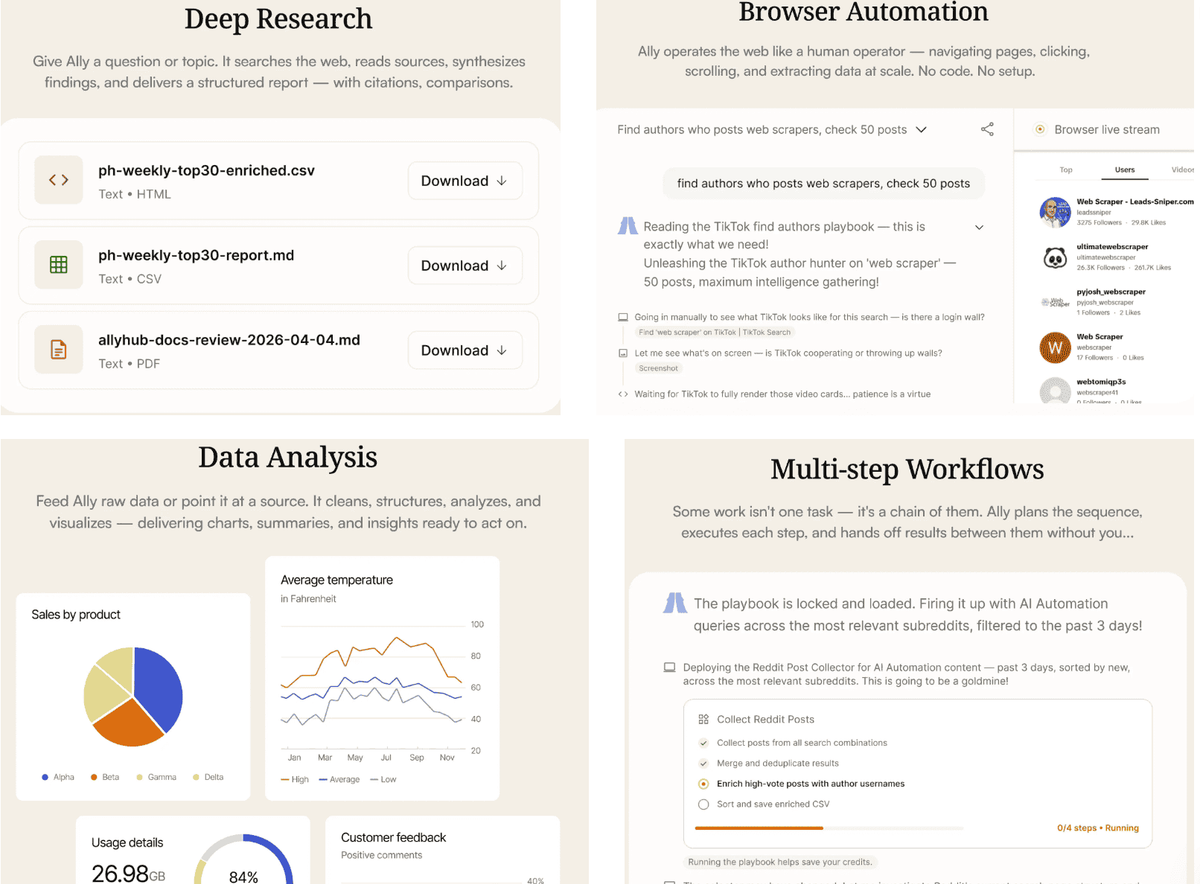
AllyHub steps in exactly here. Its best role is helping marketers automate this repetitive competitive intelligence work by building repeatable AI workflows for:
- Amazon review analysis and theme extraction: identify recurring complaints, praise themes, feature requests, and buyer language across competitor ASINs.
- Amazon product details extraction: collect titles, prices, ratings, review counts, bullets, specs, and product metadata across multiple ASINs.
- Competitor price monitoring: build price comparison tables for keyword search results or tracked competitors.
- Repeatable research workflows: turn Amazon data and external signals into structured reports reusable skills.
Frequently Asked Questions
Do beginners need Helium 10 or Jungle Scout right away?
Not always. Beginners should first learn how demand, BSR, reviews, price, and competition work; once they have real product ideas to validate, Jungle Scout or Helium 10 becomes more useful.
Why do different Amazon product research tools show different sales estimates?
Each tool uses its own estimation model and marketplace signals, so the numbers will not always match. Treat estimates as directional ranges and cross-check them with Keepa history, review velocity, pricing movement, and manual competitor analysis.
Is Keepa enough for Amazon product research?
Keepa is excellent for price and BSR history, but it is not a complete product research stack. Use it to validate demand after you find product ideas with a product database or keyword research tool.
What should I check before trusting a product opportunity?
Check demand, price stability, review count, review quality, margin, BSR history, keyword demand, and competitor strength. A good opportunity should make sense across several signals, not just one tool score.
How can marketers automate Amazon product research work?
Marketers can use AllyHub to automate repetitive work like review analysis, competitor data extraction, price monitoring, and recurring market research reports across multiple ASINs or categories.
What Should You Do Next?
Choose your Amazon product research tool based on the decision you need to make first: product discovery, demand validation, private label differentiation, launch planning, or Amazon marketing performance.
Start with one product research tool and one historical validation tool. Build a shortlist, check BSR and pricing history, calculate margins, and read competitor reviews before committing to samples or inventory.
Once the product research process becomes repetitive across many ASINs, categories, or client accounts, use AllyHub to automate competitor checks, review analysis, price comparisons, and recurring research summaries.