While Zapier’s 9,000+ app library is unmatched, its task-based pricing model has become a literal tax on marketing efficiency. A single, 5-step lead nurturing workflow running just 200 times a month burns through 1,000 tasks, forcing scaling teams into expensive tiers before the month is halfway through.
If you are looking to cut costs, bypass restrictive task limits, or find an AI that actually executes work rather than just routing data, this 2026 guide breaks down the 10 best Zapier alternatives matched to your exact pain points.
Key Takeaways
- Best Overall Alternative (Make): Offers a far more powerful visual branching canvas at a fraction of Zapier’s cost—ideal for complex, multi-step marketing workflows.
- Best Free Tier (Make / Activepieces): Provides 1,000 free operations/tasks per month across multi-step scenarios, which is 10x more generous than Zapier’s heavily restricted 100-task free tier.
- Best for Budget-Conscious E-commerce (Pabbly Connect): A cost-effective choice for complex workflows, as many built-in steps like filters and routers don’t consume tasks. External app actions still count toward usage, so it’s not strictly execution-based pricing.
- Best Open-Source / Self-Hosted (n8n): Gives technical marketing ops teams absolute data control and unlimited automations with zero per-task billing.
- Best for AI-Native Automation (AllyHub): Breaks the traditional trigger-action mold. Instead of just syncing data between APIs, it operates your browser directly to execute complex research and content creation. Every run builds reusable Skill and Service assets, allowing your automation value to compound over time.
- When to Stick with Zapier: Only if your workflows are low-volume, linear, or heavily reliant on niche, long-tail apps exclusive to Zapier’s ecosystem.
- The Bottom Line: For standard app-to-app data routing, switching to Make or Pabbly Connect will immediately slash your automation budget by up to 70%. If you need AI to actually execute web research, data extraction, or content workflows, AllyHub delivers a compounding ROI that traditional connectors cannot replicate.
Why Marketers Look for Zapier Alternatives
Zapier is the gold standard for simple, low-volume automation thanks to its unmatched 9,000+ app library. However, scaling digital marketing and e-commerce teams frequently outgrows it due to five critical pain points:
- Task-Based Pricing Scales Against You: Because Zapier charges per action step rather than per workflow run, complex multi-step automations (like e-commerce order processing or lead nurturing) quickly explode your monthly bill into hundreds or thousands of dollars.
- A Nearly Unusable Free Plan: Capped at just 100 tasks/month and restricted to simple 2-step workflows (one trigger, one action), the free tier is only good for testing, not running a real marketing stack.
- Linear Workflow Limitations: Zapier’s basic trigger-action architecture struggles heavily with advanced branching, parallel paths, and conditional logic needed for sophisticated lead routing or multi-channel campaigns.
- No Agency-Friendly Structures: With no native reseller model or per-client task attribution, agencies managing multiple client accounts are often forced directly into expensive enterprise tiers.
- AI Steps Cost Extra: Modern AI workflows burn through quotas even faster, as Zapier’s AI steps consume multiple tasks per execution depending on the underlying model tier.
If your workflows are simple and low-volume, Zapier remains a solid choice. But if you are hitting these financial or technical ceilings, it's time to switch.
Quick Comparison: Zapier Alternatives at a Glance
Alternative | Best For | Pricing vs. Zapier | Free Plan? | Standout Feature |
Make | Complex multi-step workflows | Much cheaper | ✅ 1,000 ops/mo |
10 Best Zapier Alternatives
Make (formerly Integromat)
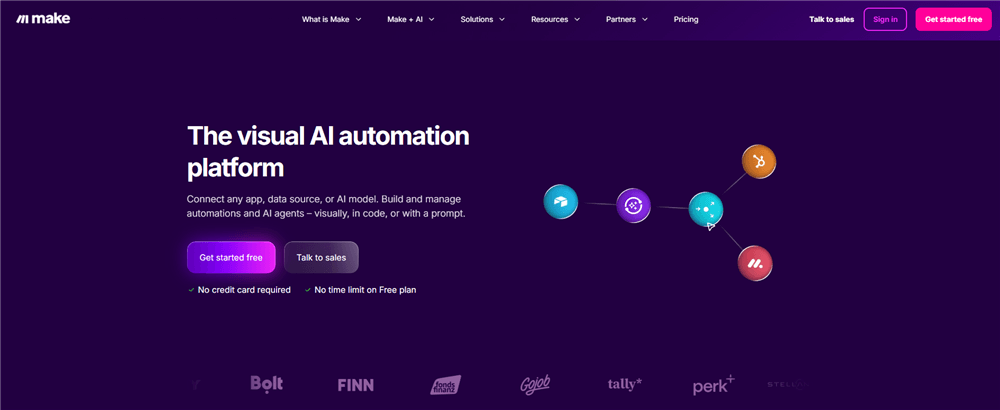
If Zapier's linear trigger-action model has ever frustrated you, Make will feel like a revelation. Its visual canvas lets you build workflows with branching paths, conditional logic, parallel routes, and error-handling modules — all in a drag-and-drop interface that actually shows you the data flowing through each step.
Why it beats Zapier for complex workflows: Make's "operations" model counts each module execution, but its pricing is structured so that complex multi-step workflows cost significantly less than Zapier's equivalent task consumption. A workflow with 10 steps running 500 times a month costs 5,000 operations on Make — covered by the $9/month Core plan. The same workflow on Zapier would consume 5,000 tasks, requiring the $69/month Team plan.
Key features:
- Visual drag-and-drop canvas with branching, parallel paths, and error routing
- 3000+ app integrations, including all major marketing and e-commerce platforms
- Data transformation tools built into the workflow (no separate formatter needed)
- Scenario scheduling with minute-level precision
- Built-in HTTP/webhook modules for custom API connections
Pricing vs. Zapier: Make's free plan includes 1,000 operations/month across unlimited active scenarios — compared to Zapier's 100 tasks and two-step limit. Paid plans start at $9/month (Core, 10,000 ops) vs. Zapier's $19.99/month (Professional, 750 tasks). For equivalent usage, Make typically costs 3–5x less.
Best for: Digital marketers running multi-step lead nurturing, e-commerce teams with complex order-to-fulfillment workflows, and marketing agencies managing multiple client automations.
Limitations vs. Zapier: Make's app library (1,500+ integrations) is smaller than Zapier's (9,000+). If you rely on a niche app that only Zapier supports, check Make's integration list before switching. The visual canvas also has a steeper learning curve than Zapier's step-by-step builder.
Pabbly Connect — Best Zapier Alternative for Budget-Conscious Marketers
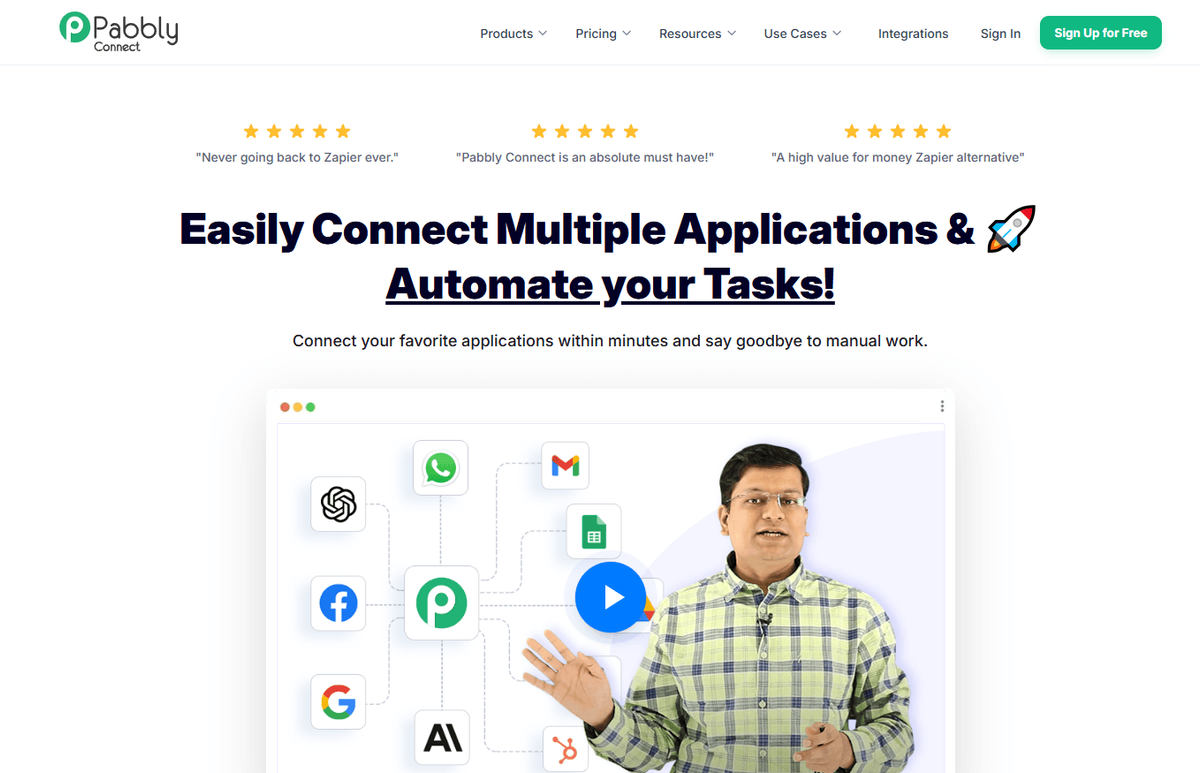
Pabbly Connect's pricing model is the most marketer-friendly in the category: many internal steps — such as filters, routers, formatters, schedulers, iterators, and parsers — do not count as tasks. A five-step workflow that runs 500 times a month counts as 500 executions — not 2,500 tasks. For marketers running complex automations, this difference is enormous.
Why it beats Zapier for cost: On Zapier's Professional plan ($19.99/month, 750 tasks), a five-step Zap running 150 times a month consumes all 750 tasks. On Pabbly Connect's Starter plan ($19/month, 10,000 executions), the same workflow uses 150 executions — leaving 9,850 for everything else. The math is hard to argue with.
Key features:
- Per-execution pricing regardless of workflow complexity
- 2,000+ app integrations including Shopify, WooCommerce, Mailchimp, HubSpot, and Facebook Ads
- Multi-step workflows with conditional logic and filters
- Webhook support for custom integrations
- Lifetime deal options available (one-time payment)
Pricing vs. Zapier: Pabbly Connect starts at $19/month for 10,000 executions, while Zapier’s $19.99/month plan includes only 750 tasks. Its lifetime deals also make it a cost-effective long-term option.
Best for: E-commerce marketers running high-volume order processing, abandoned cart, and email automation workflows; small marketing teams on tight budgets; anyone who's been burned by Zapier's task overage billing.
Limitations vs. Zapier: Pabbly Connect's interface is functional but less polished than Zapier's. Its app library, while large, doesn't match Zapier's depth for niche integrations. Customer support response times can be slower than Zapier's.
n8n — Best Zapier Alternative for Technical Marketing Teams
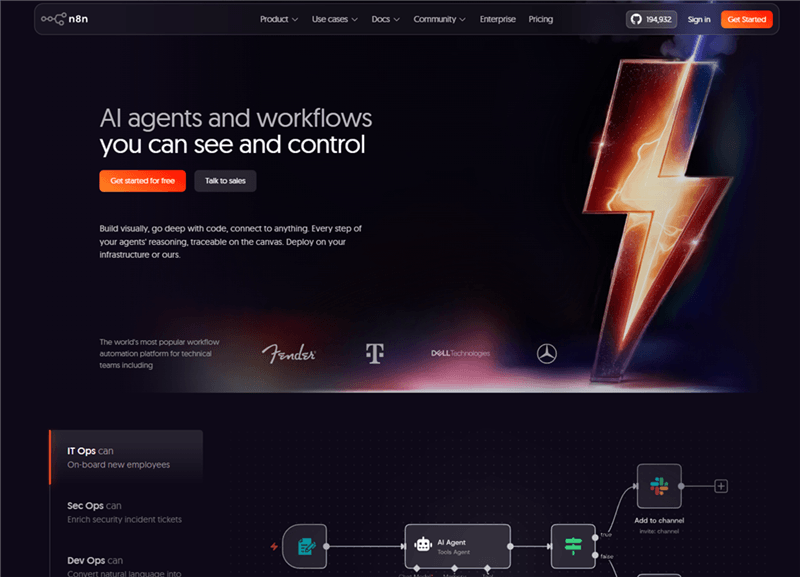
n8n is an open-source workflow automation platform that you can self-host for free — meaning unlimited automations, unlimited executions, and zero per-task billing. For marketing operations teams with technical resources, it's the most powerful and cost-effective option available.
Why it beats Zapier for data control and cost: When self-hosted, n8n has no task limits, no execution caps, and no per-step billing. You pay only for the server infrastructure (typically $5–20/month on a VPS). For marketing teams running high-volume data pipelines — CRM syncs, ad performance reporting, lead scoring — this is a fundamentally different cost structure.
Key features:
- Self-hosted option with unlimited executions (no per-task billing)
- Custom JavaScript and Python code nodes for advanced logic
- 400+ built-in integrations plus HTTP nodes for any API
- Visual workflow builder with branching and error handling
- Cloud-hosted option available for teams that don't want to manage infrastructure
Pricing vs. Zapier: Self-hosted n8n is free (infrastructure costs only). n8n Cloud starts at $20/month for 2,500 executions. Zapier's equivalent plan costs $19.99/month for 750 tasks — with no code execution capability.
Best for: Marketing operations teams with a developer or technical marketer on staff; teams running complex data workflows between CRMs, ad platforms, and analytics tools; organizations with data privacy requirements that prevent using cloud-based automation.
Limitations vs. Zapier: Self-hosting requires technical setup and ongoing maintenance. n8n's integration library (400+) is smaller than Zapier's. The interface is more complex than Zapier's, and it's not the right choice for non-technical marketers who need to build automations independently.
Activepieces — Best Free Zapier Alternative for Simple Workflows
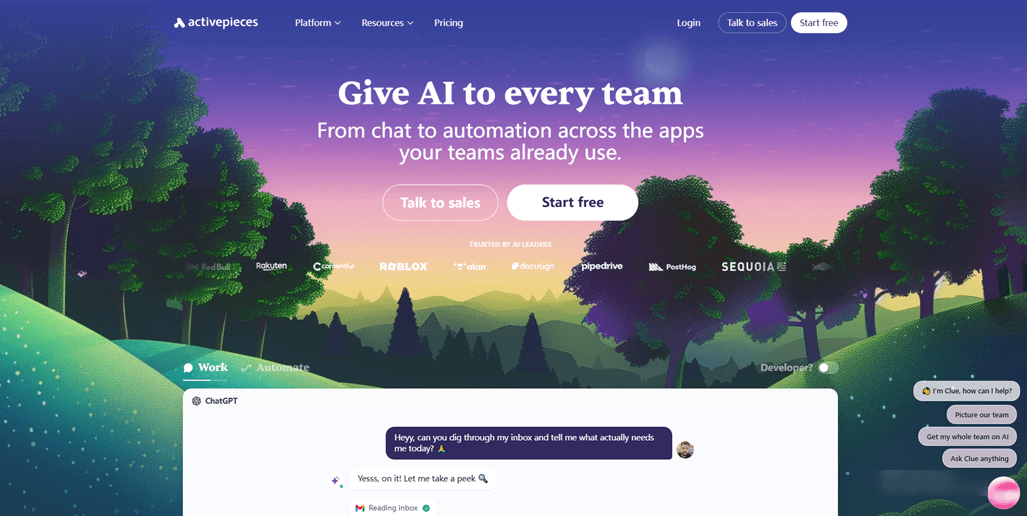
Activepieces is an open-source automation platform that combines Zapier's simplicity with n8n's open-source flexibility. Its cloud plan offers 1,000 free tasks per month — 10x Zapier's free tier — and its self-hosted version is completely free with no limits.
Why it beats Zapier for free usage: Zapier's free plan is limited to 100 tasks and two-step Zaps — barely enough to test a workflow. Activepieces' free cloud plan gives you 1,000 tasks across multi-step workflows, and the self-hosted version removes all limits entirely.
Key features:
- Clean, Zapier-like interface with minimal learning curve
- 280+ integrations (growing rapidly in 2026)
- Self-hosted option with unlimited tasks and no billing
- Open-source codebase — community-contributed integrations
- Built-in AI pieces for connecting to OpenAI, Anthropic, and other AI services
Pricing vs. Zapier: Activepieces' free cloud plan: 10 free active flows/month.
Best for: Solo marketers and small teams who need more than Zapier's free tier allows; teams evaluating automation tools before committing to a paid plan; technically comfortable teams who want to self-host for unlimited free usage.
Limitations vs. Zapier: Activepieces' integration library (280+) is significantly smaller than Zapier's (9,000+). As a newer platform, some integrations may be less mature or have fewer configuration options. Enterprise features are limited compared to Zapier's Team and Enterprise plans.
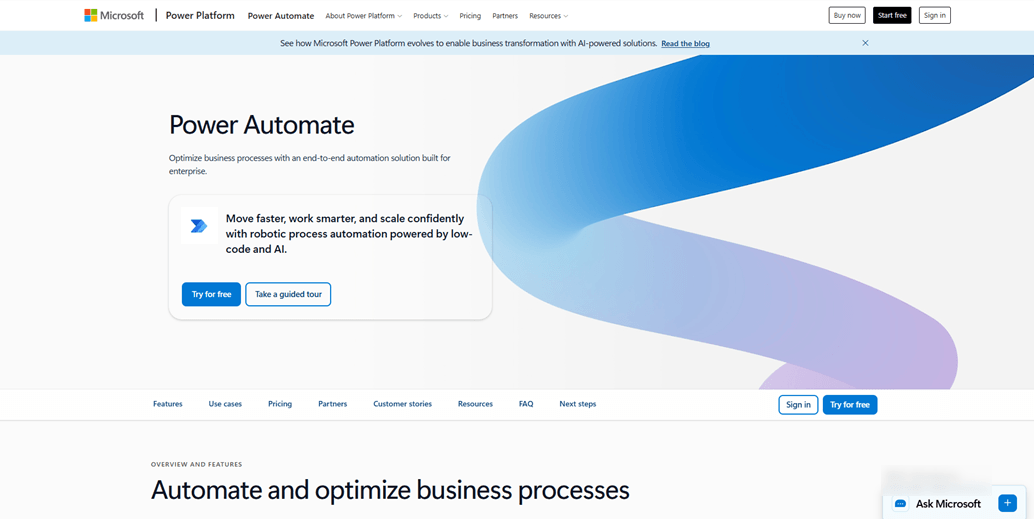
Microsoft Power Automate — Best Zapier Alternative for Microsoft 365 Teams
If your marketing team lives in Microsoft 365 — Teams, SharePoint, Outlook, Excel, Dynamics — Microsoft Power Automate is the most natural automation layer. It's deeply integrated with the Microsoft ecosystem and included in most Microsoft 365 business subscriptions.
Why it beats Zapier for Microsoft-centric teams: Power Automate's native integration with Teams, SharePoint, and Dynamics 365 goes far deeper than Zapier's connectors. Automations that would require complex workarounds in Zapier — like triggering a workflow when a specific Excel cell changes, or routing a Teams approval before updating a CRM record — are straightforward in Power Automate.
Key features:
- Deep native integration with all Microsoft 365 apps
- Cloud flows (app-to-app automation) and desktop flows (RPA for legacy systems)
- AI Builder for document processing, form recognition, and prediction models
- Included in most Microsoft 365 Business plans (no additional cost)
- Copilot integration for AI-assisted workflow building
Pricing vs. Zapier: Power Automate is included in Microsoft 365 Business Basic ($6/user/month) and higher plans. Standalone plans start at $15/user/month. If your team already pays for Microsoft 365, the automation capability is effectively free.
Best for: Marketing teams at companies standardized on Microsoft 365; e-commerce operations teams using Dynamics 365; teams that need RPA (robotic process automation) for legacy system integrations.
Limitations vs. Zapier: Power Automate's interface is more complex and less intuitive than Zapier's. Its non-Microsoft integrations, while available (900+ connectors), are less polished than Zapier's. It's not the right choice for teams using Google Workspace or non-Microsoft tools as their primary stack.
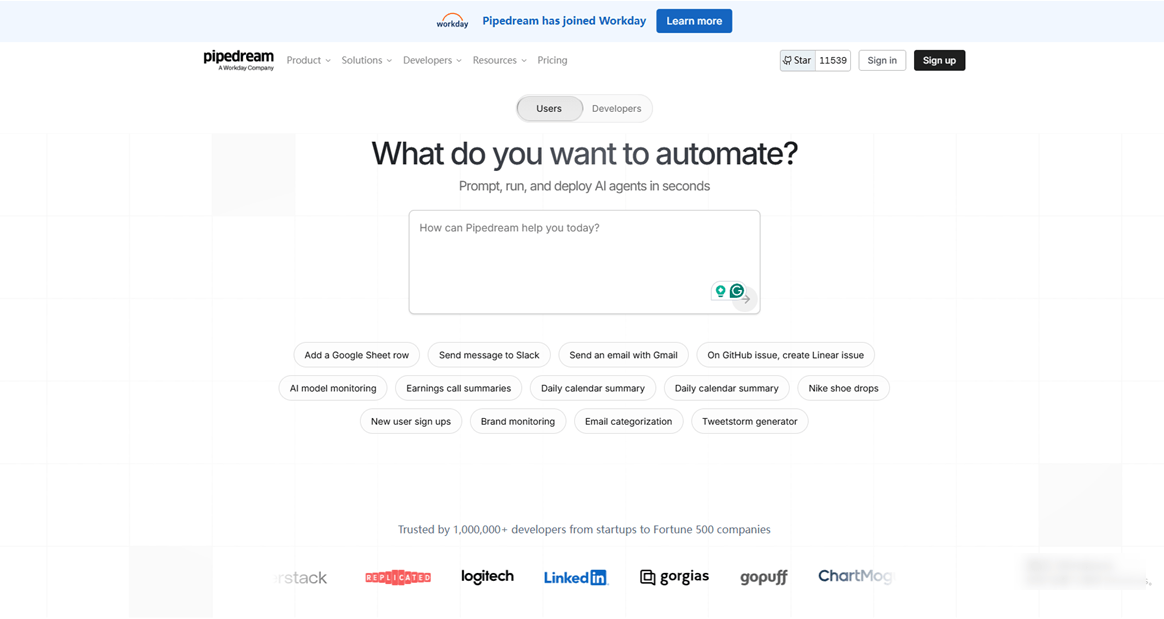
Pipedream — Best Zapier Alternative for Developer-Friendly Marketing Ops
Pipedream is a workflow automation platform built for developers and technical marketers who want the flexibility of code without building infrastructure from scratch. You can write custom Node.js or Python directly inside workflow steps — making it ideal for complex data transformations, custom API integrations, and marketing analytics pipelines.
Why it beats Zapier for custom logic: Zapier's built-in formatter and code steps are limited. Pipedream lets you write full Node.js or Python functions within any workflow step, with access to npm packages and Python libraries. For marketers building custom attribution models, data enrichment pipelines, or API integrations with platforms Zapier doesn't support well, this flexibility is invaluable.
Key features:
- Custom Node.js and Python code in any workflow step
- 1,000+ pre-built integrations plus HTTP triggers for any API
- Event-driven architecture with real-time webhook processing
- Free tier with 100 compute credits/month
- Version control and workflow history
Pricing vs. Zapier: Pipedream's free tier includes 100 compute credits/month. Paid plans start at $29/month for 2,000 credits. Zapier Professional starts at $19.99/month for 750 tasks — but without any code execution capability.
Best for: Marketing operations teams with a developer or technical marketer; teams building custom integrations with ad platforms, analytics tools, or internal APIs; anyone who's hit the limits of Zapier's formatter and code steps.
Limitations vs. Zapier: Pipedream requires comfort with code — it's not the right tool for non-technical marketers. Its pre-built integration library, while growing, is smaller than Zapier's. The pricing model (compute credits) can be harder to predict than Zapier's task-based billing.
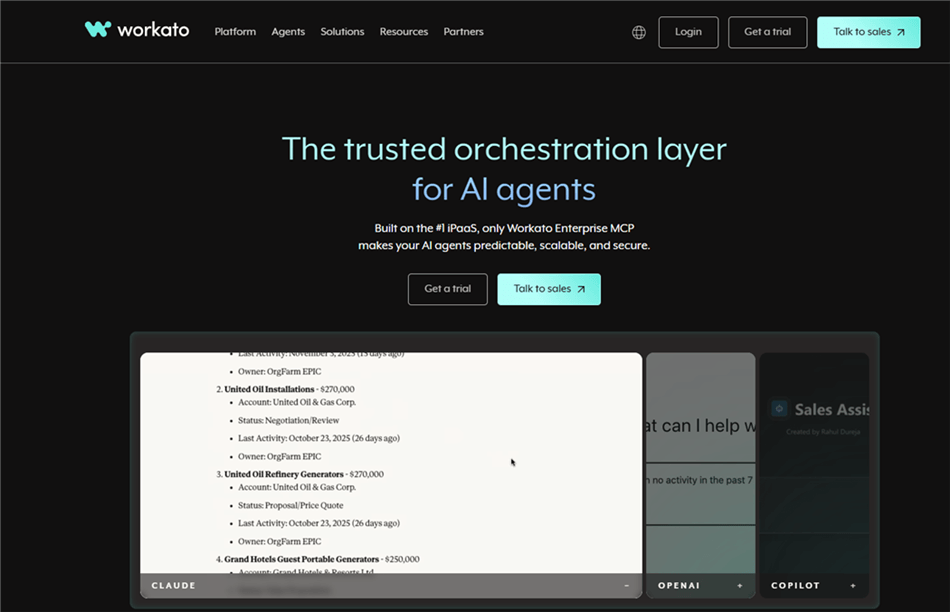
Workato — Best Zapier Alternative for Enterprise E-Commerce Teams
Workato is an enterprise-grade integration and automation platform designed for organizations running complex, high-volume workflows across multiple departments. For large e-commerce operations managing order management, inventory sync, customer data platforms, and marketing automation at scale, Workato offers capabilities that Zapier simply can't match.
Why it beats Zapier for enterprise e-commerce: Workato's "recipes" support complex business logic, real-time data processing, and enterprise governance features — role-based access control, audit logs, SOC 2 compliance, and dedicated support. For e-commerce teams processing thousands of orders daily across multiple channels, this reliability and governance matter.
Key features:
- Enterprise-grade governance: RBAC, audit logs, SOC 2 compliance
- 1,000+ enterprise app connectors with deep integration depth
- Real-time data processing for high-volume e-commerce workflows
- AI-powered workflow suggestions and anomaly detection
- Dedicated technical account management
Pricing vs. Zapier: Workato is more expensive than Zapier — pricing is custom and typically starts in the thousands per month for enterprise plans. It's not a budget alternative; it's a capability upgrade for teams that have outgrown both Zapier and mid-market alternatives.
Best for: Enterprise e-commerce teams with complex cross-departmental workflows; organizations with strict data governance and compliance requirements; teams that need dedicated support and SLA guarantees.
Limitations vs. Zapier: Workato is significantly more expensive than Zapier and requires a sales process to get started. It's overkill for small to mid-size marketing teams. Implementation typically requires dedicated IT or operations resources.
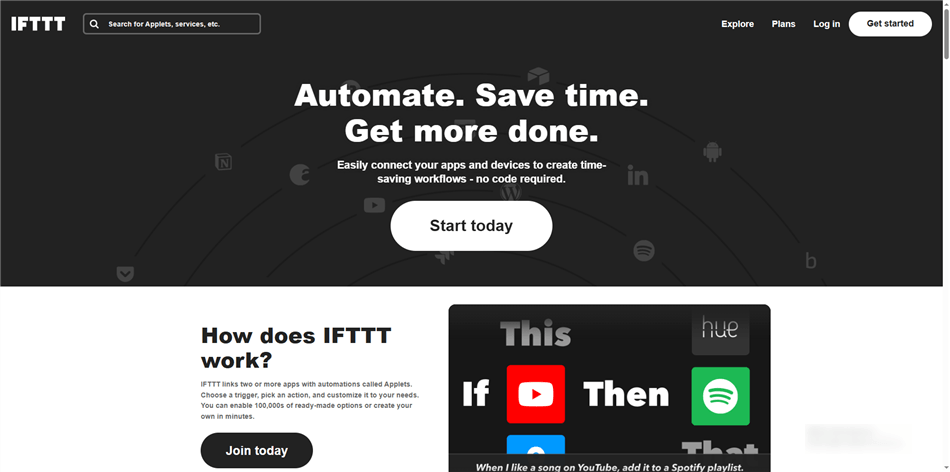
IFTTT — Best Free Zapier Alternative for Simple Personal Automations
IFTTT (If This Then That) is the original consumer automation platform — simple, free, and focused on connecting everyday apps and services. For marketers who need basic automations (post to social media when a blog publishes, save email attachments to Google Drive, get Slack notifications for new leads), IFTTT gets the job done without any cost.
Why it beats Zapier for simple free automations: IFTTT's free plan is genuinely usable — unlimited basic applets with no task counting. Zapier's free plan caps at 100 tasks and two steps, making it nearly useless for ongoing automations.
Key features:
- Free plan with unlimited basic applets (single trigger, single action)
- 700+ service integrations including social media, smart home, and productivity apps
- Simple, consumer-friendly interface — no learning curve
- Pro plan ($2.50/month) for multi-step applets and faster execution
Pricing vs. Zapier: IFTTT's free plan for 2 Applets. Pro plan starts at $2.99/month. Zapier's free plan is 100 tasks/month with a two-step limit.
Best for: Solo marketers and content creators who need simple, single-trigger automations; social media managers automating cross-posting; anyone who wants zero-cost automation for personal productivity workflows.
Limitations vs. Zapier: IFTTT is significantly less powerful than Zapier for business workflows. Multi-step automations, conditional logic, and complex data transformations are not IFTTT's strength. Its business app integrations are shallower than Zapier's. It's a personal automation tool, not a marketing operations platform.
Tray AI — Best Zapier Alternative for Mid-Market Marketing Operations
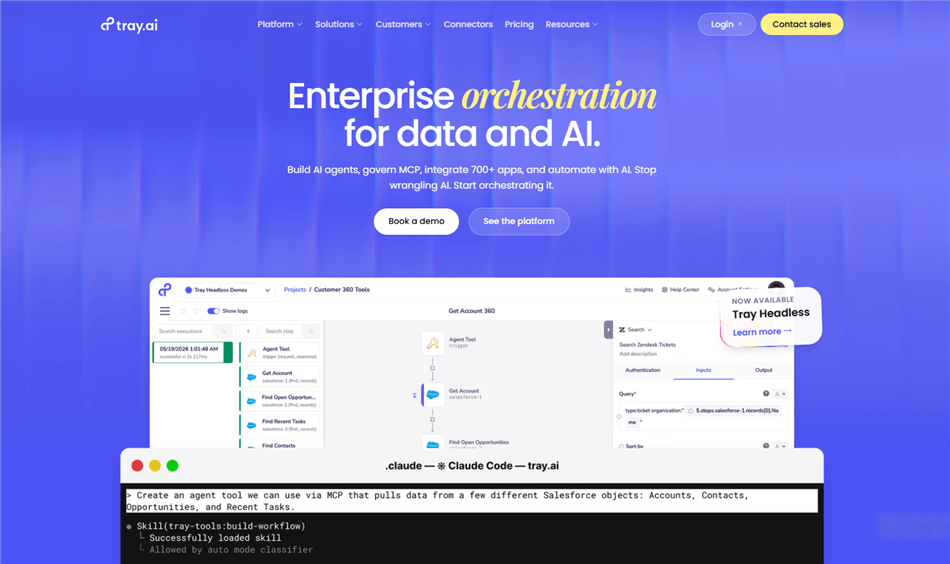
Tray AI is a flexible, scalable automation platform designed for mid-market and enterprise marketing operations teams. Its universal connector and low-code/pro-code approach makes it suitable for teams that need more power than Zapier but aren't ready for Workato's enterprise complexity and price.
Why it beats Zapier for mid-market marketing ops: Tray AI's architecture handles high-volume, complex workflows without the task-counting anxiety of Zapier. Its universal connector lets you integrate with any API, and its workflow builder supports sophisticated branching, looping, and error handling that Zapier's linear model can't replicate.
Key features:
- Universal connector for any REST API or webhook
- Visual workflow builder with advanced branching and looping
- AI-powered workflow generation (describe what you want, Tray builds it)
- Enterprise governance features: SSO, RBAC, audit logs
- Scalable architecture for high-volume marketing data workflows
Pricing vs. Zapier: Tray pricing is custom and generally more expensive than Zapier for equivalent usage. It's positioned as a step up from Zapier, not a budget alternative.
Best for: Mid-market marketing operations teams that have outgrown Zapier's complexity limits; teams running high-volume lead routing, CRM sync, and multi-channel campaign automation; organizations that need enterprise governance without full enterprise pricing.
Limitations vs. Zapier: Tray is more expensive than Zapier and requires a sales conversation to get started. Its interface has a steeper learning curve than Zapier's. It's not the right choice for small teams or simple automation needs.
AllyHub — Best for AI-Assisted Marketing Workflows That Compound Over Time
Most automation tools — including Zapier — connect apps. AllyHub does something fundamentally different: it operates your browser directly, executes multi-step research and content workflows, and builds reusable automation assets that get smarter with every task.
If you're switching from Zapier because you need more than app-to-app triggers — because you want an AI that can actually do the work, not just route data between tools — AllyHub is worth a serious look.
Why it's different from Zapier: Zapier automates data flows between apps. AllyHub automates the work itself — browsing websites, extracting data, generating reports, filling forms, and completing research workflows that would otherwise require manual effort. More importantly, every completed task builds reusable Skills and Service assets, so the second time you run a similar workflow, AllyHub already knows how to do it faster.
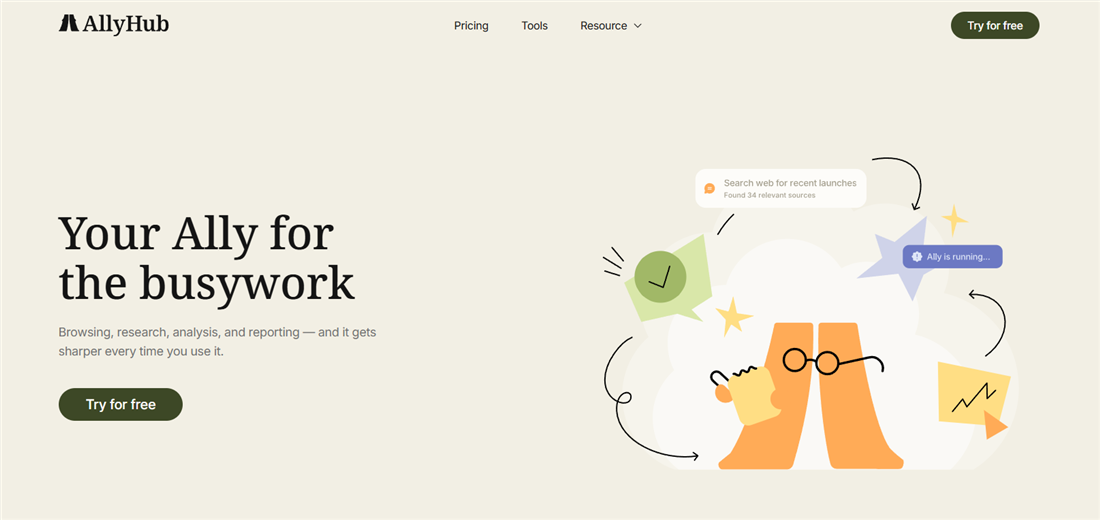
💡 Pro tip: AllyHub's ROTI (Return on Token Investment) framework means every automation you build doesn't just run once — it compounds. The more you use it, the more capable and efficient your workflows become.
Key features for marketers:
- Browser-native execution — operates your browser to complete tasks directly (no API required)
- Reusable Service assets — package any workflow into a one-click automation
- Skills accumulation — AllyHub learns your preferences and workflow patterns over time
- Research and content automation — web scraping, competitive research, content generation, data extraction
- Zero configuration — install the Chrome extension and start immediately
Pricing vs. Zapier: AllyHub offers a free tier to get started. Unlike Zapier's task-based billing, AllyHub's value compounds over time — the more workflows you build, the more reusable assets accumulate, effectively reducing the per-task cost of future work.
Best for: Digital marketers who spend hours on repetitive research, competitive analysis, and content workflows; e-commerce marketers who need AI-assisted data extraction and reporting; marketing teams that want automation assets that improve over time, not just run-and-forget Zaps.
Limitations vs. Zapier: AllyHub is not a direct app-to-app connector like Zapier — if you need to trigger a Mailchimp email when a Shopify order is placed, Zapier (or Make) is the right tool. AllyHub's strength is in AI-assisted execution workflows, not traditional trigger-action automation. Its integration library is also smaller than Zapier's for standard app connections.
✅ Recommended: If your biggest time drain is repetitive research, content creation, or browser-based workflows — not just data routing between apps — try AllyHub alongside your existing automation stack.
How to Choose the Right Zapier Alternative
The right alternative depends on why you're leaving Zapier:
If cost is the issue:
- Simple workflows → IFTTT (free) or Activepieces (free tier)
- Complex multi-step workflows → Make or Pabbly Connect (dramatically cheaper per workflow)
- Technical team with data control needs → n8n (self-hosted, free)
If complexity is the issue:
- Need visual branching and parallel paths → Make
- Need custom code in workflows → Pipedream or n8n
- Need enterprise governance → Workato or Tray.io
If you need something beyond app-to-app automation:
- AI-assisted research, content, and browser workflows → AllyHub
- Microsoft 365 ecosystem → Microsoft Power Automate
If you're an agency:
- Multi-client management → Make (scenario-based pricing scales better for agencies)
- Enterprise clients → Workato
⚠️ Warning: Before switching, audit which apps you actually use in your current Zaps. Make and Pabbly Connect cover most marketing and e-commerce platforms, but if you rely on niche integrations, verify compatibility before committing to a migration.
FAQ: Zapier Alternatives
What is the best free alternative to Zapier?
Make offers the most generous free plan for real marketing work — 1,000 operations/month across unlimited active scenarios, with multi-step workflows allowed. Activepieces also offers 1,000 free tasks/month. If you need truly unlimited free automations and have technical resources, n8n's self-hosted version has no limits.
What are the cheapest Zapier alternatives?
Pabbly Connect is the most cost-effective for complex multi-step workflows because it charges per execution (not per step). Make is significantly cheaper than Zapier for equivalent usage. n8n self-hosted is free beyond infrastructure costs. IFTTT is free for simple single-step automations.
Is Make better than Zapier?
For most marketers running complex workflows, yes. Make's visual canvas handles branching logic, parallel paths, and error handling that Zapier's linear model can't replicate — at 3–5x lower cost for equivalent usage. Zapier's advantage is its larger app library (9,000+ vs. Make's 1,500+) and simpler interface for basic automations.
Can I migrate my Zaps to another platform?
Most platforms don't offer direct Zap import, but Make, n8n, and Pabbly Connect all have migration guides. The process typically involves recreating workflows manually — which is also an opportunity to audit and simplify your automation stack.
What's the best Zapier alternative for e-commerce marketers?
Make is the top choice for most e-commerce teams — it handles complex order processing, inventory sync, and multi-channel marketing workflows at a fraction of Zapier's cost. For enterprise e-commerce operations, Workato offers deeper integration and governance. For AI-assisted product research, competitive analysis, and content workflows, AllyHub complements your automation stack.
Is Zapier still worth it in 2026?
Yes, in specific scenarios. If you need access to niche apps that only Zapier supports, or if your workflows are simple (two to three steps) and low-volume, Zapier's ease of use and app breadth justify the cost. The platform has also added useful AI features. But for most marketers running multi-step workflows at scale, the alternatives above offer better value.
What's the difference between Zapier and AllyHub?
Zapier automates data flows between apps (trigger → action). AllyHub automates the work itself — it operates your browser, executes research and content workflows, and builds reusable automation assets. They solve different problems: use Zapier (or Make) for app-to-app data routing; use AllyHub for AI-assisted execution workflows that compound over time.