TikTok growth is no longer about posting more videos — it’s about using the right content strategy.
The formats that drive views, followers, saves, and conversions are constantly changing. What works for a UGC creator may fail for a faceless channel, and a strategy that gets views may not build a loyal audience.
This guide breaks down the TikTok content strategies that work in 2026, including the best formats for different creator types, why they work, and how to apply them to grow faster.
Key Takeaways
- Best overall strategy: Hook-first storytelling with a clear content pillar system drives the most consistent growth for all creator types in 2026
- Best for UGC creators: Product-in-action demos with authentic before/after storytelling outperform polished ad-style content for brand conversions
- Best for faceless creators: Educational explainer series with AI voiceovers and tight 30–45 second pacing are the highest-performing faceless format
- Best for solo creators: Niche-down + episodic series builds the strongest algorithmic identity and audience loyalty
- What to look for: The best TikTok content strategies share three traits — strong front-loaded hooks, high rewatch/save potential, and niche clarity
- Bottom line: Pick 2–3 content pillars, test formats consistently, and let your analytics tell you which to double down on
Why TikTok Content Strategy Matters More Than Ever in 2026
TikTok is no longer just a short-video platform — it's a search engine, a discovery engine, and a conversion channel all in one. In 2026, TikTok's own search results now surface featured snippets for instructional content, and TikTok videos increasingly appear in Google's featured snippets for how-to queries.
This means your content strategy isn't just about going viral. It's about building a body of work that gets discovered, saved, shared, and searched — repeatedly.
The creators winning right now aren't posting randomly. They're operating with a system: defined content pillars, consistent formats, and data-driven iteration. This guide gives you that system.
Best TikTok Content Strategies - Quick Comparison Table
Strategy | Best For | Difficulty | Algorithm Signal | Content Pillar |
Hook-First Storytelling | All creators | Medium | Watch time + replays |
12 Best TikTok Content Strategies
The right TikTok strategy depends on your content goal, audience, and creator type. These 12 proven strategies cover the formats that help creators increase reach, engagement, and long-term growth.
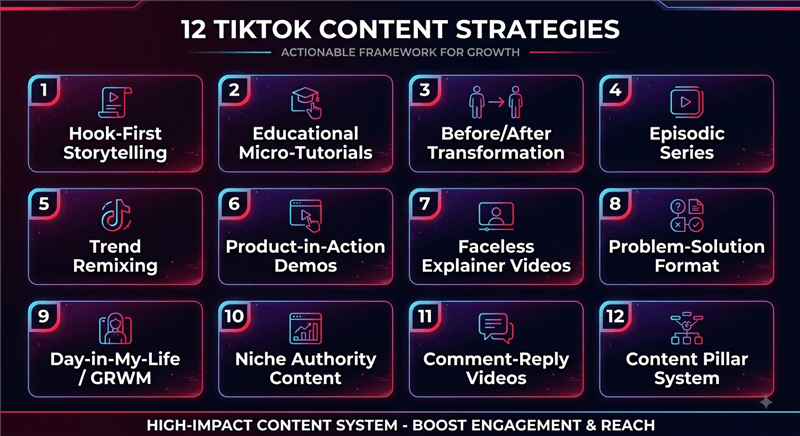
Strategy 1. Hook-First Storytelling — The Foundation of Every High-Performing Video
The first few seconds determine whether viewers keep watching or swipe away. Hook-first storytelling puts that moment at the center of your video: give people a clear reason to stay before you introduce the full story, explanation, or CTA.
Start with the payoff. Open with a bold claim, surprising visual, direct question, or the most interesting part of the story. Don't spend the first few seconds setting up context that viewers don't yet care about.
Keep the momentum. Once you've earned attention, maintain it with concise scripting, visual changes, and forward-moving information. Every section should give viewers a reason to watch the next few seconds rather than saving the best part for the end.
Build in a reason to rewatch. A strong ending can reveal another detail, create an open loop, or connect back to the opening. This gives viewers a reason to replay the video instead of simply moving on.
The challenge is that there is no universal hook that works for every audience. A hook that performs well in one niche may fall flat in another, so treat your opening as something to test and refine rather than a formula you can copy once.
Strategy 2. Educational Micro-Tutorials — Turn One Useful Idea Into a Save-Worthy Video
Educational micro-tutorials work by giving viewers one useful takeaway they can apply immediately. Instead of trying to cover everything in one video, focus on a single question, skill, or problem and walk through it clearly.

Keep the lesson focused. A strong tutorial usually teaches one specific thing rather than squeezing five loosely related tips into 30 seconds. Use a simple step-by-step structure, reinforce key points with on-screen text, and cut anything that doesn't help the viewer reach the answer faster.
Make it worth saving. Tutorials naturally have more replay and save potential when viewers may want to refer back to them later. A clear process, checklist, example, or shortcut gives people a reason to come back to the video rather than simply watching it once.
This format is particularly useful for solo and faceless creators building authority around educational niches such as productivity, cooking, fitness, finance, and technology. Its trade-off is that useful content often takes longer to build an audience than entertainment or trend-driven videos, so consistency matters more than expecting immediate follower growth.
For search-driven topics, use the language your audience actually searches for in your spoken content, on-screen text, and caption. This can also make your tutorials easier to discover beyond the initial For You feed.
Strategy 3. Before/After Transformation — Show the Problem, Process, and Result
Before/after videos are naturally compelling because viewers can understand the story almost instantly: here's the problem, here's what changed, and here's the result. That makes the format especially effective for product-focused UGC and content where the outcome is easy to demonstrate visually.

Show the transformation, not just the finished result. Let viewers see the starting point, the product or process in action, and the outcome. The contrast gives the video a built-in narrative without requiring a long explanation.
For UGC creators, authenticity matters just as much as the transformation itself. A real environment, natural narration, and specific observations usually feel more native to TikTok than polished ad copy. Instead of making broad claims, explain what you actually noticed or how the product solved a specific problem.
This approach works particularly well for UGC creators, e-commerce sellers, and lifestyle creators in categories such as beauty, fitness, food, and home organization. The main limitation is practical: a credible transformation requires a result you can genuinely demonstrate, which means some products need enough time or repeated use before you can make the comparison meaningful.
Strategy 4. Episodic Series — Give Viewers a Reason to Come Back
An episodic series turns one content idea into a sequence of related videos. Each episode should work on its own while giving viewers a reason to follow or return for the next one.
Make the series easy to follow. Use a clear theme, consistent format, and simple episode numbering. Each video should deliver something useful or interesting on its own, then naturally point toward what comes next.
This works especially well for solo and niche creators covering educational, documentary, challenge, or story-driven content. The trade-off is that series require more planning and consistency than standalone posts, so have several episodes mapped out before you start.
Strategy 5. Trend Remixing — Use Trends Without Losing Your Niche
Jumping on a trend can help a video reach new viewers, but simply copying a popular sound or format rarely gives your account a distinct identity. Trend remixing means taking the underlying hook, format, or audio and adapting it to your own niche.
Start with the trend, then add your angle. Look for the element that makes the trend work and rebuild it around a topic your audience already cares about. The goal isn't to follow every trend, but to make relevant trends feel native to your content.
This can be useful for creators at any stage, particularly when you need more discovery-driven content. Just remember that trends have a short shelf life, so they work best alongside evergreen formats such as tutorials, series, or niche authority content.
Strategy 6. Product-in-Action Demos — Show the Product in a Real Context
For UGC creators and e-commerce sellers, product demos work best when they feel like content rather than traditional advertising. Showing a product being used in a real setting helps viewers quickly understand what it does and whether it fits into their own lives.
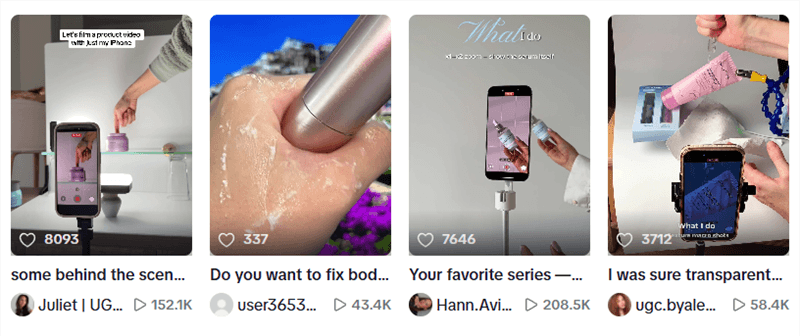
Show the problem and the product in action. Film in a natural environment, demonstrate a specific use case, and explain what you actually noticed rather than relying on polished ad copy. A simple, low-pressure CTA is usually enough.
This format is particularly effective for UGC creators, e-commerce sellers, and affiliate marketers in categories such as beauty, tech, food, and home products. The main challenge is maintaining that sense of authenticity: if the video looks overly produced or scripted, it can lose the native feel that makes UGC effective.
Strategy 7. Faceless Explainer Videos — Build a Channel Without Showing Your Face
Faceless videos let creators build around a topic rather than a personal brand. Voiceover, screen recordings, B-roll, stock footage, and text overlays can all be combined to explain a subject without appearing on camera.
Let the content carry the video. Choose a focused, searchable niche and prioritize clear scripting, useful information, and strong audio. AI voiceover can speed up production, but it doesn't replace good narration or editing. The visuals should support what is being said rather than simply filling the screen.
This approach works especially well for educational and information-heavy niches such as finance, history, technology, and productivity. The trade-off is that without a face or personal presence, the content needs stronger storytelling and a clearer point of view to create a connection with viewers.
Strategy 8. Problem-Solution Format — Turn a Pain Point Into Useful Content
Problem-solution videos are built around a simple structure: identify a problem the viewer recognizes, then show them a specific way to solve it. Because the value is immediately clear, the format can work across a wide range of advice-driven niches.
Keep the solution specific. Instead of listing several generic tips, focus on one problem and demonstrate one useful solution. A relatable scenario can serve as the hook, while the solution itself gives viewers a reason to keep watching, save the video, or share it with someone facing the same problem.
The format works well for solo, niche, and UGC creators across areas such as productivity, finance, career, lifestyle, and other problem-driven topics. Its main weakness is repetition: if every video follows exactly the same formula, the content can start to feel predictable. Mix it with other formats to keep your feed varied.
Strategy 9. Day-in-My-Life / GRWM — The Community-Building Format
Day-in-my-life (DITL) and Get Ready With Me (GRWM) videos turn everyday routines into relatable stories. By giving viewers a glimpse into your life, they create the personal connection that drives comments, follows, and repeat viewers.
Make everyday moments relatable. Film in real time or compile clips throughout the day, and share your thoughts, decisions, routines, and small imperfections rather than only polished highlights. The goal is to make viewers feel like they're spending part of the day with you.
Turn viewers into participants. Respond to interesting comments with video replies, ask questions, and leave room for viewers to share their own experiences. This makes the format particularly effective for personal brands and lifestyle creators looking to build a stronger community.
Strategy 10. Niche Authority Content — The Long-Term Follower Magnet
Niche authority content focuses on consistently creating useful, specific content around one topic. It may take longer to gain traction than trend-driven content, but it creates a stronger foundation for long-term audience growth.
Build around one clear niche. Focus on a specific topic, answer common audience questions, and cover your subject from multiple angles. Consistency helps TikTok better understand what your content is about and connect it with users interested in that topic.
Turn expertise into a content library. Maintain a consistent publishing schedule and keep expanding on proven topics instead of constantly jumping between unrelated trends. This approach works especially well for solo creators, niche creators, and faceless channels building long-term authority.
Know the trade-off. Niche authority content requires patience, consistency, and genuine knowledge. Superficial content is difficult to sustain, especially in competitive niches.
Strategy 11. Comment-Reply Videos — Turn Comments Into New Content
Comment-reply videos turn audience interactions into new content opportunities. Instead of letting valuable questions disappear in the comments, creators can use video replies to answer viewers directly, expand on popular topics, and build stronger community connections.
Turn comments into content ideas. Look for comments that reveal common questions, objections, or recurring interests, then create video replies that directly address them. Keep the original comment visible for context, and expand on topics that have already generated strong engagement.
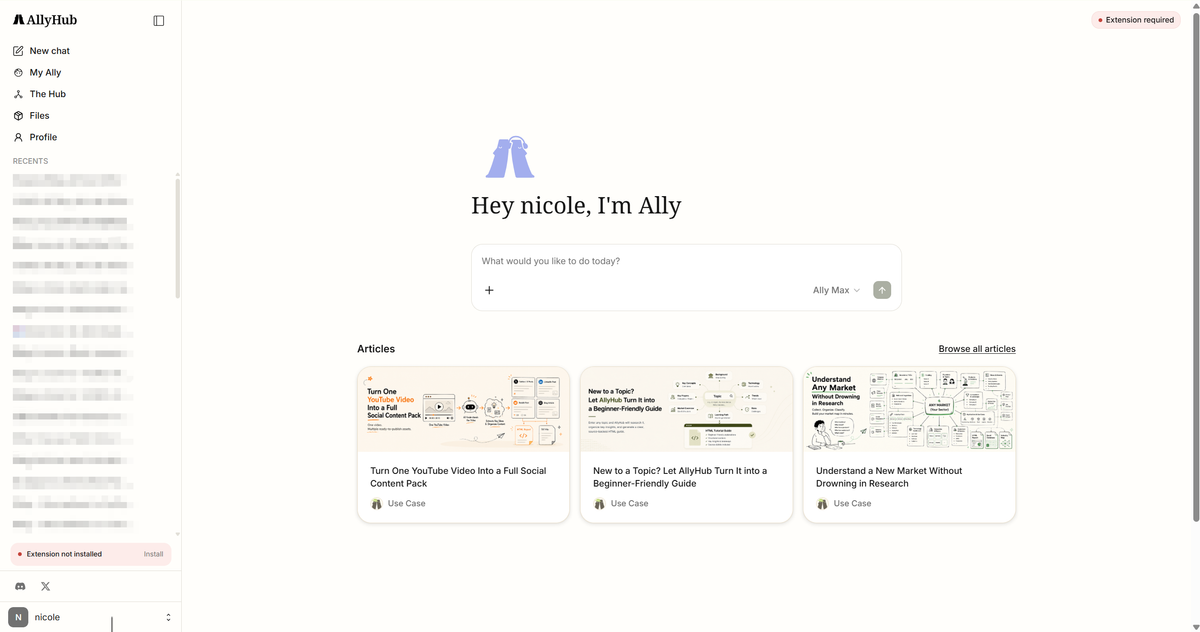
Scale your comment research with AllyHub. When a video starts generating hundreds of comments, manually reading through them can become time-consuming. AllyHub can scrape comment sections from your own viral videos or competitors' videos, giving you a structured dataset to analyze. For example, you can ask the AI to “Analyze these 500 comments and group them by the three most frequently asked questions.” Those recurring questions can then become highly relevant video ideas for your content calendar.
Build a content loop. Every question or discussion point can become a new video, which generates more comments and creates more opportunities for future content. This makes the format especially useful for educational creators, brands, and niche accounts with active communities.
Strategy 12. Content Pillar System — The Strategy Behind Every Successful Creator
The content pillar system isn't a single content type — it's the framework that brings your TikTok strategy together. Most successful creators build around 3–4 recurring content pillars that define their niche and give their audience a clear reason to follow.
Give each pillar a clear purpose. A productivity creator, for example, might combine educational tutorials, day-in-my-life videos, productivity-focused trends, and comment-reply content. Assign each pillar a posting frequency so your content stays balanced and consistent.
Let performance guide your content mix. Track which pillars drive the most follows, saves, shares, and comments, then double down on what works and reduce what doesn't. This strategy works for creators at every stage, but it requires consistent planning and regular performance analysis.
How to Choose the Right TikTok Content Strategy for Your Needs
The best strategy depends on your creator type, growth stage, and goal.
- UGC creators: Focus on Product-in-Action Demos (#6), Before/After Transformations (#3), and Hook-First Storytelling (#1).
- Solo creators: Build around Content Pillars (#12), then use Educational Tutorials (#2), Episodic Series (#4), and DITL (#9).
- Faceless creators: Lead with Faceless Explainer Videos (#7), supported by Educational Tutorials (#2) and Problem-Solution content (#8).
- Under 10K followers: Prioritize discovery with Trend Remixing (#5), strong hooks (#1), and Problem-Solution content (#8).
- 10K–100K followers: Focus on retention and community with Episodic Series (#4), Comment-Reply Videos (#11), and Niche Authority Content (#10).
Bonus: AllyHub — AI-Powered TikTok Research & Content Intelligence
Great TikTok content starts with better research. Before creating your next video, you need to understand what competitors are doing, what topics audiences care about, and where new content opportunities exist.
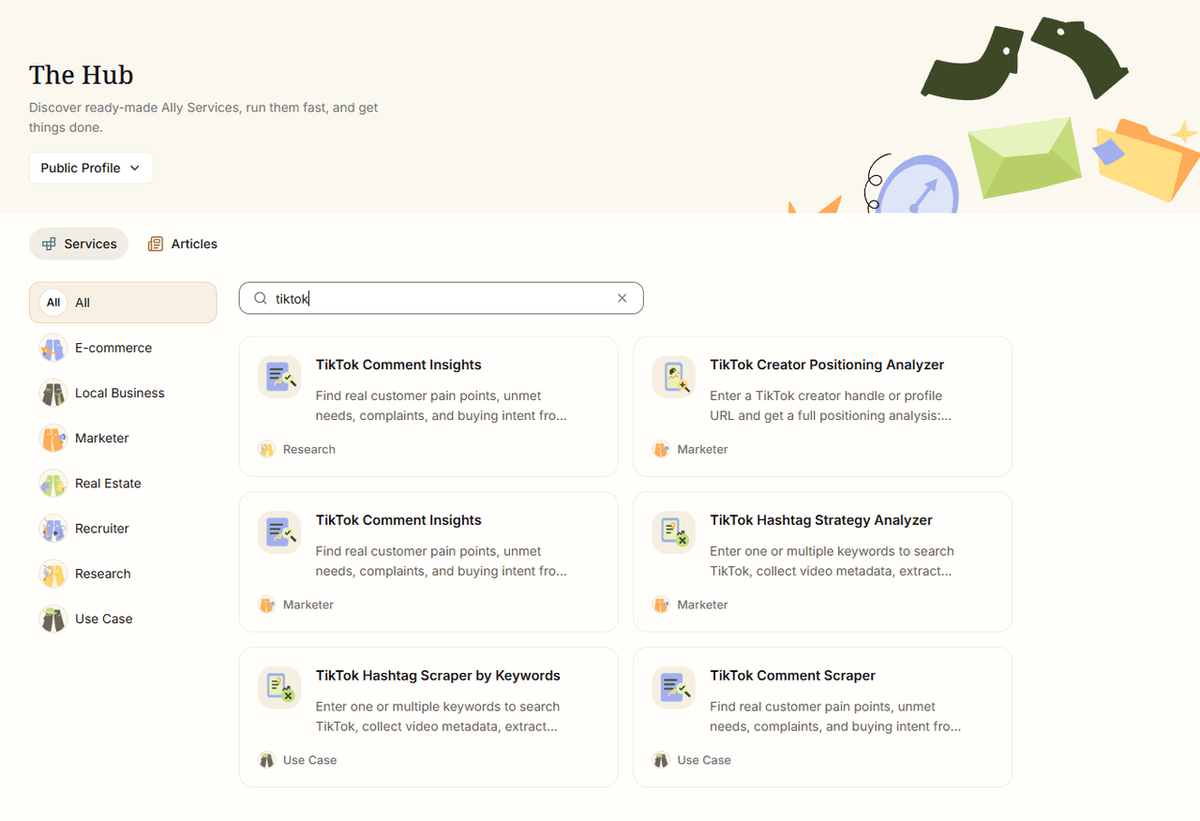
AllyHub helps creators and marketers turn TikTok data into actionable insights. Beyond comment analysis, it can help you research competitors, discover TikTok keyword opportunities, analyze winning videos, identify content patterns, and streamline repetitive research workflows — so you spend less time manually scrolling and more time creating.
For example, you can use AllyHub to:
- Analyze competitor videos and identify recurring winning patterns
- Research TikTok keywords and uncover relevant topic opportunities
- Study creators and niche content to find gaps worth targeting
- Turn research findings into content ideas, scripts, and repeatable workflows
Best for: Creators, MCNs, marketers, and teams that want to systemize TikTok research and content planning without spending hours on manual analysis.
💡 Pro tip: AllyHub's Skills system lets you turn frequently used research processes into reusable workflows, making your TikTok research faster and more consistent over time.
The Final Verdict
You don’t need to use all 12 strategies. In fact, attempting to do so will lead to burnout. The most successful creators in 2026 pick two core pillars and execute them. The real secret to sustaining a TikTok content strategy is automation.
Equip your browser with an AI agent like AllyHub to automate your competitor research, extract viral transcripts, and analyze audience comments. When the research is on autopilot, you can finally focus all your energy on what actually matters: creating great videos.
FAQ: TikTok Content Strategy
What is the best TikTok content strategy for beginners?
Start with Hook-First Storytelling and Problem-Solution content. Both are easy to create without an existing audience or large budget.
What content types perform best on TikTok in 2026?
Educational tutorials, before-and-after content, and episodic series are strong performers. Short videos remain effective for discovery, while longer videos can work well when retention is high.
How often should I post on TikTok to grow?
Posting 1–3 times daily can support faster growth, while 3–5 posts per week is enough for consistent activity. Focus on quality, strong hooks, and consistency rather than volume alone.
What is the best TikTok content strategy for UGC creators?
Prioritize authentic, native-looking content such as product demos, unboxings, and before-and-after videos. Raw, relatable videos often fit TikTok better than polished ads.
What is the best TikTok growth strategy for faceless video creators?
Choose a niche that works well without a personal brand, such as education, finance, history, or productivity. Use voiceovers, B-roll, or screen recordings and focus on useful, save-worthy content.
How do I know which TikTok content strategy is working?
Track watch time, saves, shares, and follower growth in TikTok Analytics. These metrics show which formats attract attention, engagement, and new followers.
What's the difference between a TikTok content strategy for solo creators vs. niche creators?
Solo creators build around their personality, voice, and personal story, while niche creators build around a specific topic. Personal creators can use lifestyle and episodic content, while niche creators should focus on educational and authority-driven content.