Promoting a brand on Instagram goes beyond running ads. You can build awareness through organic content, creator partnerships, branded content, Collab posts, and paid campaigns—and then use performance data to see what actually works.
Whether you're promoting your own brand or working with a brand as a creator, the right approach depends on your goals, audience, and budget.
In this guide, we'll break down six practical strategies for promoting brands on Instagram, from finding creator partnerships and setting up paid campaigns to optimizing your profile and amplifying content that performs well.
Key Takeaways
- Match the promotion path to the goal.
- Organic promotion can work without an ad budget.
- Measure the action that matters, not just Instagram reach.
What Does It Mean to Promote a Brand on Instagram?
Promoting a brand on Instagram means using content, creator partnerships, collaborations, or paid advertising to increase awareness, reach new audiences, and drive actions such as follows, website visits, or sales.
There are two common workflows:
Creator | Business | |
Promotes | A partner's brand | Its own brand |
Main methods | Sponsored content, UGC, affiliate content, Collabs | Reels, Stories, creators, Collabs, ads, Shopping |
Method 1: Use Branded Content for Paid Creator Promotions
For creators, branded content is the simplest way to promote a partner's brand while making the commercial relationship clear. Use Instagram's Paid Partnership tools when a brand sponsors a post, Reel, or Story.
Before publishing, agree on the deliverables, payment, disclosure, and content usage rights. Add the brand partner through Instagram's branded content controls, use the required disclosure, and keep the post's performance data for reporting.
This works best when the brand already has a creator relationship and needs sponsored content published with the right disclosures.
Method 2: Find Brand Partnerships Through Creator Marketplace and Direct Pitches
Getting brand deals is a different problem from publishing branded content.
Eligible creators can use Instagram's Creator Marketplace to make their profile discoverable to brands. Direct outreach is another route, particularly for niche creators whose audience is a strong match for a specific product.
A useful creator pitch needs only a few things: who your audience is, what content you can create, why the brand fits, and evidence that your content gets results. A simple media kit with reach, engagement, audience demographics, and relevant examples is usually enough.
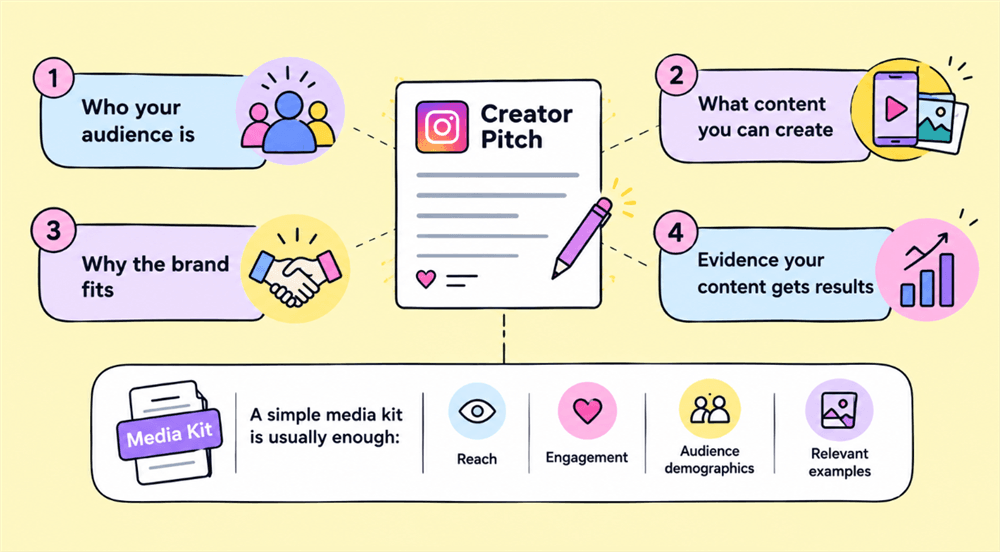
Before accepting a campaign, clarify the deliverables, fee, usage rights, exclusivity, and whether the brand wants to use the content in paid advertising.
For creators: Don't make follower count the entire pitch. Audience fit, content quality, and evidence of past performance can be more useful to a brand evaluating a partnership.
Method 3: Run Instagram Ads to Buy Targeted Reach
Paid promotion lets brands put products in front of a selected audience and optimize for goals such as awareness, traffic, leads, or sales. Before running ads, make sure the Instagram account is set up as a professional account.
Switch to a professional account:
Step 1. Open Instagram and go to your Profile.
Step 2. Tap the menu (☰) and select Settings. Open Account. Tap Switch to professional account.
Step 3. Follow the prompts to choose the account type and finish setup.
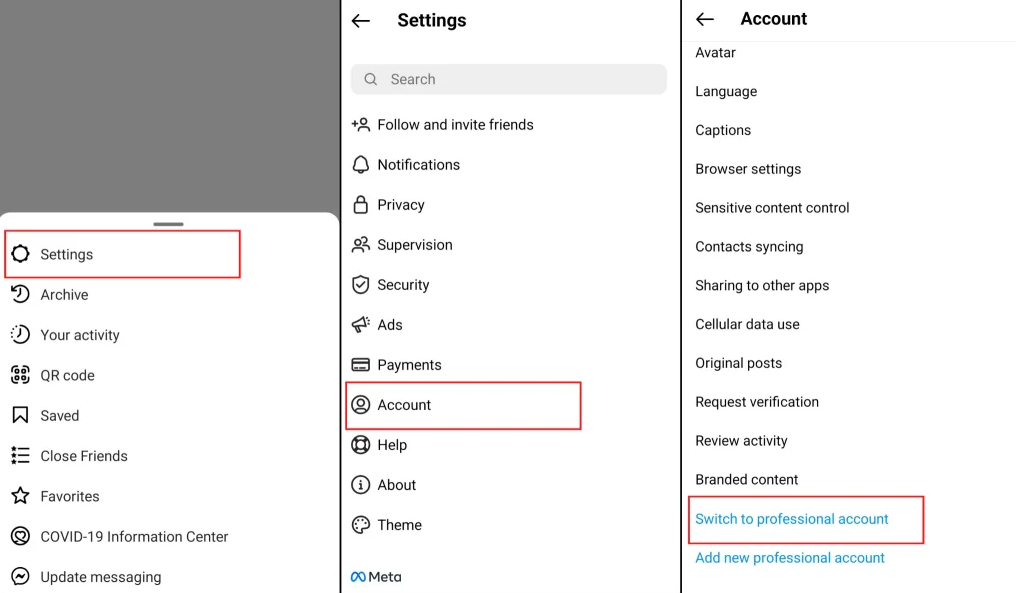
Once the account is ready, a brand can promote an existing post or create a more structured campaign through Meta Ads Manager. For e-commerce, product demos, customer testimonials, UGC, and eligible creator content can all serve as ad creative. Partnership Ads can also put paid distribution behind eligible creator content.
For measurement, match the metrics to the objective: track reach and impressions for awareness, but use clicks, purchases, cost per result, conversion rate, or ROAS when the goal is traffic or sales.
Basic paid-promotion loop:
Set up a professional account → Choose an objective → Create/test creative → Select an audience → Measure results → Scale what works
Method 4: Grow the Brand Organically With Reels, Stories, Collabs, and UGC
Organic promotion works when the content gives people a reason to discover or share the brand rather than simply asking them to buy.
Reels for discovery
Use Reels to demonstrate products, solve customer problems, show transformations, answer common questions, or turn customer experiences into short-form content. The product does not always need to be the entire story; showing how it fits into the audience's life can make promotional content more useful and shareable.
Stories for ongoing promotion
Stories are useful for launches, limited offers, FAQs, behind-the-scenes content, customer feedback, polls, and reminders. They are particularly useful for audiences that already know the brand and need another reason to click, reply, or purchase.
Collabs for shared distribution
Instagram Collab posts let brands work with creators, complementary businesses, or relevant accounts to publish shared content. The strongest collaborations are based on audience overlap rather than simply combining large follower counts.
UGC for social proof
Customer photos, reviews, creator demonstrations, and UGC give a brand content that feels closer to the customer's perspective. With appropriate permission and usage rights, strong UGC can also be reused in ads, product pages, email, and other marketing channels.
Instagram Shopping for direct conversion
For brands selling products, Instagram Shopping lets you tag products directly in posts, Reels, and Stories, linking viewers to a product page or in-app checkout. Set it up through Commerce Manager by connecting your product catalog to your Instagram professional account. Once approved, use product tags consistently in promotional content — tagged posts can appear in the dedicated Shop tab, giving products an additional discovery surface beyond your followers.
Build a mix of discovery content, useful content, social proof, and product-focused content, then use performance data to determine which formats deserve more attention.
Method 5: Turn Instagram Profile Visits Into Followers, Clicks, and Sales
Promotion doesn't end when someone reaches the profile. A visitor coming from a Reel, creator, Collab, or ad should quickly understand what the brand offers, who it is for, why they should care, and what to do next.
Make the profile name and bio clear, use a relevant link or shopping destination, and use pinned posts or Highlights to answer the questions a new visitor is most likely to have.
Use AllyHub to Research and Rewrite the Instagram Bio
A weak bio can waste traffic that the rest of the promotion strategy worked to generate. AllyHub can help with both the research and writing side of this process.
Its Instagram tools can help you:
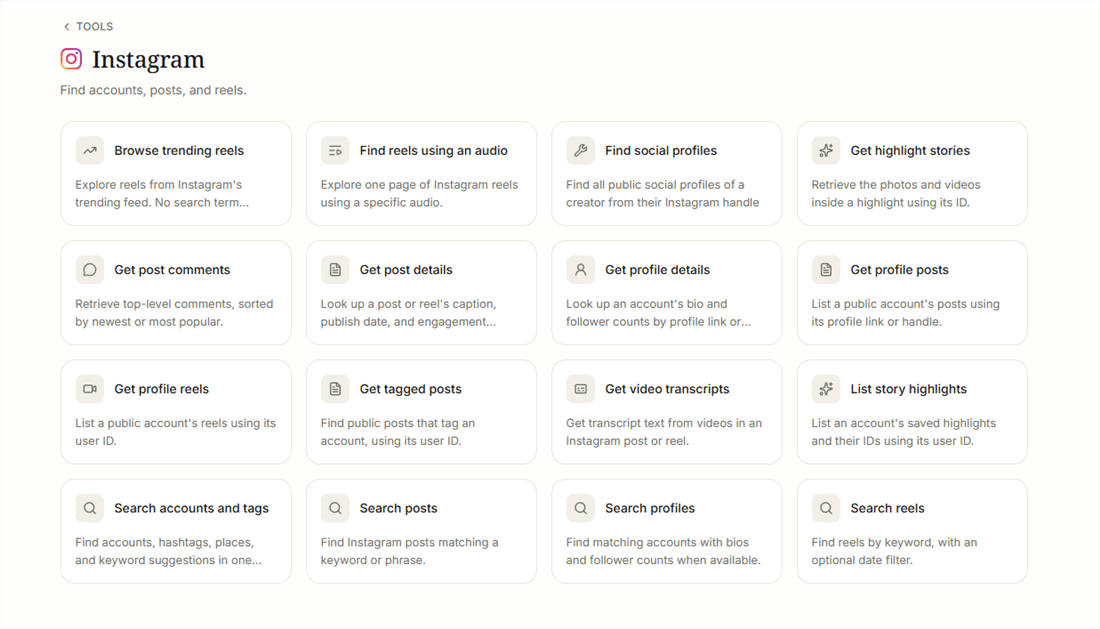
- Research comparable profiles: Search for relevant Instagram accounts and look up profile details such as bios and follower counts when available. This gives you examples of how similar brands position themselves.
- Analyze an existing account: Use Instagram Account Analyzer to identify issues with the current profile before rewriting it.
- Generate three bio options: Creates three bio drafts rather than a single generic answer with AllyHub's Instagram Bio Generator.
- See how the 150-character budget is spent: Each draft shows the split between what the account is, the reason to follow, and the line pointing visitors somewhere.
- Write the bold profile line separately: The tool treats the bold line above the bio as a separate field instead of folding everything into the same 150-character block.
- Keep time-sensitive copy replaceable: Offers, launches, and dates can be separated into a changeable line, so a campaign update doesn't require rewriting the entire bio.
- Reuse the same positioning rules: Once you've settled on how much space goes to identity, the reason to follow, and the CTA, AllyHub can carry that approach into subsequent runs rather than starting from a blank prompt.
Method 6: Amplify Winning Content With Creators, UGC, and Cross-Promotion
Once a piece of content proves that it can attract attention or drive action, don't treat it as a one-time post.
A strong product demo can be adapted into a Reel, Story, carousel, ad, product-page asset, or email creative. A successful creator concept can be tested with additional creators. Customer content can become social proof or paid creative, provided the brand has the necessary permission and usage rights.
Cross-promotion can extend the same idea beyond Instagram through channels such as TikTok, YouTube Shorts, Pinterest, email, or a brand website. The content should be adapted to each channel rather than copied without changes.
For brands working with creators, affiliate or ambassador programs can also create an ongoing incentive for creators to keep promoting products that generate sales.
The principle is simple: find content that works, then increase its distribution before constantly creating something new.
FAQ
How can I promote a brand on Instagram for free?
Focus on organic distribution through Reels, Stories, Collabs, UGC, and genuine engagement. A professional account also provides access to additional insights and promotion features. If you're promoting another brand in exchange for payment, free products, or other value, disclose the relationship clearly.
How many followers do you need to get paid to promote brands on Instagram?
There is no universal follower minimum for brand deals. Brands may work with smaller creators when the audience, niche, engagement, and content fit the campaign. A relevant audience and consistent content usually matter more than hitting a specific follower count.
Do I need a business account to promote a brand?
Not necessarily. Creators and brands can use different types of professional accounts depending on their needs. Branded content and advertising features have their own eligibility requirements, so check the relevant Instagram or Meta settings before launching a campaign.
How can I promote brands without losing my own voice?
Set clear boundaries around your tone, audience, and content style, then choose partnerships that fit them. A consistent creator profile makes sponsored content feel like part of the account rather than an interruption. Tools such as AllyHub's Profiles can also help document your positioning and voice for content creation.
What to Do Next
Choose the path that matches your goal: branded content for paid creator campaigns, brand partnerships for finding deals, ads for targeted reach, or organic content for ongoing discovery. Whatever drives the traffic, don't overlook the profile itself—turning visits into follows, clicks, leads, or sales is what makes promotion sustainable.